Mid-Century Modern Coffee Table: Vintage vs. Reproduction, a Fast Decision Filter
Design theme: Mid-century modern
A quick, low-stakes filter for coffee and side tables: when a budget-inspired mid-century modern coffee table is smart, and the rare cases when vintage or licensed is worth it.
As an Amazon Associate, Nido earns from qualifying purchases.
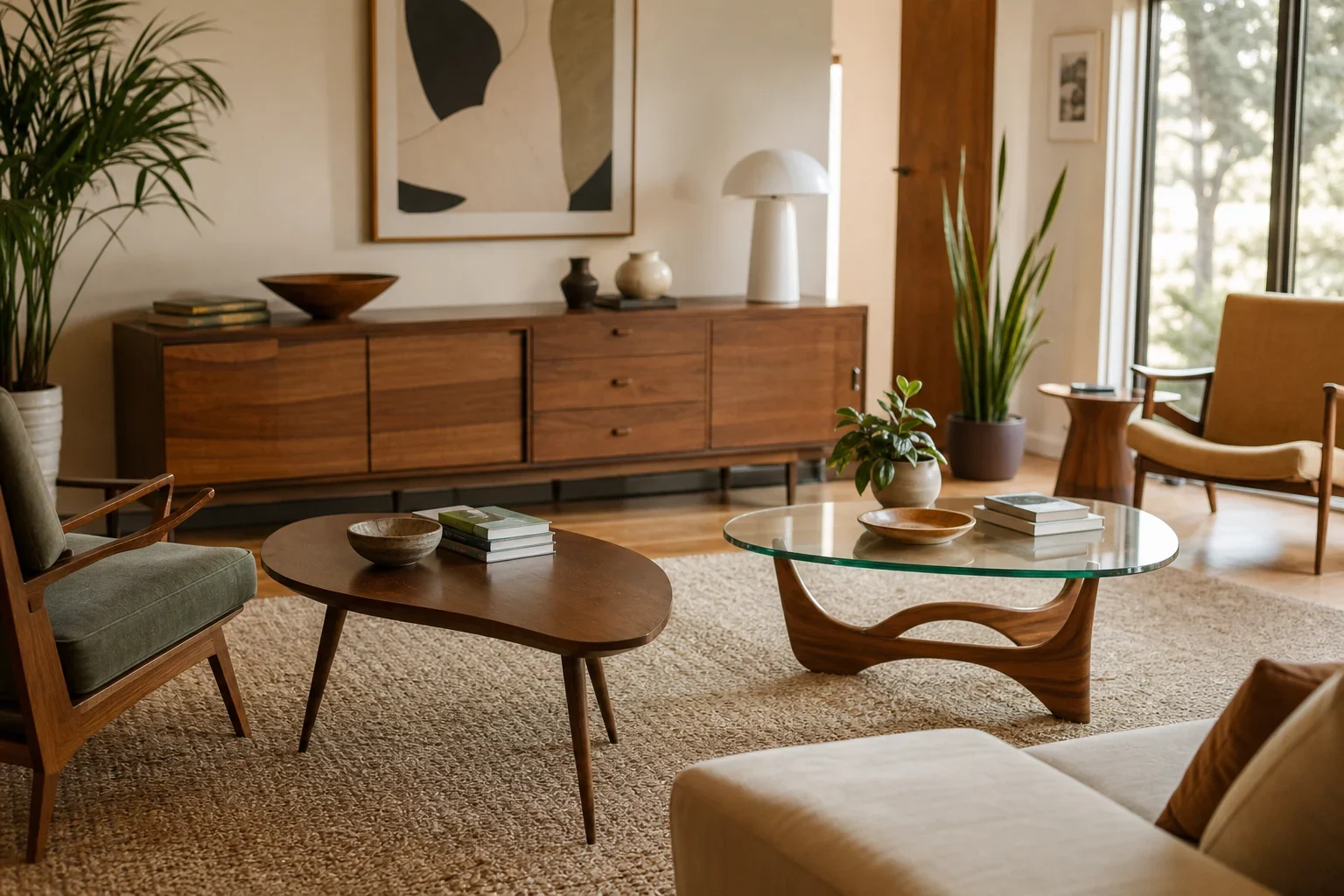
If you're furnishing a first place and staring down a mid century modern coffee table vintage vs reproduction decision, here's the short version: this is usually the easiest call in the whole room. Coffee and side tables take low physical stress, live in plain sight where a great-looking budget piece reads just as well as an original, and rarely carry the kind of maker premium that makes authentication worth the hours. That doesn't mean vintage is never right for this category — it just means the bar for choosing it should be higher than for, say, a signature lounge chair or a teak sideboard.
The Mid-Century Modern Coffee Table: Vintage vs Reproduction, Simplified
Case goods like sideboards and dressers carry construction and maker's-mark evidence that's worth inspecting closely — dovetail joints, secondary wood, hidden labels — because those details separate a $200 piece from a $1,000 one. Coffee tables are different. Many classic mid-century coffee table shapes (kidney, boomerang, simple tapered-leg rectangles) are visually driven, and a well-made modern interpretation using the same tapered or splayed legs and warm wood tones can deliver the look at a fraction of vintage pricing. Quality joinery still matters for durability — dowels, mortise-and-tenon joints, and fitted rails are signs of quality craftsmanship in genuine mid-century seating and case pieces — but a coffee table doesn't need to survive fifty years of daily drawer use, so the durability bar for a budget-inspired piece is lower too.
The Fast Buy-Tier Decision Filter
Run any coffee or side table candidate through these five questions before you spend time authenticating it:
- Is it attributed to a specific designer or maker? A table labeled or claimed as a Noguchi, Saarinen, or Adrian Pearsall design carries real premium and is worth verifying construction and marks before buying. A generic "MCM style" table found at an estate sale usually isn't.
- Does the price already reflect "vintage-style," not "vintage"? If a seller is upfront that it's a reproduction or later production and pricing it accordingly, there's no authentication work left to do — just a quality check.
- Is the surface load-bearing or purely decorative? Coffee tables mostly hold drinks, books, and feet — not the structural stress of a dresser drawer or dining chair. Lighter-duty construction is an acceptable tradeoff here in a way it isn't for seating.
- Would a flaw be visible or fixable? Since coffee tables sit low and get scuffed, minor wear patterns matter less for value and more for whether you're comfortable living with a well-used surface.
- Does the shape do the work? If the tapered legs, low profile, and warm wood tone are what you're actually buying, a budget-inspired table with the same proportions delivers the same room impact as an authenticated original.
If your answers land mostly toward "generic shape, decorative use, price already reflects style-not-age," go budget-inspired and don't spend more time on inspection. If you land toward "specific maker claimed, priced like an original," it's worth slowing down.
Mid-century modern product idea: Solid Wood Side Table, 3 Tier Small End Table, Brown Accent Table | 100% Pine, Fluted Acrylic Top, Geometric Retro Style, MCM End Table, Open Storage, For Living Room, Couch, Bedroom, Narrow. This is a good example of the 'budget-inspired' side table the article recommends for low-stakes categories: its geometric, tiered silhouette echoes classic mid-century proportions without any designer attribution or vintage pricing to authenticate. Since side tables get the same light-duty use as coffee tables, an accent piece with the same tapered, retro-inspired shape delivers the visual read the article says matters most, letting you skip authentication effort entirely and put that time toward higher-stakes furniture decisions.
Worked example: two coffee tables, two decisions (hypothetical)
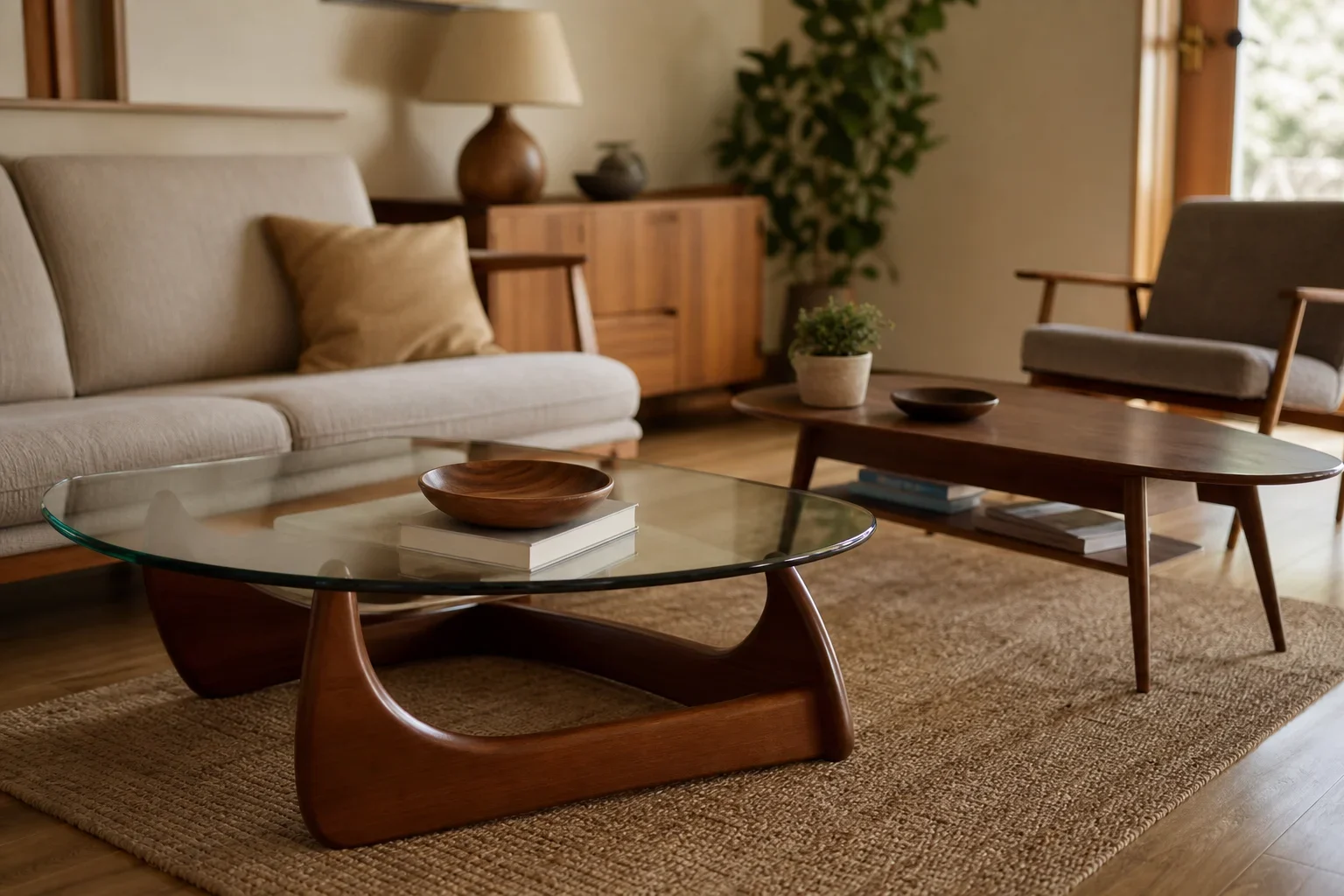
Picture two coffee tables you're weighing for the same living room, both online listings. The first is a plain kidney-shaped table with tapered legs, listed as "mid-century style," no maker named, priced well under what a documented original would cost. There's nothing to authenticate — it's already being sold honestly as reproduction-inspired, and the shape is the whole appeal. That's a straightforward budget-inspired buy: check the listed dimensions fit your space and move on.
The second is listed as an original Adrian Pearsall biomorphic coffee table with a specific model reference and a price that assumes it's genuine. Here the calculus changes — that's exactly the kind of designer-attributed piece where checking joinery, looking for a maker's mark or label, and comparing proportions against documented examples is worth the twenty minutes, because the price gap between "real" and "inspired by" is large enough to matter. This is a hypothetical pair, not a real listing, but it illustrates the split: spend your authentication effort on the pieces that claim a name, not the ones that don't.
When Vintage Actually Earns the Higher Price
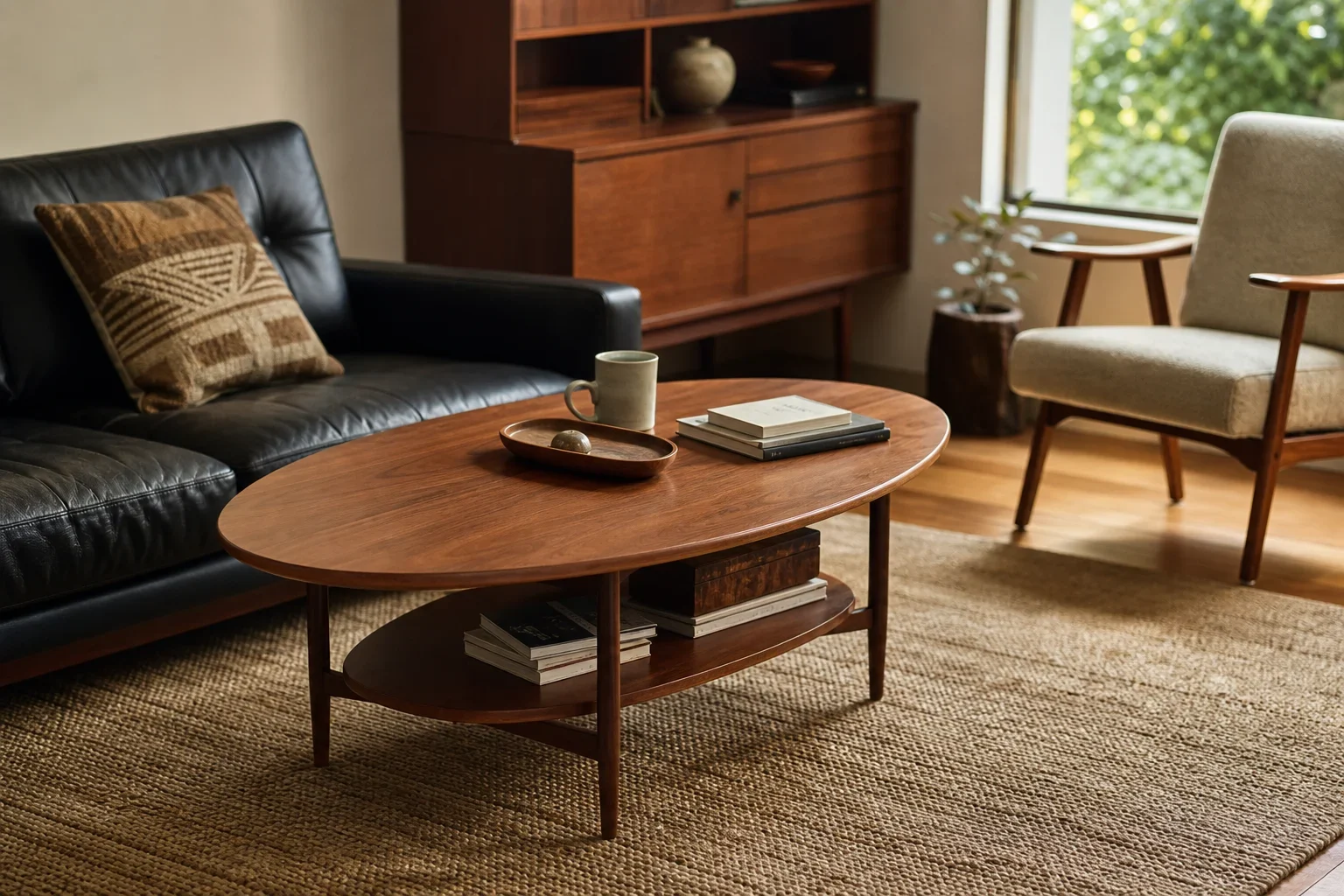
Vintage or licensed reissue is worth the premium for a coffee table mainly when the design itself is the reason you want it — a documented Noguchi table, a licensed Saarinen reissue, or a piece with clear maker's marks and consistent construction details for its claimed era. Reproductions sometimes use particle board or MDF in structural areas where an authentic period piece would use solid secondary wood, and unusually light weight for a claimed solid-wood table is a common red flag worth noting even on a low-stakes purchase. Common reproduction tells also include machine-perfect symmetry and a finish that's evenly worn across the whole surface rather than showing wear concentrated at edges and stress points — useful to know if you're evaluating a specific vintage claim, even for a modest table.
Making the budget-inspired choice easy
Once you've decided a coffee or side table doesn't need vintage authentication, the next question is simply finding one that fits your room, your style, and what's left in your furnishing budget. Nido's AI picks match real, in-stock products to your rooms and price range, so you can fill a low-stakes category like this one quickly and put your remaining time and budget toward the one or two pieces in your home where vintage or licensed really does matter.
Mid-century modern product idea: DCX 5x7 Area Rug Living Room: Modern Washable Indoor Carpet Blue & Yellow. An area rug isn't something to authenticate as vintage or reproduction, but it plays a supporting role in the room-level decision the article describes: once you've chosen a budget-inspired coffee table for its shape and proportions, a modern washable rug in a considered color pairing helps ground that low-stakes furniture choice and reinforces the overall mid-century look without adding any maker-premium complexity to worry about.
Frequently asked questions
Is it ever worth authenticating a budget coffee table?
Generally no. Authentication effort makes sense when a seller is claiming a specific designer or manufacturer and pricing accordingly. If a table is already sold as "MCM-style" or "inspired by" at a modest price, there's no premium at stake to verify, so your time is better spent checking that the size, sturdiness, and finish work for your room.
What are the fastest red flags to check on a vintage-claimed coffee table?
Lift a corner if you can — vintage solid wood or quality plywood is noticeably heavier than modern engineered wood, so a surprisingly light table claimed as solid vintage construction is worth questioning. Also look for particle board or MDF in structural areas, which wasn't used in quality furniture before the 1980s and is a strong sign of reproduction or later production.
Does veneer mean a coffee table is a lower-quality reproduction?
No. Veneer was never simply a cheap substitute for solid timber in mid-century furniture, and a high-quality veneered piece can be entirely authentic and desirable. What matters more is whether the veneer, grain direction, and hidden surfaces are consistent with the era and quality being claimed, not whether veneer is present at all.
How do I tell a licensed reissue from an unlicensed reproduction?
A licensed reissue is currently produced by the original manufacturer or an authorized successor and should be priced noticeably below a documented vintage original but still reflect quality materials and construction. Unlicensed reproductions are lower-quality copies sometimes sold deceptively as vintage; if a seller can't clearly explain whether a piece is original, licensed, or inspired-by, treat it as budget-inspired pricing regardless of what it's called.
Mid-century modern product idea: LEPOWER Tripod Floor Lamp Mid Century Modern Standing Lamps for Living Room | Light-Diffusing Linen Shade, Premium Rubberwood Tripod with E26 Base, Adding Warmth to Bedroom, Office & Study Corner Brown. A tripod floor lamp is a classic mid-century silhouette in its own right, and like the coffee tables discussed here, its value lies in the tapered-leg, warm-wood profile rather than in any designer attribution worth authenticating. It's a useful example of another low-stakes category where matching the recognizable mid-century shape and finish is enough to complete the room's look, freeing up authentication effort for pieces where a specific maker claim is actually on the table.
Should I worry about wear patterns on a coffee table the way I would on a chair?
Less so. Wear matters more for authentication on pieces where value depends on originality, like a designer-attributed table. For a general-use coffee table, wear that looks randomly or evenly distributed across the whole surface is a sign of artificial distressing worth noting if you're paying a vintage price, but for a budget-inspired piece it's mostly a cosmetic preference, not a red flag.
What's the quickest way to fill this category without overthinking it?
Decide your shape and size first — tapered legs, a low profile, and a warm wood tone are the visual signals that make a table read as mid-century modern — then look for in-stock options that match your room's dimensions and your remaining budget rather than hunting for a specific vintage listing.
Further reading: How to Identify Genuine Mid Century Modern Furniture (Real vs. Fake).
Shop the Mid-century modern look
As an Amazon Associate, Nido earns from qualifying purchases.

Solid Wood Side Table, 3 Tier Small End Table, Brown Accent Table | 100% Pine, Fluted Acrylic Top, Geometric Retro Style, MCM End Table, Open Storage, For Living Room, Couch, Bedroom, Narrow
This is a good example of the 'budget-inspired' side table the article recommends for low-stakes categories: its geometric, tiered silhouette echoes classic mid-century proportions without any designer attribution or vintage pricing to authenticate. Since side tables get the same light-duty use as coffee tables, an accent piece with the same tapered, retro-inspired shape delivers the visual read the article says matters most, letting you skip authentication effort entirely and put that time toward higher-stakes furniture decisions.
View on Amazon
DCX 5x7 Area Rug Living Room: Modern Washable Indoor Carpet Blue & Yellow
An area rug isn't something to authenticate as vintage or reproduction, but it plays a supporting role in the room-level decision the article describes: once you've chosen a budget-inspired coffee table for its shape and proportions, a modern washable rug in a considered color pairing helps ground that low-stakes furniture choice and reinforces the overall mid-century look without adding any maker-premium complexity to worry about.
View on Amazon
LEPOWER Tripod Floor Lamp Mid Century Modern Standing Lamps for Living Room | Light-Diffusing Linen Shade, Premium Rubberwood Tripod with E26 Base, Adding Warmth to Bedroom, Office & Study Corner Brown
A tripod floor lamp is a classic mid-century silhouette in its own right, and like the coffee tables discussed here, its value lies in the tapered-leg, warm-wood profile rather than in any designer attribution worth authenticating. It's a useful example of another low-stakes category where matching the recognizable mid-century shape and finish is enough to complete the room's look, freeing up authentication effort for pieces where a specific maker claim is actually on the table.
View on Amazon