How to Organize Vintage Furniture Listings by Authenticity Before You Buy
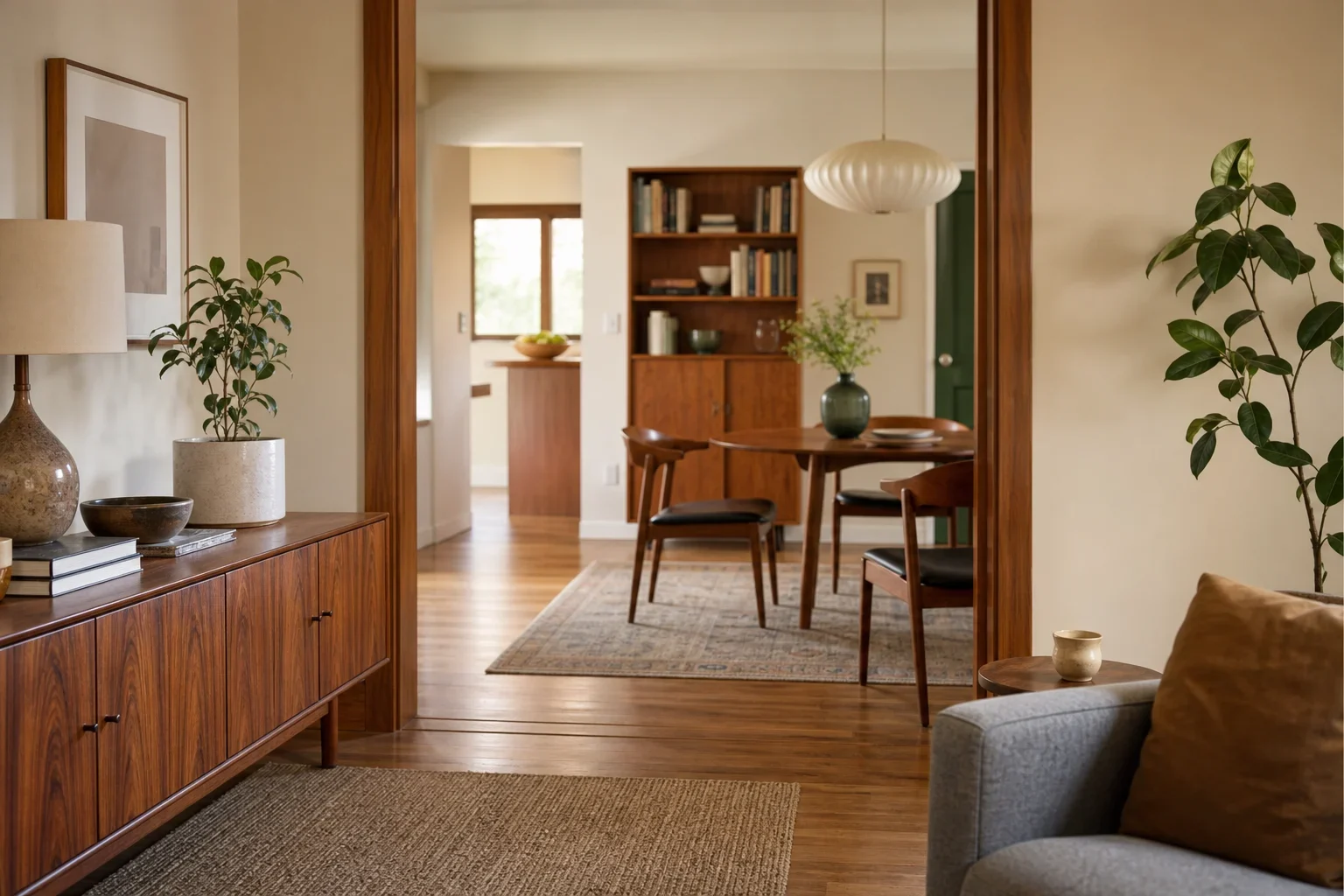
Design theme: Mid-century modern
A practical walkthrough for first-time MCM furnishers: how to organize vintage furniture listings by authenticity tier so you compare apples to apples instead of forty open tabs.

As an Amazon Associate, Nido earns from qualifying purchases.
If you've ever had fifteen marketplace tabs open at once — one claiming to be a genuine Lane credenza, another an "MCM-inspired" lookalike from a discount site, a third you're not sure about at all — you already know the real problem isn't finding vintage furniture. It's keeping track of it. This guide walks through a simple way to organize vintage furniture listings by authenticity so you can compare a real find to a reproduction to a budget-inspired piece on equal footing, instead of relying on memory and browser history.
This is a supporting piece to Nido's broader guide on choosing between vintage, reproduction, and budget-inspired mid-century furniture. Here, we're focused narrowly on the organizing step: what to do with a listing the moment you find it, so your decision later is easy instead of overwhelming.
Why sorting matters more than searching
Authentication guides tend to focus on what to look for in person or in photos — joinery, maker's marks, materials, wear patterns. That's essential groundwork, but it solves only half the problem. The other half is logistical: once you've found ten or twenty candidate listings across Facebook Marketplace, Chairish, estate sale sites, and local classifieds, how do you keep straight which ones are likely authentic, which are honest reproductions, and which are budget-friendly stand-ins — especially when you're also tracking room, price, and whether it fits your space?
Without a system, most people end up re-opening the same listings repeatedly, forgetting which credenza had the dovetail drawers and which one didn't, and eventually either overpaying out of fatigue or giving up and buying whatever's easiest.
Organize vintage furniture listings by authenticity: a three-tier system
Before you save anything, decide on three simple tags. These mirror the categories that authentication researchers commonly use when separating real finds from reproductions, and they give you a consistent way to label every listing the moment you save it.
Mid-century modern product idea: Bme Georgina Sideboard 2 Doors & 3 Drawers, Mid Century, Teak Brown, 61". A listing like this teak sideboard is the exact kind of candidate the article's three-tier system is built for: when you save it, note whether the listing itself claims 'mid century' styling versus vintage or licensed provenance, then tag it accordingly (likely Tier 2 or 3 given the modern listing format) rather than assuming it's an original find. Use it as a live example while practicing the walkthrough — paste the link, tag room and tier, and add one authentication note about what the listing does or doesn't claim about its origins.

Tier 1: Likely vintage original
The listing shows construction details associated with the claimed era — hand-cut or consistent dovetail joinery, solid secondary wood rather than particle board, and a maker's mark or label that's at least plausible for the manufacturer named. These pieces carry the highest price and the most research burden, so tag them clearly as needing a closer look before you commit.
Tier 2: Licensed reissue or honest reproduction
The seller is upfront that the piece is a current production run or a licensed reissue of an original design, not a vintage find. These can be excellent value and don't require the same authentication scrutiny — just confirm the price reflects that it isn't a vintage original.
Tier 3: Budget-inspired lookalike
New furniture that borrows mid-century proportions — tapered legs, warm wood tones — without claiming any vintage or licensed pedigree. Perfectly fine for low-stakes pieces like a coffee table or side table where authenticity isn't the point.
A walkthrough: saving and sorting your first ten listings
Here's a practical sequence to try the next time you're hunting for a specific piece, like a sideboard or a lounge chair:
- Paste the link the moment you find it. Nido's paste-a-link tool pulls in the photo, name, and price automatically when you drop in a marketplace or dealer URL, so you're not retyping details or losing the listing in a closed tab.
- Tag it by room and by tier. As you save each one, note which room it's for and which authenticity tier it looks like based on the listing photos and description — vintage original, reproduction, or budget-inspired.
- Add one authentication note. A single line is enough at this stage: "dovetail drawers visible," "seller says licensed reissue," or "no maker's mark mentioned." You're not writing a full appraisal — just leaving yourself a trail.
- Group by room using your room-by-room plan. Once a handful of listings are saved, sort them against your room plan so you can see, for example, that you've got three candidate credenzas for the living room but nothing yet for the bedroom dresser.
- Revisit in batches, not one at a time. With everything tagged and grouped, you can compare three sideboards side by side on price and tier instead of reopening old tabs and trying to recall which was which.
A worked example (hypothetical)
Say you're furnishing a first apartment living room and searching for a teak credenza. Over a week of browsing, you come across three listings:
Mid-century modern product idea: Karl home Mid-Century Lounge Accent Chair, Brown. This lounge chair listing is a good practice case for Tier 2 or Tier 3 tagging since its title points to a mid-century-inspired design rather than a vintage or dealer-verified original. Save it alongside any vintage lounge chair candidates you're comparing, tag it by room and tier, and note that its price should be checked against new-production expectations rather than scrutinized for joinery or maker's marks the way a claimed original would be.
- Listing A: A local estate sale posting, $650, photos show dovetailed drawers and a faded label on the back. You tag it Tier 1 — needs closer look and note "label present, dovetails visible, confirm maker before offering."
- Listing B: A dealer site selling a licensed reissue of a known Danish design, $900, clearly labeled as current production. You tag it Tier 2 and note "no authentication needed, price should reflect reissue not vintage."
- Listing C: A big-box retailer's "mid-century inspired" credenza, $349, new. You tag it Tier 3 and note "fine as a budget stand-in if A falls through."
With all three saved, tagged, and sorted by room, the decision becomes straightforward: investigate Listing A first since it has the best shot at being a genuine vintage piece worth the research time, keep Listing B as a safe fallback, and hold Listing C in reserve if the budget needs to flex. This is a hypothetical walkthrough to illustrate the sorting process — treat the prices and details as illustrative, not quoted from any real listing.
Checklist: tags to add to every saved listing
- Room it's intended for
- Authenticity tier (vintage original / licensed reissue or reproduction / budget-inspired)
- One-line construction or materials note from the photos (joinery, wood, hardware)
- Whether a maker's mark or label is visible or mentioned
- Asking price and whether it matches the tier
- Open question to resolve before buying (e.g., "ask seller for underside photo")
Keep this simple. The goal isn't a research dossier for every item — it's enough structure that you can glance at your saved list and immediately know what you're comparing.
Frequently asked questions
What's the fastest way to organize vintage furniture listings by authenticity without overthinking it?
Use three tags only — vintage original, reproduction or reissue, and budget-inspired — and apply one to every listing the moment you save it. Resist the urge to build an elaborate spreadsheet; a consistent three-tier label applied immediately is more useful than a detailed system you abandon after a week.
Do I need to confirm authenticity before saving a listing, or after?
Save first, verify later. Tag a listing with your best guess at the authenticity tier based on the photos and description, then do the closer inspection — joinery, materials, maker's marks — only for the handful of listings that make your shortlist. Trying to fully authenticate every listing before saving it wastes time on pieces you may never pursue.
How many listings should I compare before deciding on a piece?
There's no fixed number, but three to five saved candidates per room category (sideboard, lounge chair, dining table) is usually enough to make a confident comparison without endless browsing. Once you've sorted them by tier and room, it typically becomes clear which one or two are worth the follow-up questions to the seller.

Mid-century modern product idea: Tribesigns 2-Tier Solid Wood Side Table, Mid-Century Modern End Table with Storage Shelves, Tall Slim Side Table for Couch with Unique Legs, Long Bedside Table for Bedroom, Living Room, Cherry. A side table like this fits naturally into Tier 3 of the sorting system — new furniture borrowing mid-century lines without any vintage claim — making it a low-stakes example for the checklist's 'asking price and whether it matches the tier' step. It's a useful stand-in to tag and hold in reserve the way Listing C is treated in the worked example, while your research time stays focused on higher-stakes vintage candidates.
What should I do if a listing doesn't mention a maker's mark at all?
Tag it as unverified rather than discarding it outright — many genuine vintage pieces were sold without prominent branding or have lost their original labels over time. Note it as an open question and ask the seller for additional photos of the underside, drawer interiors, or back panel before ruling it in or out.
Should reproductions and budget-inspired pieces get the same scrutiny as vintage originals?
No. Reproductions and budget-inspired pieces mainly need a price check — does the asking price match what you'd expect for new or licensed production — rather than a full authentication pass. Save your detailed inspection time for pieces claiming vintage or designer origin, where getting it wrong costs more.
What should I keep after I actually buy a piece?
Hold onto any documentation the seller provides — receipts, photos from the listing, and any notes about provenance or prior ownership. This becomes useful reference material if you ever want to resell the piece or simply confirm its history later.
Can this sorting approach work across multiple rooms at once?
Yes — tagging each saved listing by room as well as by authenticity tier lets you see your whole apartment's shopping list in one place, so you can spot gaps (like no bedroom dresser candidates yet) without losing track of what you've already found for the living room.
Shop the Mid-century modern look
As an Amazon Associate, Nido earns from qualifying purchases.

Bme Georgina Sideboard 2 Doors & 3 Drawers, Mid Century, Teak Brown, 61"
A listing like this teak sideboard is the exact kind of candidate the article's three-tier system is built for: when you save it, note whether the listing itself claims 'mid century' styling versus vintage or licensed provenance, then tag it accordingly (likely Tier 2 or 3 given the modern listing format) rather than assuming it's an original find. Use it as a live example while practicing the walkthrough — paste the link, tag room and tier, and add one authentication note about what the listing does or doesn't claim about its origins.
View on Amazon
Karl home Mid-Century Lounge Accent Chair, Brown
This lounge chair listing is a good practice case for Tier 2 or Tier 3 tagging since its title points to a mid-century-inspired design rather than a vintage or dealer-verified original. Save it alongside any vintage lounge chair candidates you're comparing, tag it by room and tier, and note that its price should be checked against new-production expectations rather than scrutinized for joinery or maker's marks the way a claimed original would be.
View on Amazon
Tribesigns 2-Tier Solid Wood Side Table, Mid-Century Modern End Table with Storage Shelves, Tall Slim Side Table for Couch with Unique Legs, Long Bedside Table for Bedroom, Living Room, Cherry
A side table like this fits naturally into Tier 3 of the sorting system — new furniture borrowing mid-century lines without any vintage claim — making it a low-stakes example for the checklist's 'asking price and whether it matches the tier' step. It's a useful stand-in to tag and hold in reserve the way Listing C is treated in the worked example, while your research time stays focused on higher-stakes vintage candidates.
View on Amazon