Mid-Century Modern Style Quiz: Danish vs. Californian vs. Brazilian Modern
Design theme: Mid-century modern
Not sure if you're drawn to Danish, Californian, or Brazilian modern? Take a quick mid-century modern style quiz and use this checklist to find your lane before you start shopping.
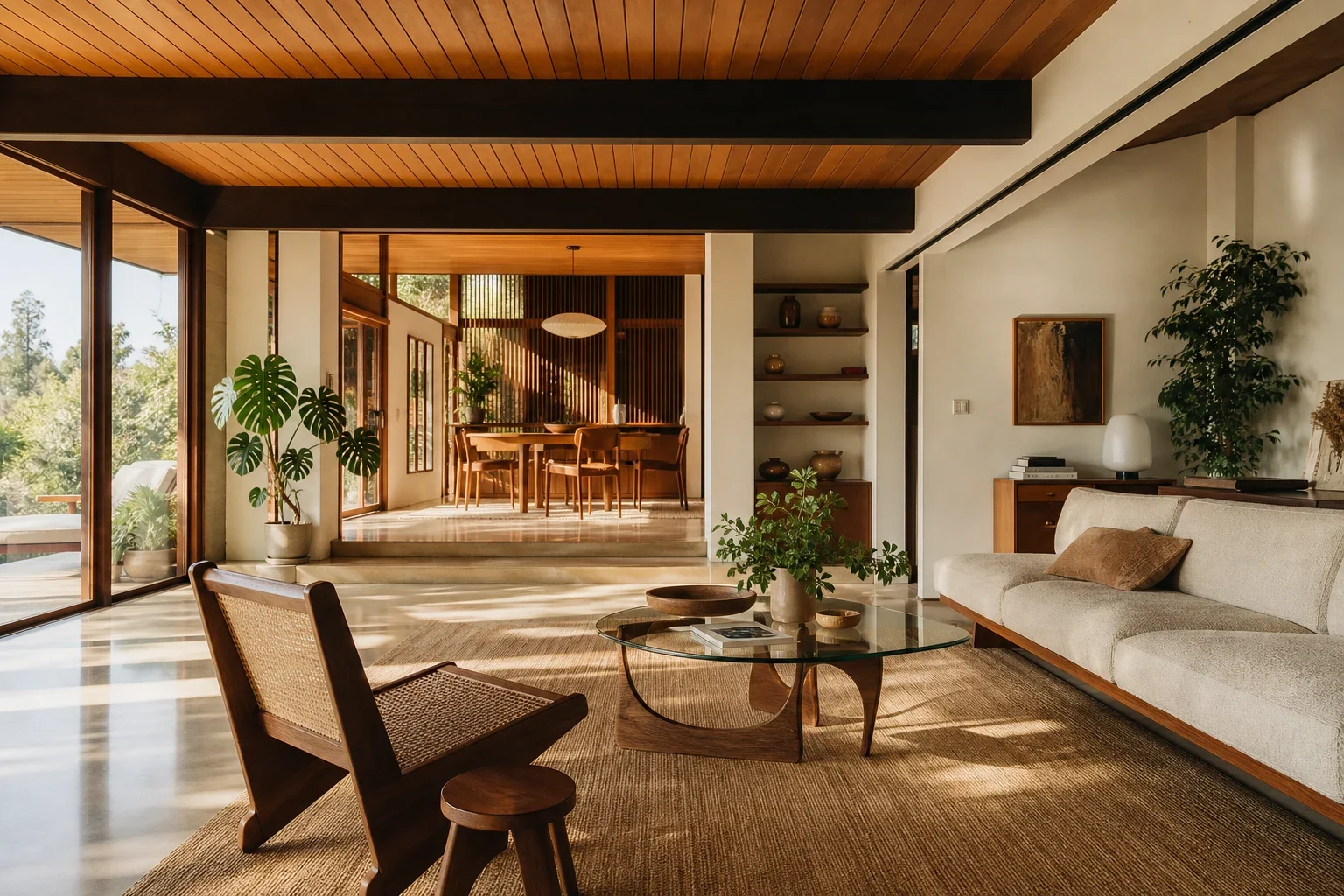
As an Amazon Associate, Nido earns from qualifying purchases.
"Mid-century modern" sounds like one style, but it's really an umbrella over several distinct regional looks. Before you spend a weekend scrolling estate sales or marketplace listings, it helps to run a quick mid-century modern style quiz — Danish vs. Californian vs. Brazilian — so you know which silhouettes, woods, and proportions you're actually hunting for. Picking a lane first saves you from buying pieces that technically qualify as "MCM" but don't sit together in the same room.
Why a mid-century modern style quiz helps before you shop Danish vs. Californian looks
Mid-century modern furniture spans roughly the 1940s through the 1960s and includes several national design traditions that grew up around the same time but look noticeably different in person. General guides to the era describe common threads — clean lines, warm woods, tapered or splayed legs, and a preference for function over ornament — but those traits show up differently depending on where a piece was designed.
Teak, walnut, oak, rosewood, and beech were all widely used across the mid-century period, often as solid wood or as high-quality veneer over a stable core. Which of those woods, and which overall proportions, feel most like "you" is exactly what a short style quiz is built to surface — before you start evaluating individual listings for authenticity or price.
Three mid-century modern looks, side by side
Danish Modern
Danish modern leans toward restraint: slim tapered legs, visible joinery, and a strong emphasis on craftsmanship over decoration. Teak and rosewood are closely associated with this tradition, and pieces often show careful, hand-finished construction details rather than heavy ornamentation. If you're drawn to understated silhouettes and a warm, honest wood finish, Danish modern is likely your reference point.
Mid-century modern product idea: Bme Georgina Sideboard 2 Doors & 3 Drawers, Mid Century, Teak Brown, 61". Once a reader's quiz result points toward Danish modern, a teak-toned sideboard with clean door-and-drawer proportions is a useful example to flag as the kind of case good worth shortlisting: it's the warm, quiet wood tone and restrained silhouette the article describes as a Danish signal, so you could suggest readers use this listing as a visual reference when deciding whether their own saved pieces lean Danish or Californian.
Californian Modern
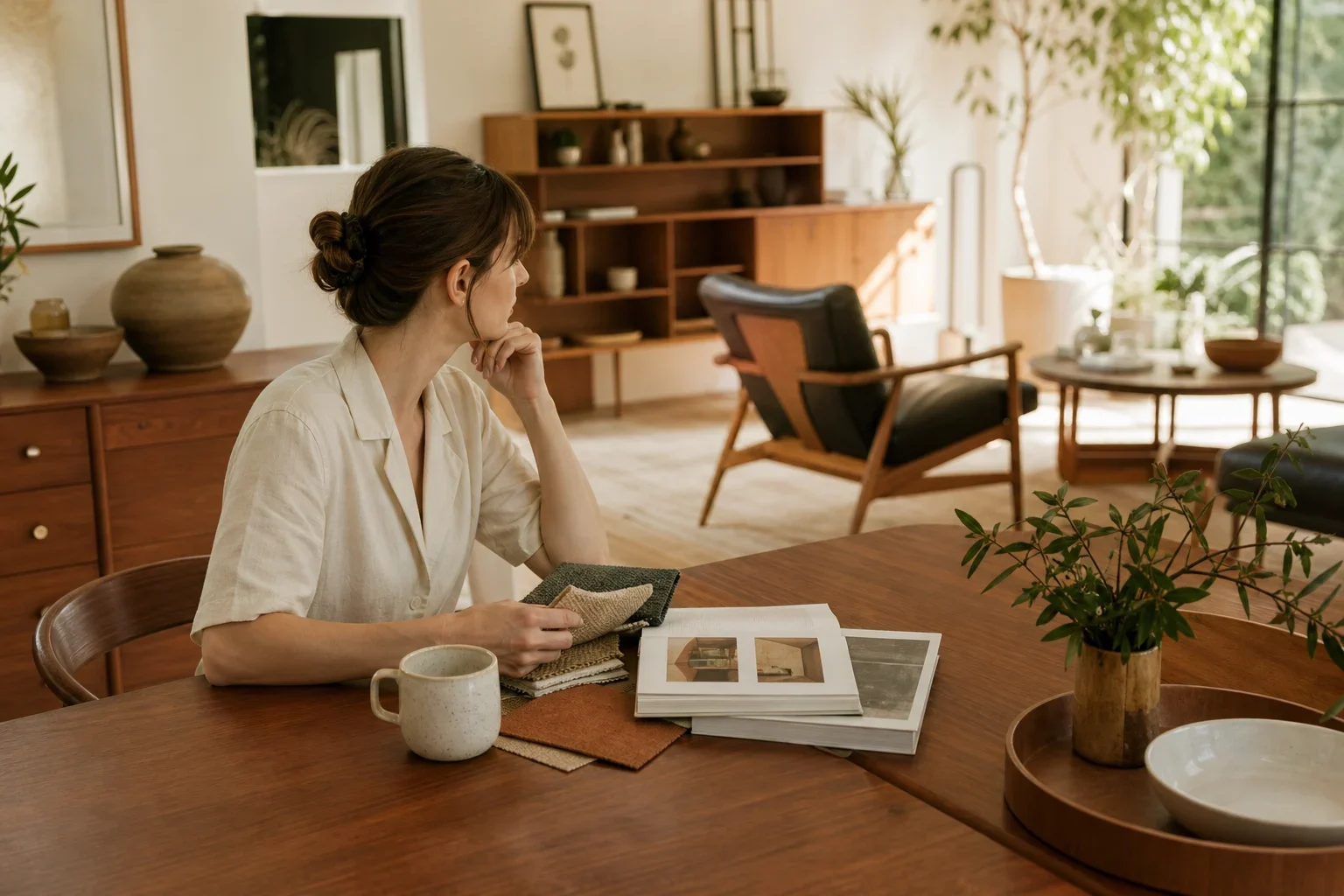
Californian modern (sometimes just called American mid-century) tends to feel a little more casual and indoor-outdoor than its Danish counterpart — lower, longer case goods, lighter overall proportions, and designs built for everyday postwar family living rather than formal display. American manufacturers of the period produced furniture in this vein at a range of price points, which is part of why it's so common at estate sales today.
Brazilian Modern
Brazilian modern is the boldest of the three: sculptural curves, exposed exotic hardwoods, and a willingness to prioritize dramatic form alongside function. If straight Danish restraint feels too quiet for your taste, but you still want mid-century bones, Brazilian modern pieces usually bring the most visual drama to a room.
A worked example: using the quiz to pick a lane
This is a hypothetical walkthrough, not a record of a real purchase.
Imagine a reader furnishing a first apartment who knows they love "that mid-century look" but can't articulate more than that. They take Nido's two-minute style quiz, answering seven quick visual preference questions. The results lean toward simple, uncluttered shapes and warm wood tones rather than bold curves or saturated color — a signal that points toward Danish modern rather than the more sculptural Brazilian end of the spectrum. With that in hand, they stop saving every "MCM" listing that crosses their feed and start filtering specifically for slim-legged, teak or walnut pieces with minimal ornamentation — a much smaller, more decisive shopping list.
Mid-century modern product idea: Karl home Mid-Century Lounge Accent Chair, Green. A lounge accent chair in a saturated color works well as a talking point for the article's Californian section, since that look is described as more casual and livable than strict Danish restraint; pointing to this chair lets readers compare a bolder-hued seat against the quieter teak and walnut pieces to see which mood actually matches their quiz result.

A quick self-check if you'd rather skip the quiz
- Look at the legs. Very slim, angled, almost delicate legs usually point toward Danish; slightly chunkier or more sculptural bases point toward Californian or Brazilian.
- Look at the wood tone. A love of pale, uniform teak suggests Danish; a preference for darker, richer rosewood or exotic grain suggests Brazilian; lighter, more varied American woods often suggest Californian.
- Look at the overall mood. Quiet and restrained leans Danish; casual and livable leans Californian; dramatic and sculptural leans Brazilian.
- Look at what you keep saving. Scroll your own saved listings or pins — the pattern in your own choices is often more honest than any single quiz question.
What to do with your answer
Once you know which look you're actually chasing, the next decision is how to source it — a genuine vintage piece, a licensed reissue, or a well-made budget-inspired lookalike — for each specific item on your list. That's a separate, piece-by-piece decision that's easier to make once you're not also second-guessing your overall style. Narrowing your lane first means every chair, table, and lamp you consider afterward gets judged against one clear picture of your room, rather than against the whole sprawling world of "mid-century modern."
Frequently asked questions
What's the fastest way to tell Danish and Californian modern apart?
Start with the legs and the wood tone. Danish modern tends toward very slim, tapered legs and teak or rosewood with a quiet, consistent finish. Californian modern often has slightly more casual proportions and a broader range of American-sourced woods, since it was produced by manufacturers serving everyday postwar households rather than a single national design tradition.
Do I need to pick just one sub-style for my whole apartment?
No. Many real rooms mix influences — a Danish-style dining set with a more casual Californian sideboard, for example. The point of narrowing your preference first is to have a clear anchor style, not a strict rule; it just makes individual buying decisions faster and keeps the room from feeling like a random assortment of "anything vintage-ish."
Where does Brazilian modern fit if I like elements of both Danish and Californian?
Brazilian modern tends to appeal to people who like mid-century shapes but want more visual drama than Danish restraint typically offers. If a style quiz result shows you gravitating toward sculptural curves and bold wood grain rather than quiet straight lines, that's a signal worth paying attention to before you shop.
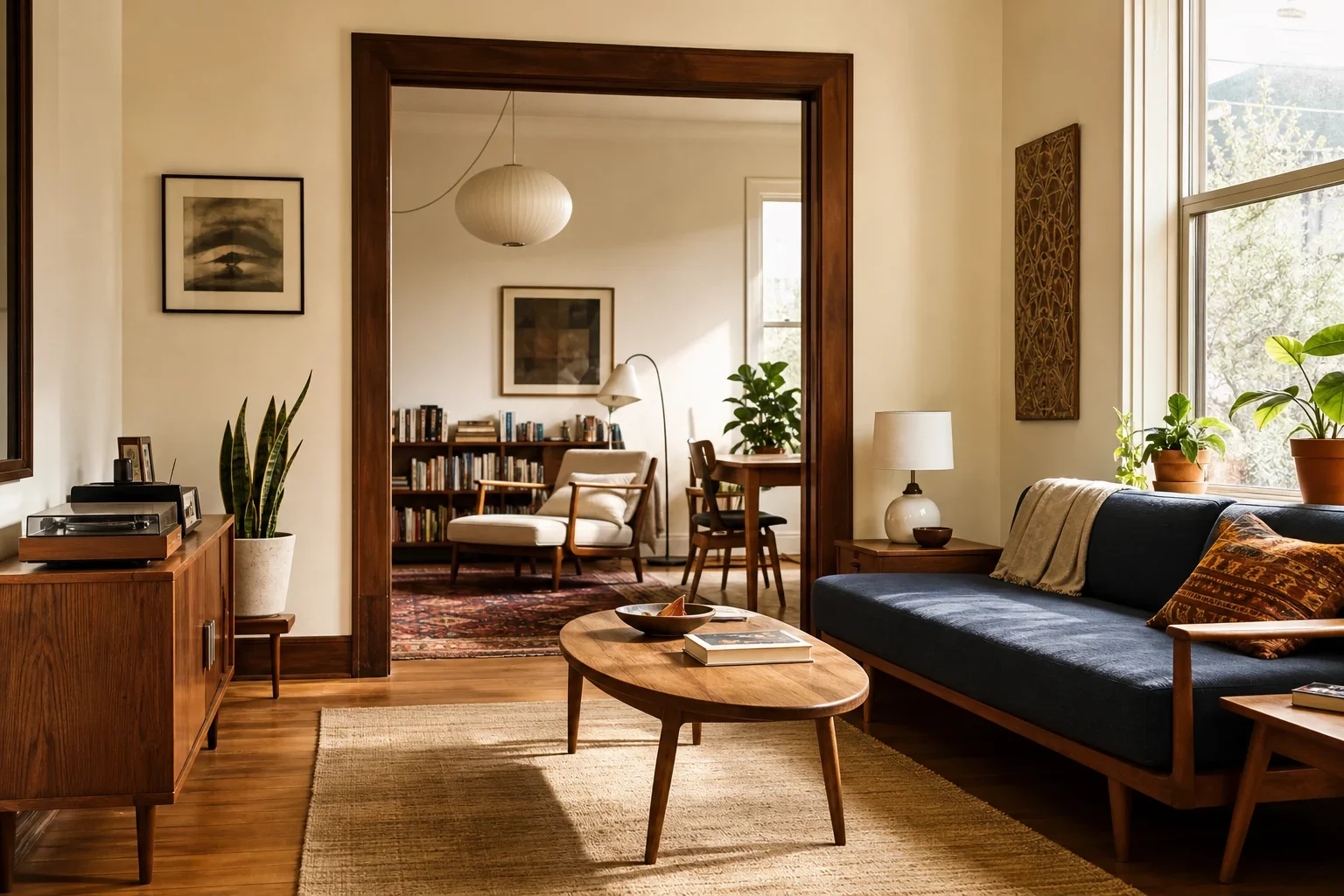
Mid-century modern product idea: Mid Century Modern Coffee Table, Wood Coffee Table with Storage, Walnut. A walnut coffee table with built-in storage fits naturally into the piece-by-piece shopping stage the article describes after someone identifies their lane, since walnut is named alongside teak as a core mid-century wood; it's a concrete example to reference when explaining how to judge an individual item against a chosen Danish or Californian direction.
How does a style quiz actually help once I start shopping?
Nido's style quiz takes about two minutes and uses seven quick visual picks to identify your aesthetic and a comfortable price range, so the recommendations you see afterward are already filtered toward pieces that match your look rather than the full, undifferentiated range of mid-century listings.
What if none of the three looks feels exactly right?
That's common — these are reference points, not strict categories, and plenty of real homes blend them. Treat your quiz result and this checklist as a starting filter rather than a final verdict, and feel free to adjust as you see more real pieces in person or in listing photos.
Does picking a sub-style affect whether I should buy vintage, reissue, or budget-inspired pieces?
Not directly — that's a separate decision based on each specific item's price, condition, and how much the authenticity of that particular piece matters to you. But knowing your sub-style first means you're applying that vintage-versus-reproduction decision to pieces that actually belong together, instead of to a random mix of "MCM-ish" finds.
Shop the Mid-century modern look
As an Amazon Associate, Nido earns from qualifying purchases.

Bme Georgina Sideboard 2 Doors & 3 Drawers, Mid Century, Teak Brown, 61"
Once a reader's quiz result points toward Danish modern, a teak-toned sideboard with clean door-and-drawer proportions is a useful example to flag as the kind of case good worth shortlisting: it's the warm, quiet wood tone and restrained silhouette the article describes as a Danish signal, so you could suggest readers use this listing as a visual reference when deciding whether their own saved pieces lean Danish or Californian.
View on Amazon
Karl home Mid-Century Lounge Accent Chair, Green
A lounge accent chair in a saturated color works well as a talking point for the article's Californian section, since that look is described as more casual and livable than strict Danish restraint; pointing to this chair lets readers compare a bolder-hued seat against the quieter teak and walnut pieces to see which mood actually matches their quiz result.
View on Amazon
Mid Century Modern Coffee Table, Wood Coffee Table with Storage, Walnut
A walnut coffee table with built-in storage fits naturally into the piece-by-piece shopping stage the article describes after someone identifies their lane, since walnut is named alongside teak as a core mid-century wood; it's a concrete example to reference when explaining how to judge an individual item against a chosen Danish or Californian direction.
View on Amazon