Where to Buy Vintage Mid-Century Modern Furniture: Estate Sales, Marketplaces, or Local Listings
Design theme: Mid-century modern
A practical venue filter for where to buy vintage mid-century modern furniture — comparing estate sales, curated marketplaces, and local listings on trust, fees, and shipping lead time.
As an Amazon Associate, Nido earns from qualifying purchases.
Once you know how to spot a real mid-century piece, the next question is where to buy vintage mid-century modern furniture without overpaying, waiting too long, or getting stuck with something misrepresented. The honest answer is that no single venue is best for everything — estate sales, curated resale marketplaces, and local classifieds each trade off differently on trust, price, and how long a piece takes to actually land in your apartment. This guide is a venue filter, not an authenticity checklist: it assumes you already know what to look for in a piece, and helps you decide where to go looking for it.
Where to buy vintage mid-century modern furniture: three venues compared
Most first-time buyers end up choosing between three broad categories of venue. Each has a different relationship between price, risk, and speed.
Estate sales and local walkthroughs
Estate sales are where a lot of genuine mid-century furniture surfaces first, often before a dealer has had a chance to price it for the resale market. Estate sale professionals note that mid-century pieces are currently one of the categories most likely to surprise sellers with their value, and that platforms covering local sales have made it easier for shoppers to track what's coming up in their area. The upside is price — sellers and estate companies aren't always pricing against dealer comps. The downside is that you're buying as-is, usually with no return window, and you need to do your own inspection on the spot.
Curated vintage marketplaces
Sites built specifically around vintage and designer furniture — the kind estate professionals point shoppers toward for comparison pricing — tend to carry more documentation, clearer provenance notes, and dealer-level descriptions. That documentation comes at a cost: dealer asking prices on these platforms typically run higher than what the same piece would sell for at an estate sale, partly because the seller has already done the authentication and staging work for you. These are a reasonable default for a first MCM purchase if you'd rather pay for certainty than chase a bargain.
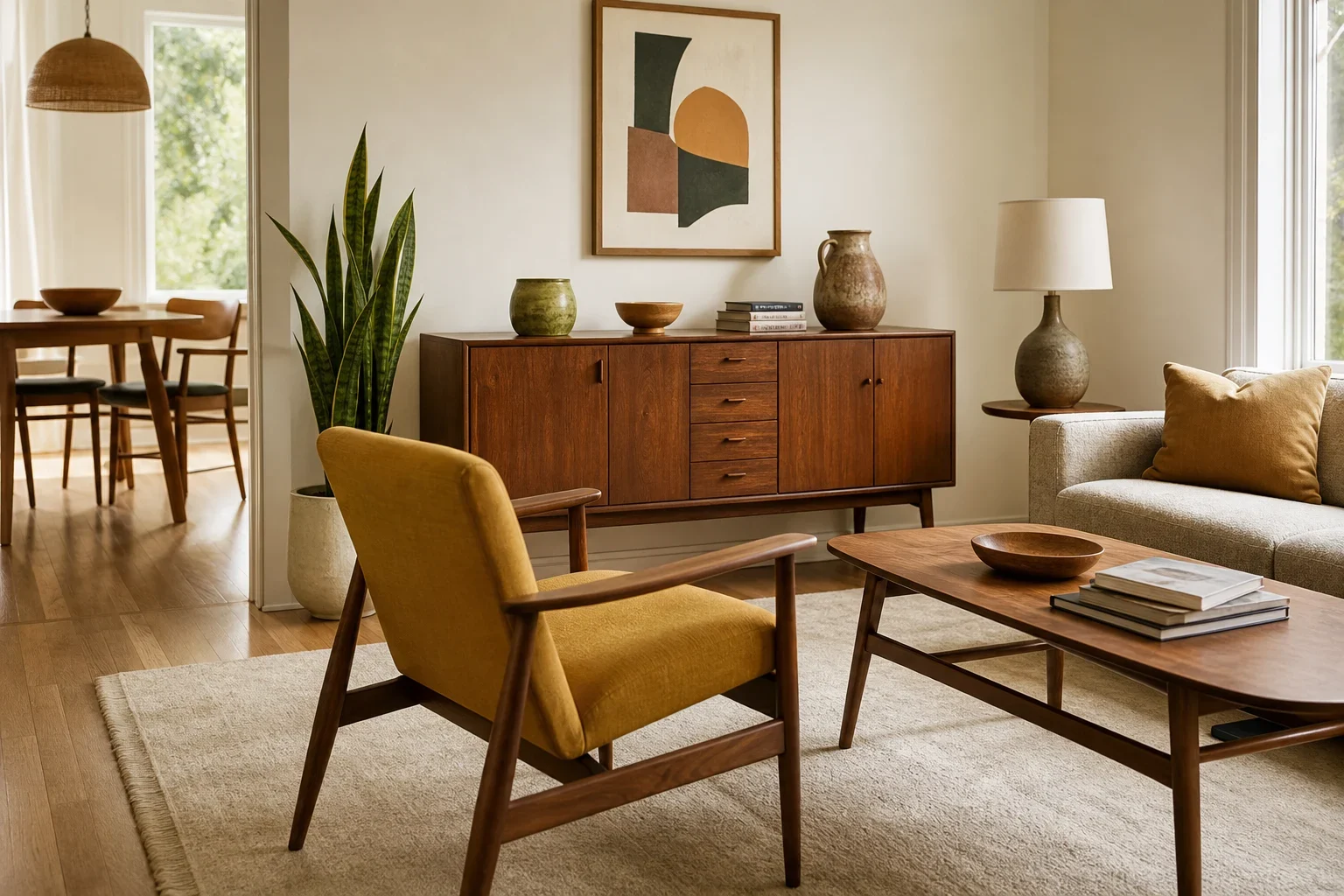
Mid-century modern product idea: Bme Georgina Sideboard 2 Doors & 3 Drawers, Mid Century, Teak Brown, 61". The worked example in this guide centers on a reader hunting for a teak credenza before a move-in deadline — exactly the kind of case-good this sideboard represents as a new, readily available option. If a vintage search stalls past your timeline, a reproduction piece with a similar silhouette and finish lets you fill the slot in a room plan now, then swap in an authenticated original later if one turns up through an estate sale or curated marketplace.
Local classifieds and general marketplaces
General local listing sites sit at the opposite end from curated marketplaces: lowest friction, lowest documentation, and the widest range of accuracy in how pieces are described. They can be a genuine source of real vintage finds, but the burden of verifying age, materials, and condition falls entirely on you, in person, before any money changes hands.
A decision filter: trust, fees, and shipping lead time
Rather than treating venue choice as a style preference, run each option against the same three questions before you buy.
- Trust: Does the listing include a maker's mark, measurements, and close-up photos of joinery, drawer interiors, and the underside — or just a flattering angle and a price?
- Fees and markup: Curated marketplaces usually build authentication and seller vetting into the price. Estate sales and local listings may be cheaper, but that gap is the price of doing your own verification.
- Shipping and lead time: A credenza bought three states away through a marketplace may need freight shipping arranged separately from the purchase, which can add real time to a move-in deadline. A local estate sale or classifieds find you can transport yourself removes that variable entirely.
Worked example: furnishing a studio before a winter move
This is a hypothetical, not a real transaction. Imagine a reader needs a teak credenza for a living room before a move-in date six weeks out. At a local estate sale, they find one priced well below marketplace comps, but the seller has no documentation and the sale ends in two days — they'd need to inspect the joinery and finish in person, on the spot, and arrange their own pickup. On a curated vintage marketplace, a similar piece is priced higher but comes with maker's-mark photos and a shipping estimate that fits the six-week window. On a local classifieds listing, a third credenza is priced between the two, with decent photos but no measurements and a seller who hasn't responded in three days. Given the deadline, the marketplace option is the lower-risk choice even at a higher price — the estate sale piece is only worth the discount if the reader can physically go look at it before the sale ends.
A quick venue checklist
- Ask directly whether a piece is original-period, a licensed reissue, or a later reproduction — reputable sellers in any venue should answer this plainly.
- Request or photograph the underside, drawer interiors, and any maker's mark before paying, regardless of venue.
- Compare the asking price against recent sold listings on a general marketplace, not just other active asking prices, since asking prices on curated sites tend to run above realized sale prices.
- Confirm who is responsible for shipping or freight and get a time estimate in writing if the piece isn't local.
- Keep any receipt, listing screenshot, or seller correspondence — this becomes your documentation if you ever want to resell or verify the piece later.
Because vintage shopping often means tabs open across an estate sale site, a marketplace, and a few local listings at once, it helps to collect candidates in one place as you go rather than relying on memory or bookmarks. Nido's paste-a-link feature lets you paste any product or listing URL and it fills in the name, photo, and price automatically, filing it by room so you can compare real candidates side by side before committing. And since vintage pieces can vary widely in price across venues, Nido's budget tool tracks what you've committed to spend across every room, so a higher-priced marketplace credenza doesn't quietly throw off the rest of your furnishing plan.

Mid-century modern product idea: Walnut Dresser for Bedroom,63"Wide 9 Drawer Mid Century Modern Chest. While the article focuses on living-room case goods, bedroom storage faces the same venue trade-offs. A new mid-century-styled dresser like this gives you a known lead time and no inspection risk, which is useful if your estate-sale or classifieds search for a vintage equivalent is still open-ended and you need bedroom storage settled before move-in.
Frequently asked questions
Where should a first-time buyer start when shopping for vintage mid-century modern furniture?
If you're buying your first vintage piece and want to minimize risk, a curated marketplace with documented listings is a reasonable starting point, since dealers there have typically already vetted maker's marks and condition. As you get more comfortable inspecting joinery and materials yourself, estate sales and local listings open up more affordable options.
What's the real difference between an estate sale and a curated marketplace like a dealer site?
An estate sale is usually unvetted and priced by the seller or estate company with limited furniture-specific expertise, while a curated marketplace listing has typically already been authenticated and described by a dealer. That difference in vetting is largely why marketplace asking prices run higher than what similar pieces sell for at estate sales.
How do I know if I'm paying a fair price for a vintage piece?
Check recently sold listings on a general marketplace rather than just comparing active asking prices, since asking prices on curated vintage sites tend to run higher than realized sale prices. For anything priced as a significant purchase, it's also worth comparing against a specialist dealer or auction house estimate before committing.
Mid-century modern product idea: MOFFE Mid Century Modern Real Wood Floor Lamp with 2 Shades for Two Looks. Lighting rarely shows up in estate listings with the same documentation as case goods, so a new mid-century-style floor lamp with interchangeable shades is a practical placeholder while you compare credenza or dresser candidates across venues — it lets you finish a room's look now without the shipping or verification lead time that vintage lighting often adds.
Should I buy a high-value piece without seeing it in person?
For pieces priced as a meaningful investment, it's worth treating the purchase the way specialists recommend for high-value vintage furniture — asking for detailed photos of construction, maker's marks, and condition, and considering a specialist opinion before paying, rather than relying on a few listing photos alone.
How much does shipping or lead time differ between these venues?
Local estate sales and classifieds finds you can transport yourself remove shipping lead time entirely, while marketplace purchases from out-of-state sellers often require freight arrangements that can add real time before move-in. If you're working against a move date, confirm shipping timelines before you buy, not after.
Do I need paperwork or a receipt when buying vintage furniture?
Yes — keep any receipt, listing screenshot, or seller message describing the piece's age and maker. This documentation doesn't guarantee authenticity on its own, but it becomes part of the piece's history if you ever want to verify, insure, or resell it later.
Shop the Mid-century modern look
As an Amazon Associate, Nido earns from qualifying purchases.

Bme Georgina Sideboard 2 Doors & 3 Drawers, Mid Century, Teak Brown, 61"
The worked example in this guide centers on a reader hunting for a teak credenza before a move-in deadline — exactly the kind of case-good this sideboard represents as a new, readily available option. If a vintage search stalls past your timeline, a reproduction piece with a similar silhouette and finish lets you fill the slot in a room plan now, then swap in an authenticated original later if one turns up through an estate sale or curated marketplace.
View on Amazon
Walnut Dresser for Bedroom,63"Wide 9 Drawer Mid Century Modern Chest
While the article focuses on living-room case goods, bedroom storage faces the same venue trade-offs. A new mid-century-styled dresser like this gives you a known lead time and no inspection risk, which is useful if your estate-sale or classifieds search for a vintage equivalent is still open-ended and you need bedroom storage settled before move-in.
View on Amazon
MOFFE Mid Century Modern Real Wood Floor Lamp with 2 Shades for Two Looks
Lighting rarely shows up in estate listings with the same documentation as case goods, so a new mid-century-style floor lamp with interchangeable shades is a practical placeholder while you compare credenza or dresser candidates across venues — it lets you finish a room's look now without the shipping or verification lead time that vintage lighting often adds.
View on Amazon