Eames Lounge Chair: Reproduction vs Original — A Buying Filter for Your Living Room
Design theme: Mid-century modern
A practical filter for deciding between a vintage Eames lounge chair, a licensed reissue, or a budget-inspired lookalike — with an inspection checklist and a worked example.
As an Amazon Associate, Nido earns from qualifying purchases.
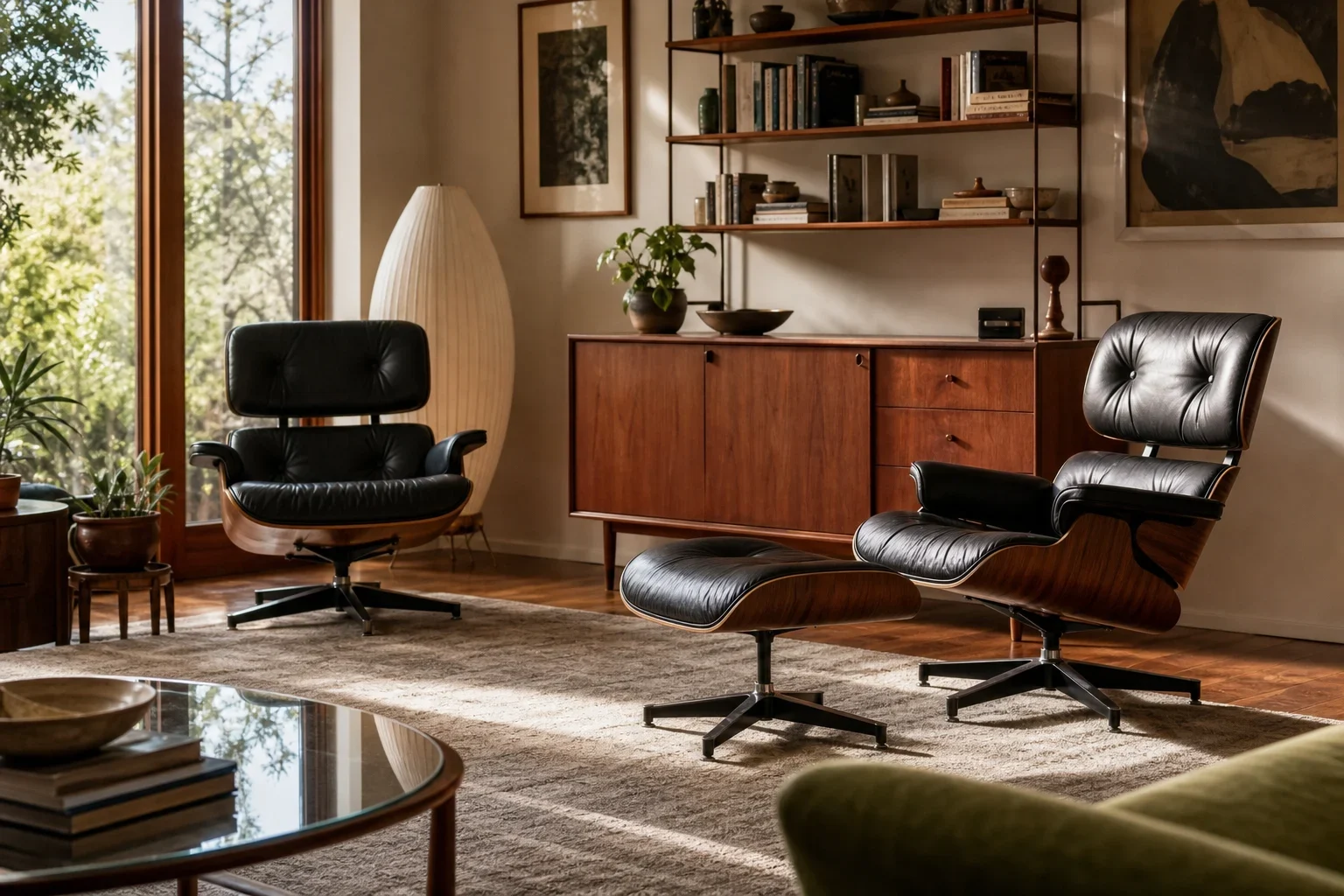
If one piece of furniture defines a mid-century modern living room, it's the lounge chair and ottoman — and few decisions in this style trigger more second-guessing than eames lounge chair reproduction vs original. The gap between a $150 lookalike, a licensed reissue, and a decades-old vintage original is enormous, and each one can be the right call depending on what you actually want from the chair. This guide gives you a simple filter for making that call, plus a checklist to run before you buy.
This piece is scoped to one category — the lounge chair — inside a wider decision framework. If you want the full room-by-room approach to vintage, reproduction, and budget-inspired furniture, see the vintage vs. reproduction buying filter hub guide.
Eames Lounge Chair Reproduction vs Original: The Three-Tier Filter
Before comparing prices, it helps to separate what you're actually shopping for. Research across identification and reproduction guides consistently describes the same three categories:
- Vintage original: A Herman Miller lounge chair actually manufactured during an earlier production run, with age-appropriate wear, materials, and (ideally) a maker's label or stamped date code.
- Licensed reissue: A current Herman Miller production model, made under the original design rights. It's not "vintage," but it's built to the manufacturer's own specification.
- Budget-inspired lookalike: A piece that borrows the silhouette — molded shell, tapered base, leather cushions — without any license or claim to the original design. Some sellers describe these honestly as "inspired by" designs that are now largely out of patent; others blur the line.
One industry source that sells its own unlicensed interpretations of modernist classics is upfront that these pieces are "design inspirations," not exact replicas, and that a true original from the original manufacturing run would use period-correct materials no longer produced today — which is a useful reminder that "inspired by" and "vintage original" are not the same claim, even when a listing photo looks similar.
How to tell an authentic Eames lounge chair from a reproduction
Run this five-point check before you buy, whether you're looking at an estate sale, a marketplace listing, or a chair already in someone's living room:

Mid-century modern product idea: Karl home Mid-Century Lounge Accent Chair, Green | Wide Curved Armrest, Linen Fabric, Lumbar Pillow Included, Solid Wood Frame, For Living Room, Bedroom, Balcony, Apartment. This piece works well as the budget-inspired tier discussed in the worked example — a mid-century-styled accent chair for readers who want the anchor-chair look in a living room without vintage-hunting or reissue costs. Its wide curved arm and solid wood frame echo the era's silhouette cues, making it a reasonable stand-in while the reader saves for or considers a licensed reissue down the line.
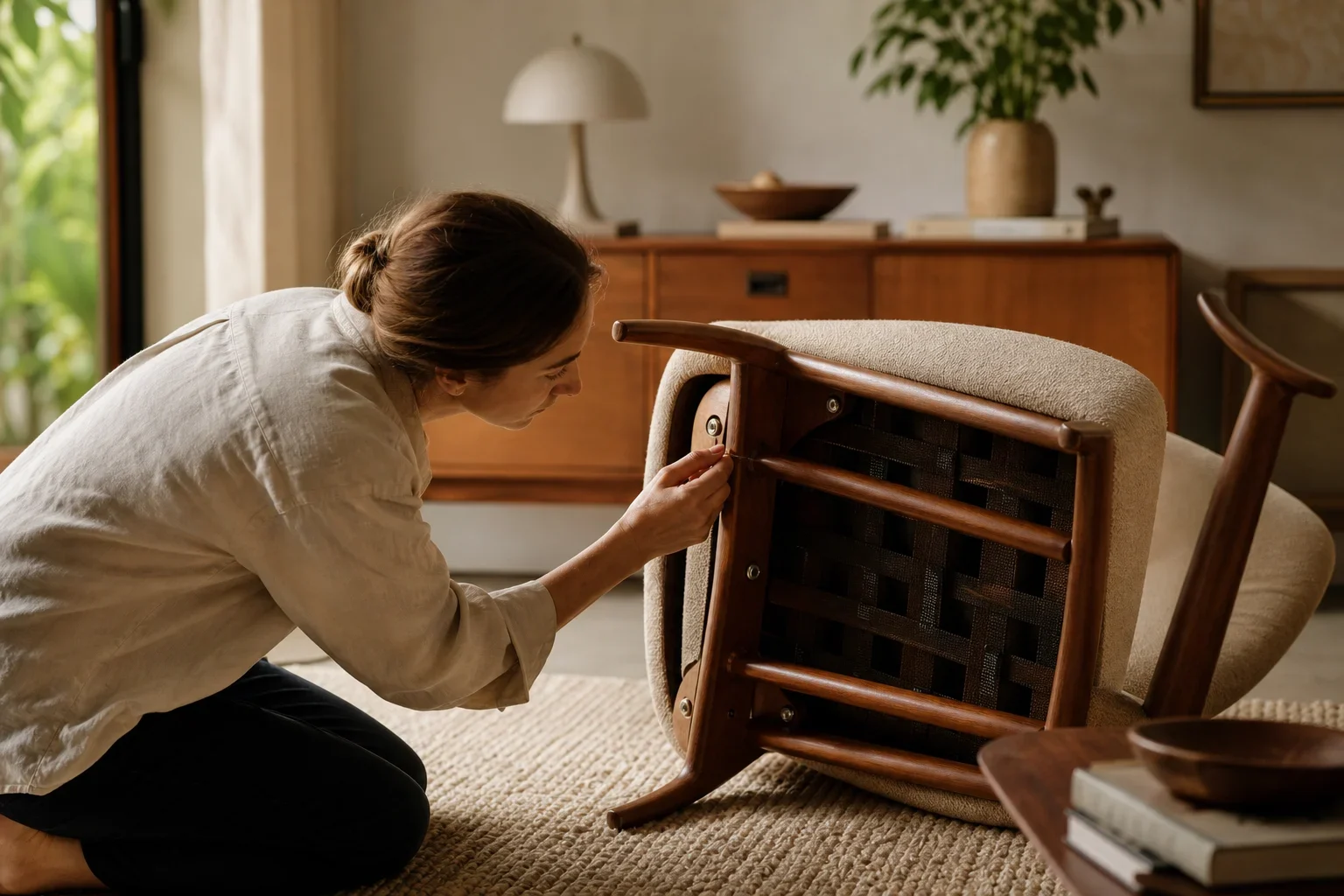
- Label or date code. Authentic Herman Miller Eames chairs typically carry a label or a date code stamped into the underside of the seat shell; the code format changed across decades, so it's worth confirming the format matches the era claimed. A label alone isn't proof — it should agree with everything else on this list.
- Shell material. Early Eames-style molded shells were produced in fiberglass; polypropylene shells came later, in the 1990s. If a chair is sold as an early original but the shell material doesn't match that timeline, treat it as a red flag.
- Plywood and veneer quality. Look at the back of the shell and the veneer grain on the exterior shell panels. Genuine vintage veneer tends to show natural, slightly irregular grain rather than a printed or repeating pattern.
- Wear that matches use. Authentic age shows up at contact points — armrests, headrest, base swivel — with wear that follows how the chair is actually sat in and touched, not distributed evenly across the whole piece. Uniform "distressing" is a common reproduction tell.
- Base and shock mounts. Check that the base type and shock-mount hardware are consistent with the claimed production era rather than newer replacement parts throughout.
None of these checks is decisive on its own — together they build a picture, which is the same approach identification guides recommend for any mid-century case good or chair.
A worked example: choosing a tier for a first living room
The following is a hypothetical scenario used to illustrate the decision, not a specific product recommendation.
Imagine a reader furnishing their first living room on a defined budget. They want the lounge chair to be the room's one "anchor" piece — the item guests notice — while everything else (side table, rug, floor lamp) stays budget-inspired. Three paths, worked through:
- If the chair is purely symbolic — bought mostly for the look, in a rental that will change again in two years — a budget-inspired lookalike does the job. The construction quality won't match an original, but the financial risk is low and it's easy to replace later.
- If the reader wants the real design without vintage-hunting risk — no interest in verifying date codes or traveling to inspect a stranger's estate sale find — a licensed reissue is the more predictable choice. It carries the authorized design and materials, at a price still well below an authenticated vintage original.
- If the reader specifically wants an aged, one-of-a-kind original — patina, an authenticated stamp, and a piece with real production history — that's the vintage tier, and it comes with the authentication work described above, plus a wider price range depending on condition and completeness.
The point isn't that one tier is "correct." It's that the reader's actual reason for wanting the chair — display value, design fidelity, or collectible originality — should decide the tier before price does.

Mid-century modern product idea: Solid Wood Side Table, 3 Tier Small End Table, Brown Accent Table | 100% Pine, Fluted Acrylic Top, Geometric Retro Style, MCM End Table, Open Storage, For Living Room, Couch, Bedroom, Narrow. As the article notes, the lounge chair is usually the room's biggest line item, so pairing it with a lower-cost side table keeps the rest of the room budget-inspired. This tiered, pine-and-geometric-form side table fits that supporting role, sitting alongside the chair without competing with it as the room's design statement.
Where a real budget fits in
Whichever tier you land on, the lounge chair is usually the single biggest line item in a first living room, which makes it worth pricing against the rest of the room before you commit. Nido's AI picks can match real, in-stock options across price tiers to your room and your remaining budget, so you can see what a licensed reissue or a budget-inspired option actually costs against everything else still on your list before you decide.
Frequently asked questions
Is a licensed Eames reissue the same chair as the original design?
A licensed reissue is produced by the original manufacturer (or an authorized successor) using the current authorized specification, so it carries the same design lineage as the original — but it is a new-production piece, not a vintage one. Guides on this category note licensed reissues are commonly priced well below authenticated vintage originals, which reflects that difference in age and collectibility rather than a difference in design authorization.
How can I tell if a lounge chair's shell is fiberglass or polypropylene?
Fiberglass shells, used in earlier production, typically have a slightly rough, textured underside, while polypropylene shells (introduced later) tend to feel smoother and more uniform. If a seller claims a chair is an early original, the shell material should match that era — a polypropylene shell on a chair claimed to be from the earlier production period is a mismatch worth questioning.
Does a maker's label guarantee the chair is authentic?
No. Identification guides are consistent on this point: labels can be removed, replaced, or reproduced, so a label should be treated as one piece of evidence, not proof on its own. Corroborate it against the shell material, wear patterns, base hardware, and overall construction before trusting the label alone.
Mid-century modern product idea: LEPOWER Tripod Floor Lamp Mid Century Modern Standing Lamps for Living Room | Light-Diffusing Linen Shade, Premium Rubberwood Tripod with E26 Base, Adding Warmth to Bedroom, Office & Study Corner Brown. A tripod floor lamp with a linen shade and wood legs suits the same budget-inspired layer of the room described in the article's worked example, adding warm, era-appropriate lighting near the lounge chair without drawing focus away from whichever tier of chair the reader ultimately chooses.
Is a budget-inspired lookalike ever the right choice for a signature chair?
Yes — when the chair is chosen mainly for its look in a space that may change again soon, or when the budget genuinely doesn't stretch to a reissue or vintage piece. The tradeoff is construction quality and design fidelity, not the chair's usefulness as a seat, so it's a reasonable choice as long as you're clear-eyed about what you're buying.
What does uneven wear tell me about a lounge chair listed as vintage?
Authentic age tends to show wear concentrated at contact points — armrests, headrest padding, the base swivel — because that's where hands and bodies actually touch the chair over decades of use. Wear that's spread evenly and uniformly across the whole piece, by contrast, is a common sign of artificial distressing rather than genuine age.
Should I worry about the difference between vintage and later production runs by the same maker?
It's worth asking about, since a chair made by the original manufacturer years after the classic design debuted is still authentic to that maker but is not the same as an early-era piece, and pricing should reflect that distinction. When the era matters to you, ask the seller directly which production period the piece comes from rather than assuming from the design alone.
Shop the Mid-century modern look
As an Amazon Associate, Nido earns from qualifying purchases.

Karl home Mid-Century Lounge Accent Chair, Green | Wide Curved Armrest, Linen Fabric, Lumbar Pillow Included, Solid Wood Frame, For Living Room, Bedroom, Balcony, Apartment
This piece works well as the budget-inspired tier discussed in the worked example — a mid-century-styled accent chair for readers who want the anchor-chair look in a living room without vintage-hunting or reissue costs. Its wide curved arm and solid wood frame echo the era's silhouette cues, making it a reasonable stand-in while the reader saves for or considers a licensed reissue down the line.
View on Amazon
Solid Wood Side Table, 3 Tier Small End Table, Brown Accent Table | 100% Pine, Fluted Acrylic Top, Geometric Retro Style, MCM End Table, Open Storage, For Living Room, Couch, Bedroom, Narrow
As the article notes, the lounge chair is usually the room's biggest line item, so pairing it with a lower-cost side table keeps the rest of the room budget-inspired. This tiered, pine-and-geometric-form side table fits that supporting role, sitting alongside the chair without competing with it as the room's design statement.
View on Amazon
LEPOWER Tripod Floor Lamp Mid Century Modern Standing Lamps for Living Room | Light-Diffusing Linen Shade, Premium Rubberwood Tripod with E26 Base, Adding Warmth to Bedroom, Office & Study Corner Brown
A tripod floor lamp with a linen shade and wood legs suits the same budget-inspired layer of the room described in the article's worked example, adding warm, era-appropriate lighting near the lounge chair without drawing focus away from whichever tier of chair the reader ultimately chooses.
View on Amazon