Upgrade Budget Furniture to Vintage Mid Century: A New Year Audit for Your Apartment
Design theme: Mid-century modern
A simple January checklist for deciding which budget-inspired mid-century pieces earned their keep and which ones are ready to upgrade to vintage or licensed originals.
As an Amazon Associate, Nido earns from qualifying purchases.
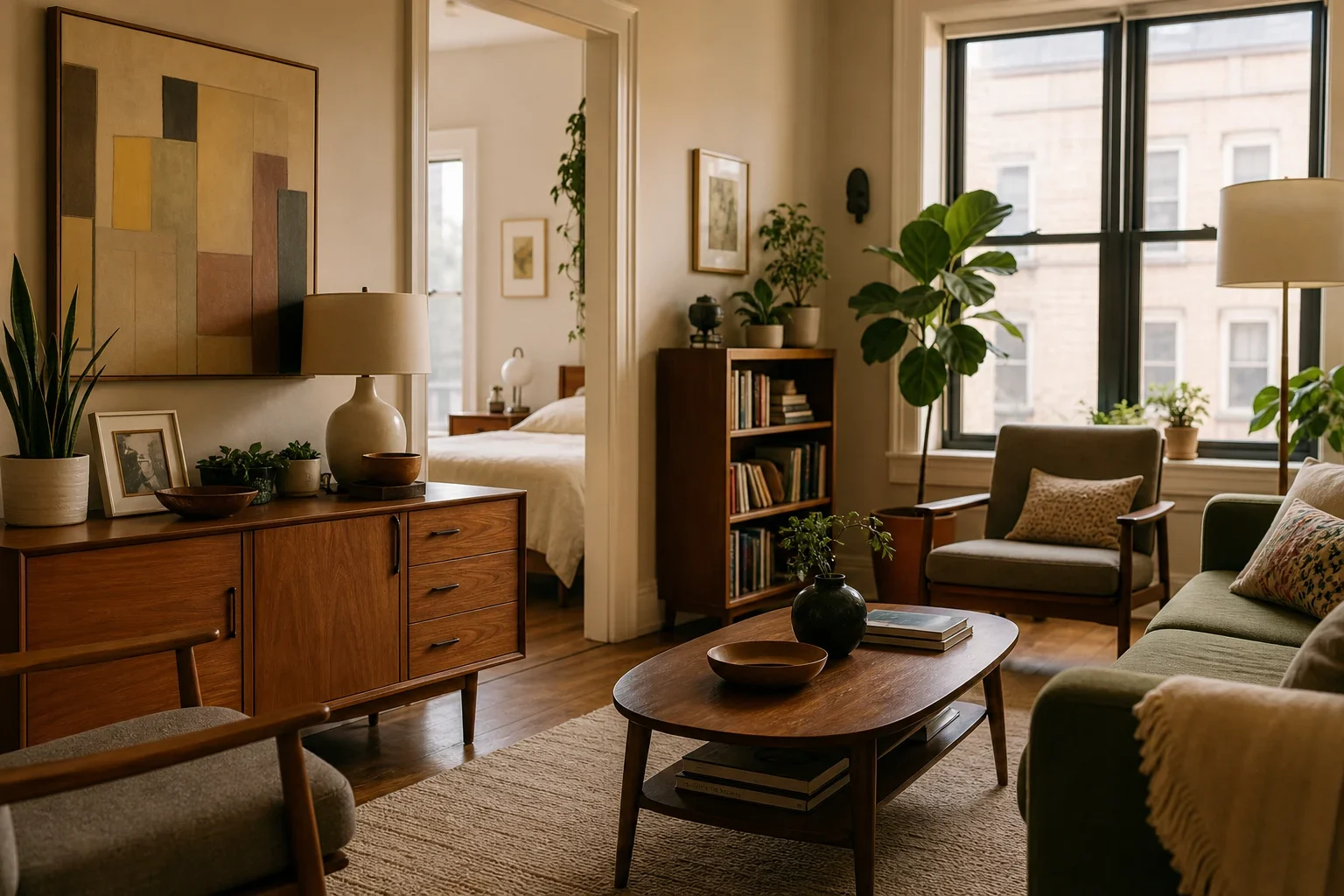
If you furnished your first place in a hurry — maybe during a fall move or a holiday lease start — there's a good chance a few budget-inspired mid-century pieces filled gaps you planned to revisit later. January is a natural moment to upgrade budget furniture to vintage mid century originals or licensed reissues, piece by piece, instead of replacing everything at once. This guide walks through a short audit you can run room by room, plus a worked example showing how the decision plays out on one piece.
The goal isn't to declare your starter furniture a failure. Budget-inspired pieces exist precisely to get a room functional fast and affordably. The audit below simply helps you spot which ones are worth trading up now that you have more information about how you actually live in the space — and some room in the budget.
Why January is the right time to run this audit
By the time you've lived with a piece for a few months, you know things no showroom visit could tell you: whether a chair actually gets used daily, whether a table wobbles under normal life, whether a finish is already looking tired. Pairing that lived-in knowledge with a fresh budgeting cycle is what turns "maybe someday" upgrades into a short, specific shopping list instead of a vague wish.
The Five-Question Checklist to Upgrade Budget Furniture to Vintage Mid Century
Go piece by piece through the rooms where you placed budget-inspired mid-century style furniture at move-in. For each one, ask:
- Is it a daily-visibility piece? Items you see and touch constantly — a living room credenza, a dining table, a lounge chair — earn more value from an upgrade than things tucked in a closet or spare room.
- Is the surface already showing wear it shouldn't? Veneer lifting, laminate chipping, or finish dulling after only a few months suggests the piece won't age gracefully, which is a stronger upgrade signal than simple taste fatigue.
- Is it structurally solid? Wobbly legs, drawers that stick, or joints that have loosened point to construction shortcuts rather than a style problem — and no refinishing fixes that.
- Does it anchor the room's look? One or two pieces usually carry a room's whole aesthetic. If this is one of them, upgrading it changes how the whole space reads; if it's a supporting piece, the return is smaller.
- Do you have realistic lead time? Vintage and licensed mid-century pieces often take longer to source, ship, or restore than new furniture. If you need the room finished by a hard deadline, that affects timing more than budget.
A piece that scores high on daily visibility, has visible wear, and anchors the room is your best upgrade candidate. A piece that's rarely noticed, still solid, and secondary to the room's look is fine to leave alone for now.
Mid-century modern product idea: Bme Georgina Sideboard 2 Doors & 3 Drawers, Mid Century, Teak Brown, 61". This sideboard maps directly onto the worked example's living room credenza: a teak-toned piece with doors and drawers that functions as the room's daily-visibility anchor. Use it as a reference point when running the five-question checklist against your own credenza — comparing door alignment, drawer action, and surface finish on a mid-century-styled piece can help you judge whether your current unit is wearing normally or showing the construction shortcuts the audit flags as an upgrade signal.

Worked example (hypothetical): the living room credenza
Here's a hypothetical walkthrough of how the audit plays out on one common piece.
The piece: A budget-inspired teak-look credenza bought at move-in for a living room TV and storage setup.
- Daily visibility: High — it's the first thing visible from the front door.
- Surface wear: The laminate top has already started to peel at one corner after light daily use.
- Structure: Doors are slightly misaligned and one hinge has loosened.
- Anchor piece: Yes — it sets the tone for the whole room's look.
- Lead time: No hard deadline; the room is otherwise finished.
In this hypothetical case, the credenza checks every upgrade box: it's visible daily, already wearing out, structurally compromised, and central to the room. That combination makes it a strong candidate to replace with a vintage or licensed teak credenza rather than another budget-inspired version, since a second round of the same shortcut construction would likely wear the same way. A side table in the same room that's barely touched and still sturdy, by contrast, can simply stay another year.
What to expect price-wise when you upgrade
Licensed reissues of original mid-century designs are typically priced well below true vintage originals — often 40–70% less — while still reflecting authorized manufacturing and materials rather than an unlicensed copy. Vintage originals in good condition command the highest prices because of their age, provenance, and collector demand, so deciding between a licensed reissue and a true vintage find often comes down to whether you care about owning the original object or simply want its authorized design and build quality at a lower cost.
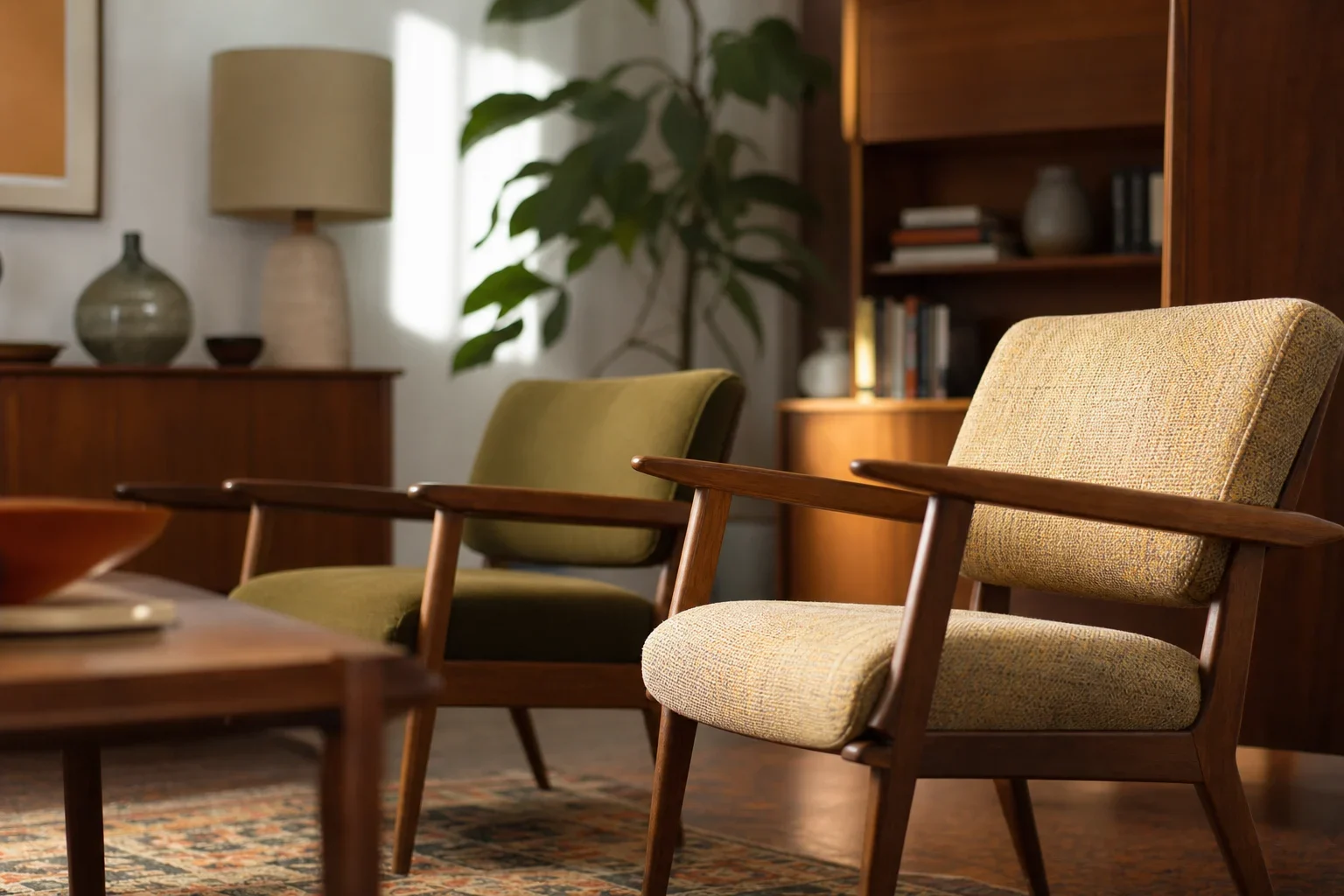
Mid-century modern product idea: Karl home Mid-Century Lounge Accent Chair, Green. A lounge chair is one of the daily-visibility, anchor-level pieces the checklist calls out as giving the best return on an upgrade. When auditing a seating area, use a listing like this as a style and category reference for what a mid-century lounge chair typically looks like, then weigh your own chair's structural soundness and wear against it before deciding whether it's worth sourcing a vintage or licensed replacement this cycle.

Before you commit budget to any single swap, it helps to see the upgrade in context of everything else you still want to buy for the home. Tracking the upgrade against your full room plan — rather than deciding on impulse — keeps one splurge from quietly crowding out other priorities later in the year.
How to shop the upgrade without guessing on style
Mid-century modern covers a range of sub-styles — Danish, Californian, Brazilian, and more — and a vintage or licensed piece chosen in the wrong sub-style can clash with the budget-inspired pieces you're keeping. Before you shop, it's worth confirming which specific look you're actually drawn to so the upgrade reads as intentional rather than mismatched.
Frequently asked questions
How do I know if a budget piece is worth upgrading versus just living with it longer?
Run it through the five-question checklist: daily visibility, visible wear, structural soundness, how much it anchors the room's look, and whether you have time to source a replacement. Pieces that score high on visibility, wear, and anchoring tend to give the best return on an upgrade; pieces that are rarely seen and still sturdy can usually wait.
Should I replace a worn budget piece with another budget-inspired version or go vintage?
If the original piece failed because of construction shortcuts — loose joints, peeling laminate, misaligned doors — buying another budget-inspired version of the same type risks the same outcome. That's usually the clearest signal to consider a vintage original or a licensed reissue instead, since both are generally built to different construction and material standards.
Mid-century modern product idea: Walker Edison Mid-Century Modern Solid Wood Tapered-Leg Dining Table, 59 Inch, Walnut. Dining tables are named explicitly in the article as a common anchor piece worth prioritizing in an upgrade round, since they're used daily and set the tone for a room. A tapered-leg walnut design gives a concrete example of the solid-wood construction the audit encourages readers to look for when comparing a current budget-inspired table against sturdier joinery and material choices before committing to a swap.
What's the real difference between a licensed reissue and a vintage original?
A vintage original was produced during the mid-century era itself, while a licensed reissue is a newly made version of the same design produced with the original manufacturer's authorization. Licensed reissues are typically priced well below true vintage pieces while still reflecting authorized materials and construction, so they're a middle path between a true original and an unlicensed reproduction.
How many pieces should I plan to upgrade at once?
Most rooms only need one or two anchor pieces upgraded to feel noticeably different — a credenza, a lounge chair, a dining table. Trying to swap everything at once usually isn't necessary and can strain a budget that's better spent concentrating on the piece that gets the most daily use and visibility.
Does it matter if I don't know the exact mid-century sub-style I like?
It's worth figuring out before you shop for the upgrade. Danish, Californian, and Brazilian mid-century looks share some traits but differ in materials, proportions, and finishes, and mixing them unintentionally can make a new vintage piece feel out of place next to the furniture you're keeping.
What should I check before buying a vintage piece instead of a reissue?
Look at construction first — joinery, drawer materials, and wood weight — since these are harder to fake than a label. Maker's marks and labels can support an attribution but shouldn't be trusted on their own, and wear should look consistent with genuine age rather than artificially distressed.
Shop the Mid-century modern look
As an Amazon Associate, Nido earns from qualifying purchases.

Bme Georgina Sideboard 2 Doors & 3 Drawers, Mid Century, Teak Brown, 61"
This sideboard maps directly onto the worked example's living room credenza: a teak-toned piece with doors and drawers that functions as the room's daily-visibility anchor. Use it as a reference point when running the five-question checklist against your own credenza — comparing door alignment, drawer action, and surface finish on a mid-century-styled piece can help you judge whether your current unit is wearing normally or showing the construction shortcuts the audit flags as an upgrade signal.
View on Amazon
Karl home Mid-Century Lounge Accent Chair, Green
A lounge chair is one of the daily-visibility, anchor-level pieces the checklist calls out as giving the best return on an upgrade. When auditing a seating area, use a listing like this as a style and category reference for what a mid-century lounge chair typically looks like, then weigh your own chair's structural soundness and wear against it before deciding whether it's worth sourcing a vintage or licensed replacement this cycle.
View on Amazon
Walker Edison Mid-Century Modern Solid Wood Tapered-Leg Dining Table, 59 Inch, Walnut
Dining tables are named explicitly in the article as a common anchor piece worth prioritizing in an upgrade round, since they're used daily and set the tone for a room. A tapered-leg walnut design gives a concrete example of the solid-wood construction the audit encourages readers to look for when comparing a current budget-inspired table against sturdier joinery and material choices before committing to a swap.
View on Amazon