Mid-Century Modern Wall Art: Original vs Print vs Budget Décor
Design theme: Mid-century modern
A practical filter for choosing between an original MCM artwork, a licensed reproduction print, and budget-inspired wall art — plus a checklist and worked example for a first apartment.
As an Amazon Associate, Nido earns from qualifying purchases.
If you've been hunting for mid-century modern furniture, you've probably already learned to check joinery, maker's marks, and patina before you buy. Wall art needs its own version of that filter. A mid-century modern wall art original vs print decision doesn't hinge on dovetails or screw types — it hinges on paper, edition, signature, and how a seller describes what they're selling. This guide walks through the three tiers you'll actually encounter, how to tell them apart at a glance, and a simple way to decide which tier earns a spot on your wall and which doesn't.
Why wall art needs a different filter than furniture
The furniture-authentication playbook — dovetail joints, secondary wood, maker's stamps — doesn't transfer directly to art on paper or canvas. There's no drawer to pull out and inspect. Instead, the meaningful signals for art are things like whether a print is part of a numbered, signed edition; whether a "vintage travel poster" is an original lithograph or a later commercial reprint; and whether a seller is upfront about which one you're getting. The underlying three-tier logic, though, is the same one collectors use to sort furniture: an authentic original, a licensed reissue made with permission from the rights holder, and an unlicensed or budget-inspired reproduction. One furniture-authentication guide lays out this exact framework — original, licensed reissue, unlicensed reproduction, and later production run — and notes that licensed reissues are typically priced well below true vintage originals because they're new, not old.
Mid-Century Modern Wall Art: Original vs Print vs Budget Tiers
1. Original artwork
This is a one-of-a-kind piece or an early, hand-pulled print made during or close to the mid-century period: a signed lithograph, an original gouache, a period advertising poster printed for its original commercial run. Originals carry the most weight in a room and the most risk if you're wrong about what you're buying, because price and scarcity both rise sharply at this tier.
2. Licensed reproduction print
A licensed reissue is a new print made with permission from the artist's estate, museum, or rights holder — often a numbered, limited edition with a certificate of authenticity. It isn't vintage, and it shouldn't be priced as if it were, but it's an honest, traceable product rather than a guess.
Mid-century modern product idea: Handcrafted 11x14 Walnut Picture Frame, Matted to 8x10 with HD Plexiglass. Once you've settled on your anchor piece using the original-vs-reproduction checklist, how you frame it matters too. A walnut frame with an 8x10 mat reads as warm, understated, and period-appropriate for mid-century tastes, and matting a smaller print within a larger frame mirrors the gallery-style presentation described for the entry-wall pieces in the worked example. This makes it a reasonable pick for either the anchor print or one of the smaller supporting spots, depending on the size of art you've chosen.
3. Budget-inspired wall art
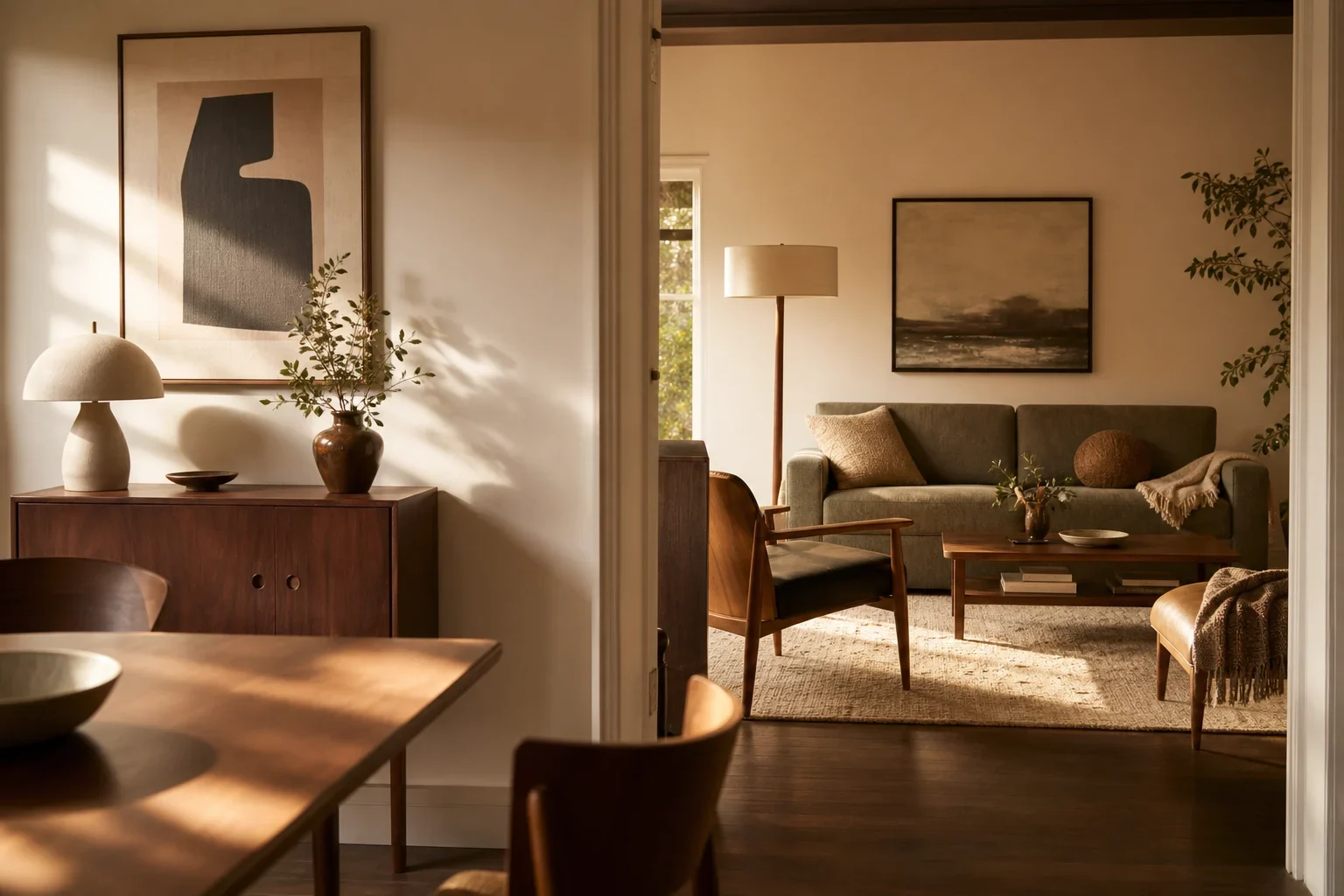
This is new artwork that borrows mid-century shapes, palettes, and composition without claiming any connection to a specific original or designer. For most walls in a first apartment, this tier does the job perfectly well — and it's where most of your art budget should probably go.
A quick checklist before you buy
- Ask directly what it is. Is this an original, a licensed/limited edition, or a decorative reproduction? A straightforward seller will answer without hedging.
- Look for a signature and edition number. A hand signature with a fraction like 24/150 suggests a limited print; its absence doesn't automatically mean fake, but it removes one layer of evidence.
- Check the paper or canvas, not just the image. Aging paper, foxing, and uneven fading at the edges happen gradually and unevenly on genuinely old pieces — uniform, even "aged" toning across an entire sheet is worth a second look.
- Ask for documentation. A receipt, gallery label, or certificate of authenticity adds real weight to a claim, the same way original paperwork adds value when authenticating vintage furniture.
- Compare the price to the claim. A piece priced like a budget print but marketed as an original rarity is a mismatch worth questioning before you pay.
- Remember a reproduction isn't automatically a problem. The issue is misrepresentation, not the existence of reproductions themselves — a well-made reproduction sold honestly as a reproduction is a perfectly reasonable choice.
Worked example: filling one living room wall
This is a hypothetical walkthrough, not a record of an actual purchase. Imagine a first apartment with one large living room wall above the sofa and two smaller gallery-style spots near the entry.
- Anchor wall: The reader picks one piece to care most about — say, a numbered licensed reproduction of a well-known mid-century print, bought from a dealer who provides a certificate and clear edition information. This is the one spot where paying for documentation and traceability feels worth it.
- Secondary spots: The two smaller frames near the entry are filled with budget-inspired prints chosen for color and shape rather than provenance — inexpensive, easy to swap later, and not meant to carry any authenticity claim.
- Result: One piece with real documentation sets the tone for the room; the rest support it without inflating the budget or requiring authentication research the reader doesn't have time for.
The same one-anchor-plus-supporting-pieces logic that works for splitting a dining set between a splurge table and budget-inspired chairs works just as well for a wall of art.
Matching art to your actual style, not just "mid-century"
"Mid-century modern" covers a wide range of looks — warm Danish wood tones, breezy Californian casualness, bold Brazilian curves — and wall art that fits one sub-style can feel out of place in another. Taking a short style quiz before you shop can narrow down which palette and composition style actually matches the rest of your room, so you're not guessing between a dozen "MCM-inspired" prints that don't quite agree with each other. From there, a tool that turns your style and budget into real, shoppable picks can help you fill in the budget-inspired tier quickly once you've decided where your one or two anchor pieces will go.
Mid-century modern product idea: Afuly Walnut Floating Shelves for Wall, Mid Century Modern Decor Shelf Unit. Not every piece of wall art needs to be framed and hung flat — floating shelves give you a spot to lean smaller prints, swap them seasonally, or display a budget-inspired piece alongside a small object without committing to permanent placement. This fits naturally into the secondary, gallery-style spots mentioned in the article's worked example, where low-commitment, easy-to-change display matters more than provenance. A walnut finish also keeps the hardware itself visually in line with a mid-century palette rather than competing with the art.

Frequently asked questions
What's the real difference between an original print and a licensed reproduction?
An original is a piece made during the period it claims to represent — a hand-pulled lithograph or period poster, for example. A licensed reproduction is a new print made later with permission from the rights holder, often numbered and accompanied by a certificate. Licensed reissues are legitimate and traceable, but they aren't vintage and shouldn't be priced as if they were.
How can I tell if a "vintage" poster is actually old or a modern reprint?
Look at the physical object, not just the image. Genuine age tends to show up as uneven wear — fading concentrated where light hit the piece, soft foxing at the edges, paper that has yellowed unevenly rather than uniformly. A print that looks evenly "aged" across its entire surface, with crisp uniform printing and no documentation, deserves more questions before you treat it as original.
Is buying a reproduction print dishonest or lower quality?
No — reproductions aren't inherently a problem. The issue arises when a reproduction is represented or assumed to be an original. A well-made reproduction, sold honestly as a reproduction, is a completely reasonable choice for most rooms and budgets.
Should I pay vintage-original prices for mid-century wall art?
Only when the piece comes with real evidence to back the claim: a signature, a documented edition, provenance paperwork, or a reputable seller who specializes in the category. Treat price as a claim that needs support, not as proof on its own.

Mid-century modern product idea: Mid-Century Modern wall sconces Gold wall sconces wall lighting1pack. Good lighting changes how you actually see the details that matter when evaluating wall art — signature, edition number, texture of the paper or canvas — so placing a sconce near your anchor piece can make those checklist details easier to spot day to day, not just at purchase time. A gold, mid-century-styled sconce also reads as a deliberate design choice rather than a mismatched add-on, helping the lit piece feel like the intentional focal point the article describes.
How many original or licensed pieces does one room actually need?
Usually just one. Picking a single anchor piece for the wall that gets the most attention — and filling supporting spots with budget-inspired art — gives a room a sense of intention without requiring you to authenticate every frame you own.
Does documentation matter for art the way it matters for vintage furniture?
Yes. A receipt, gallery label, or certificate of authenticity adds real weight to a claim about a piece's origin, the same way original paperwork adds confidence when evaluating a vintage furniture find. Keep any documentation that comes with a piece, especially for anything you consider an anchor purchase.
What's the fastest way to avoid overthinking every wall art purchase?
Decide upfront which wall or piece actually matters to you, apply the checklist only to that one, and treat everything else as budget-inspired décor chosen for color and shape. A short style quiz can also narrow your options before you start browsing, so you're comparing fewer, better-matched pieces instead of everything labeled "mid-century."
Shop the Mid-century modern look
As an Amazon Associate, Nido earns from qualifying purchases.

Handcrafted 11x14 Walnut Picture Frame, Matted to 8x10 with HD Plexiglass
Once you've settled on your anchor piece using the original-vs-reproduction checklist, how you frame it matters too. A walnut frame with an 8x10 mat reads as warm, understated, and period-appropriate for mid-century tastes, and matting a smaller print within a larger frame mirrors the gallery-style presentation described for the entry-wall pieces in the worked example. This makes it a reasonable pick for either the anchor print or one of the smaller supporting spots, depending on the size of art you've chosen.
View on Amazon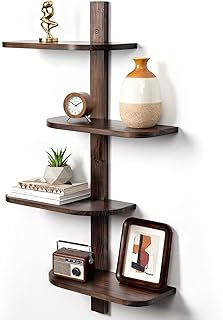
Afuly Walnut Floating Shelves for Wall, Mid Century Modern Decor Shelf Unit
Not every piece of wall art needs to be framed and hung flat — floating shelves give you a spot to lean smaller prints, swap them seasonally, or display a budget-inspired piece alongside a small object without committing to permanent placement. This fits naturally into the secondary, gallery-style spots mentioned in the article's worked example, where low-commitment, easy-to-change display matters more than provenance. A walnut finish also keeps the hardware itself visually in line with a mid-century palette rather than competing with the art.
View on Amazon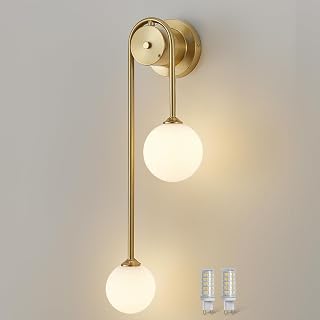
Mid-Century Modern wall sconces Gold wall sconces wall lighting1pack
Good lighting changes how you actually see the details that matter when evaluating wall art — signature, edition number, texture of the paper or canvas — so placing a sconce near your anchor piece can make those checklist details easier to spot day to day, not just at purchase time. A gold, mid-century-styled sconce also reads as a deliberate design choice rather than a mismatched add-on, helping the lit piece feel like the intentional focal point the article describes.
View on Amazon