Multipurpose Furniture for a Small Apartment: A Buy-It-Twice Checklist
Design theme: Minimalist
A decision filter for which small-apartment furniture should do double duty (storage bed, extendable table, storage ottoman) and which should stay single-purpose, plus a worked example.
As an Amazon Associate, Nido earns from qualifying purchases.
Every small-apartment guide tells you to "buy multi-functional pieces," but nobody tells you which pieces. Not every square foot of your home needs a piece of furniture that moonlights as something else — some categories are worth keeping simple. This multipurpose furniture checklist for a small apartment gives you a three-question filter to run on any item before you buy it, so you only pay the trade-offs that actually earn their keep.
This is a supporting guide to our full room-by-room buying order. If you haven't sequenced your purchases yet, start with What to Buy First for Your First Apartment, then come back here when you're deciding between the storage bed and the plain frame.
Why "multi-purpose" isn't always the right answer
Multi-functional furniture solves a real problem in small footprints: a studio or a tight one-bedroom has fewer square feet to hold everything a life needs, so a piece that does two jobs can save an entire zone of floor space. That's exactly why cost breakdowns of studio apartments note that one room has to do everything a whole apartment normally splits across several, which is where multi-use pieces earn their keep. But a folding dining table that wobbles, or a storage ottoman with a lid that's awkward to lift every single evening, costs you convenience every day in exchange for space you might not have needed to save. The filter below is about spending that trade-off only where it pays off.
The three-question multipurpose furniture filter
Before buying any piece for a small apartment, ask these three questions. If you answer "yes" to all three, multi-functional is worth it. If you land on "no" for even one, buy the single-purpose version instead.
Minimalist product idea: GarveeHome Wood Platform Bed Frame, Full Bed Frame with 2 Drawers | Floor Bed Frame, Low Profile Design, Wood Slat Support, No Box Spring Needed, Easy Assembly. This platform bed's two built-in drawers make it a straightforward example of the storage-bed category in the checklist above: run it through the three-question filter first, and if your bedroom closet is genuinely tight, drawers you use weekly for linens or off-season clothes are the kind of dual function worth paying for. Its low-profile frame and included wood slats also mean you skip a box spring, which keeps the visual footprint low and clean, in line with a minimalist room where you don't want a bulky frame competing with the walls.
- Is floor space actually the constraint? If the room has room to spare for a dresser and a bench separately, you don't need a bench that opens for storage. Multi-purpose furniture is a space-saving tool, not a default upgrade.
- Will the second job get used weekly, not just in theory? A sofa bed only pays for itself if guests actually stay over regularly. If your "guest room" function happens twice a year, a daybed or an air mattress you store in a closet is cheaper and less compromised than a sofa bed you sit on every day.
- Does the dual function cost you comfort or durability you'll notice daily? Extendable dining tables, storage beds, and nesting tables rarely compromise daily use. Sofa beds, fold-down desks, and murphy beds often do — check hinges, mattress thickness, and how much daily setup and teardown the mechanism adds before you commit.
Your multipurpose furniture checklist for a small apartment
Run each category below through the filter above. This is the checklist itself — go category by category rather than room by room, since the same logic applies whether you're furnishing a studio or a small one-bedroom.
| Category | Go multi-functional when | Keep single-purpose when |
|---|---|---|
| Bed | Storage bed frame, when the bedroom has no closet or the closet is genuinely too small for seasonal items and linens. | A plain frame, when you already have a dresser and closet with room to spare — storage beds cost more and make bed-making slower. |
| Dining/coffee table | Extendable or nesting tables, when you host occasionally but don't have a spare table's worth of floor space day to day. | A fixed table, when you rarely have more than your regular household at the table — extension mechanisms add cost without daily benefit. |
| Seating | A storage ottoman or bench, when you need a coffee table and extra seating but have nowhere for a separate media console or linen closet. | A sofa bed, only if overnight guests are a genuine weekly or monthly occurrence — otherwise a daybed or a fold-out mattress stored elsewhere is more comfortable for daily lounging. |
| Desk/workspace | A fold-down or wall-mounted desk, when the apartment has no dedicated office nook and the desk would otherwise block a walkway. | A fixed desk, when you work from home most days — daily fold-down setup and teardown gets old fast for regular use. |
| Storage/shelving | Under-bed bins or a storage headboard, when closet space is the tightest constraint in the apartment. | Open shelving or a simple bookcase, when you have wall space to spare — it's cheaper and easier to access than most built-in storage mechanisms. |
Worked example: a hypothetical 550-square-foot one-bedroom
This is a hypothetical walkthrough to show the filter in action, not a real household. Picture a one-bedroom with a small bedroom closet, a living room that also has to hold a work-from-home desk, and guests who stay over maybe three times a year.
- Bed: The bedroom closet is small, so a storage bed frame passes the filter — floor space and closet space are both tight, and the storage gets used weekly for off-season clothes.
- Dining table: Two people eat there most nights, but friends come by for dinner a few times a month. An extendable table passes the filter — the second function is used regularly, not just aspirationally.
- Sofa: Guests stay over three times a year. A sofa bed fails the third question — the daily comfort trade-off isn't worth it for such infrequent use. A regular sofa plus a fold-out guest mattress stored in the closet is the better call.
- Desk: The living room has no dedicated nook, and a fixed desk would block the main walkway. A wall-mounted fold-down desk passes the filter.
Notice the pattern: this hypothetical apartment goes multi-functional on the bed, the table, and the desk, but stays single-purpose on the sofa. That's the filter working as intended — it should say no sometimes.
Where AI tools can help you apply the filter
Once you know which categories should be multi-functional for your space, matching that decision to real, in-stock products is the slower part. Nido's Ask Nido chat lets you describe a room the way you would to a friend, for example "small bedroom, no closet space, need a bed with storage," and turns the answer into a real, shoppable list. AI Picks then matches real, in-stock furniture to your rooms, your style, and your budget, so you're comparing actual storage beds and extendable tables rather than guessing at dimensions from a product photo.
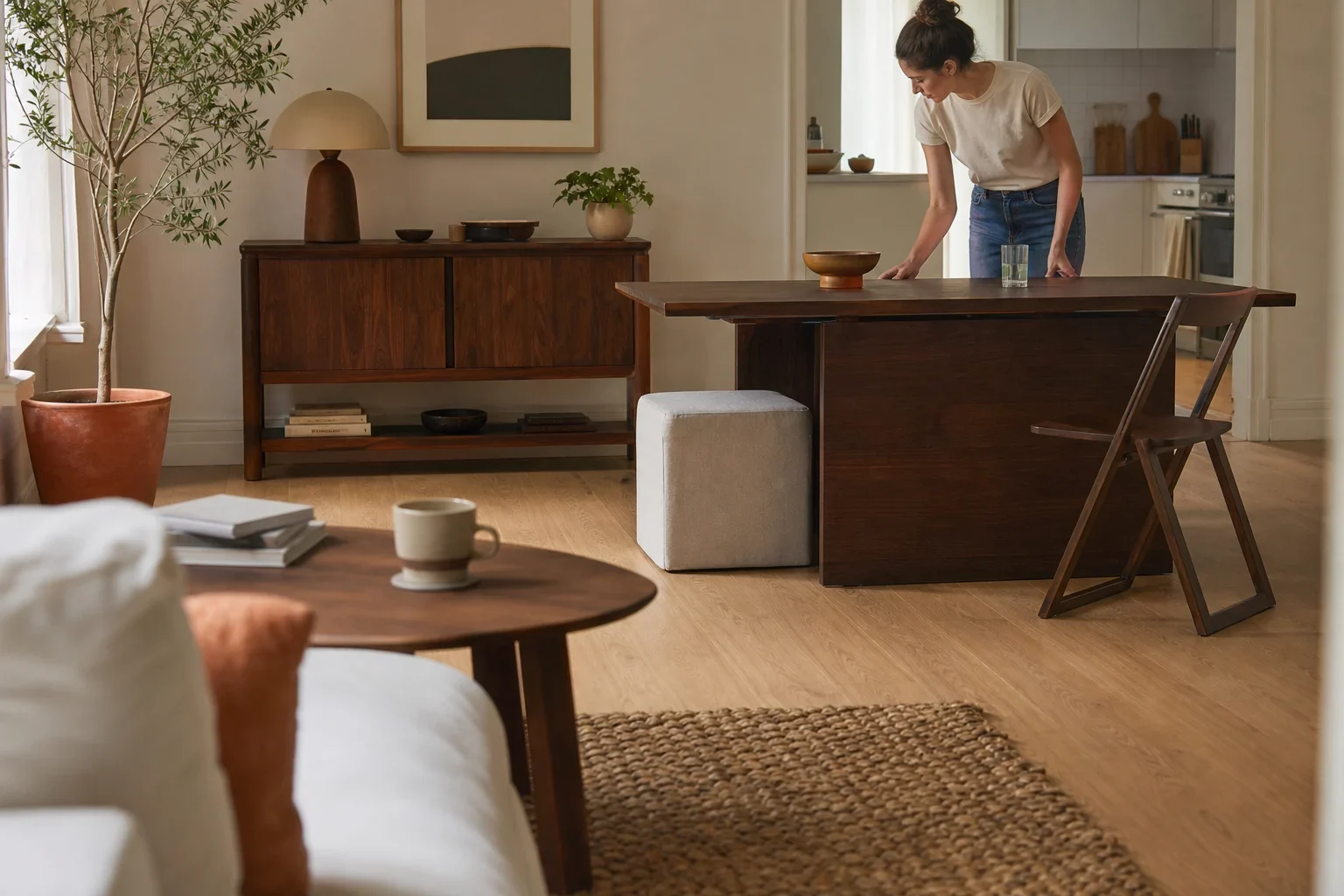
Minimalist product idea: Extendable Dining Table, Transformer Folding Console Table for 2-12 People, Space Saving Dining Room Table for Apartments & Homes, Walnut. This is the extendable-table example the checklist points to directly: a fixed table stays put day to day, but folds out to seat far more people when friends come by, so it only earns its keep if you host somewhat regularly rather than just aspirationally. Its stated range down to a compact size for two people suggests it can sit unobtrusively in a small dining area most days, which suits a minimalist layout that doesn't want a permanently oversized table anchoring the room.

For the sequencing question — which room and which purchases come first — see What to Buy First for Your First Apartment. If you're furnishing a studio specifically, where nearly every piece has to justify a dual role, our Studio Apartment Furniture Checklist walks through that zone-by-zone.
Frequently asked questions
Is multipurpose furniture always cheaper than buying two separate pieces?
Not necessarily. A storage ottoman or a sofa bed often costs more upfront than a plain ottoman or a basic sofa, because of the added mechanism or materials. The savings come from not needing a second piece of furniture at all — a separate coffee table plus a linen chest, for example — so the value only shows up when floor space is genuinely the constraint, not when you have room for both.
What's the biggest mistake people make with multi-functional furniture?
Buying dual-purpose pieces for a function they rarely use, most commonly a sofa bed for guests who stay over only a couple of times a year. The daily comfort or convenience trade-off gets paid every day, while the second function only pays off a few times annually. Running the three-question filter before buying catches this.
Should I measure my apartment before deciding on multi-functional pieces?
Yes. Whether a piece needs to be multi-functional often comes down to whether the room has spare floor space for two separate items, and that's only clear once you've measured. Furniture that doesn't fit the space is one of the more expensive furnishing mistakes, since it ends up costing money in returns or re-delivery rather than saving it.
Minimalist product idea: HOMCOM Foldable Desk Wall Mounted Convertible Table for Small Spaces, White. A wall-mounted, foldable desk is the exact fix the checklist recommends when a living room has no dedicated office nook and a fixed desk would block a walkway: it folds flat against the wall when you're not working, freeing the floor for the room's other jobs. Its simple white finish and compact folded profile fit a minimalist space that prioritizes open floor area over a permanent furniture piece, provided you actually work from home often enough that the daily fold-down setup is worth the trade-off.
Do multi-functional pieces take longer to arrive or cost more in delivery and assembly?
Sometimes. Storage beds, extendable tables, and wall-mounted desks often have more parts to assemble than their single-purpose counterparts, and hidden costs like delivery and assembly can add roughly 15 to 30 percent on top of the furniture price regardless of which version you buy. Factor that into your budget rather than assuming the multi-functional option is a straightforward swap.
Which room benefits most from multi-functional furniture in a small apartment?
The bedroom and the living room usually benefit most, since they combine the largest number of functions in the smallest apartments — sleep and storage in one, and seating, dining, and sometimes work in the other. Kitchens and bathrooms rarely need multi-functional furniture, since their fixtures are already fixed in place.
How do I know if I'm overthinking the multi-functional decision?
If you're debating a low-cost, low-commitment category like a side table or a plant stand, it's not worth the filter — buy whichever fits your space and style. Save the three-question filter for the higher-cost anchor pieces: beds, sofas, dining tables, and desks, where the wrong call is expensive and hard to reverse.
Shop the Minimalist look
As an Amazon Associate, Nido earns from qualifying purchases.

GarveeHome Wood Platform Bed Frame, Full Bed Frame with 2 Drawers | Floor Bed Frame, Low Profile Design, Wood Slat Support, No Box Spring Needed, Easy Assembly
This platform bed's two built-in drawers make it a straightforward example of the storage-bed category in the checklist above: run it through the three-question filter first, and if your bedroom closet is genuinely tight, drawers you use weekly for linens or off-season clothes are the kind of dual function worth paying for. Its low-profile frame and included wood slats also mean you skip a box spring, which keeps the visual footprint low and clean, in line with a minimalist room where you don't want a bulky frame competing with the walls.
View on Amazon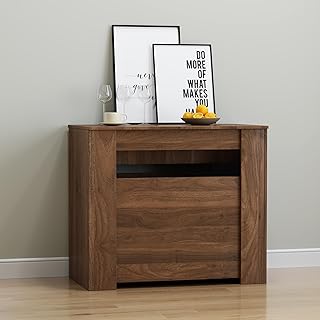
Extendable Dining Table, Transformer Folding Console Table for 2-12 People, Space Saving Dining Room Table for Apartments & Homes, Walnut
This is the extendable-table example the checklist points to directly: a fixed table stays put day to day, but folds out to seat far more people when friends come by, so it only earns its keep if you host somewhat regularly rather than just aspirationally. Its stated range down to a compact size for two people suggests it can sit unobtrusively in a small dining area most days, which suits a minimalist layout that doesn't want a permanently oversized table anchoring the room.
View on Amazon
HOMCOM Foldable Desk Wall Mounted Convertible Table for Small Spaces, White
A wall-mounted, foldable desk is the exact fix the checklist recommends when a living room has no dedicated office nook and a fixed desk would block a walkway: it folds flat against the wall when you're not working, freeing the floor for the room's other jobs. Its simple white finish and compact folded profile fit a minimalist space that prioritizes open floor area over a permanent furniture piece, provided you actually work from home often enough that the daily fold-down setup is worth the trade-off.
View on Amazon