How Much Does It Cost to Furnish a First Apartment, Room by Room?
Design theme: Minimalist
A realistic, room-by-room cost breakdown for furnishing a first apartment, plus a checklist and worked example to build your own number before you shop.
As an Amazon Associate, Nido earns from qualifying purchases.
Before you buy a single thing, it helps to answer the question in plain terms: how much does it cost to furnish a first apartment, room by room? Published guides throw out big headline numbers, but those numbers hide a lot of variation between a studio and a two-bedroom, and between a thrifted dresser and a designer one. This guide breaks the total down by room so you can build a realistic budget for your specific apartment, not a stranger's.
This is a pre-purchase benchmark, not a spending tracker. If you've already started buying and want to see what's left, that's a different exercise — this one is for setting an accurate number before the first order goes in.
How much does it cost to furnish a first apartment, room by room?
Cost guides don't fully agree with each other, which is itself useful information: it tells you the real number depends heavily on quality tier and what you already own. Here's a rough synthesis of published 2026 ranges, budget through mid-range, for a first apartment's core rooms.
- Living room: roughly $2,000–$5,000 mid-range for sofa, rug, coffee table, media unit and lighting, according to a 2026 apartment furnishing breakdown.
- Primary bedroom: roughly $2,500–$5,000 mid-range for mattress, frame, dresser, nightstands and bedding, per the same source.
- Kitchen and dining: roughly $1,000–$2,600 for a table, chairs, bar stools and small appliances.
- Home office or nook: roughly $500–$1,500 for a desk, task chair and shelving, if your apartment has the space for one.
- Entry and hallway: roughly $150–$500 for a console, mirror, runner and hooks.
- Bathroom: roughly $150–$400 for storage, textiles and accessories.
One guide put it plainly: the living room and primary bedroom together tend to make up the majority of a first apartment's furnishing budget, since that's where the sofa and mattress live — the two priciest single items most renters buy. Another source estimated the living room alone can absorb 30–40% of a total furnishing budget. That's the practical takeaway: get the two biggest rooms right, and the smaller ones are easier to hold to whatever's left.
Why the ranges vary so much
Three things move these numbers more than anything else. First, quality tier: the gap between a budget dresser and a premium one can be several hundred dollars on that single item alone. Second, apartment size, since a one-bedroom is essentially a studio plus one more full room's worth of furniture. Third, timing: one 2026 furnishing guide noted that a US tariff on imported furniture pushed prices up roughly 10–15% since 2024, so older cost articles now read low. If you're comparing your own numbers against a guide written a couple of years ago, pad it upward before you trust the total.
Minimalist product idea: Acanva Mellow Modern Tight Curved Back Velvet Sofa, 3 Seater, Cream | Minimalist Couch for Living Room Apartment, Modular Sectional, Hardwood Frame. Since the living room typically absorbs the largest share of a first apartment's furnishing budget, this is a natural fit for readers deciding how much of that mid-range range to allocate to the sofa itself. A tight curved back and cream, uncluttered profile fits a minimalist theme by keeping the room's biggest single purchase visually simple rather than bulky, which helps a reader mentally test whether a clean-lined sofa fits their budget tier before shopping further.
None of these published ranges account for delivery, assembly, or the small stuff — curtains, hardware, a trash can. Multiple guides put that hidden layer at roughly 15–30% on top of the furniture line items themselves. Build that padding into your number now rather than discovering it at checkout.
A room-by-room budget reality-check checklist
Use this before you open a single shopping tab. For each room in your apartment, answer all four questions:
- What's already covered? List anything you own, are inheriting, or a roommate is bringing — that's furniture you don't need to budget for.
- What tier fits this room? Decide budget, mid-range, or premium per room, not for the whole apartment. It's common to go mid-range on a sofa and budget on a bathroom.
- What's the realistic range for this room at that tier? Use the breakdown above as a starting point, then adjust for your actual apartment size.
- What's the hidden add-on? Add 15–30% to that room's furniture total for delivery, assembly, and the small stuff you'll inevitably need.
Do this for every room before you buy anything, and you'll have an apartment-wide number instead of a guess that only covers whichever room you're excited about first.
Worked example: a hypothetical one-bedroom, two ways
The following is a hypothetical illustration, not a specific product list or a Nido output — it's here to show how the room-by-room approach plays out in practice.
Scenario: A first-time renter furnishing a one-bedroom apartment from close to scratch, comparing a leaner budget tier against a mid-range tier.
Minimalist product idea: DUMOS 6-Drawer Storage Cabinet, 59" Wide Modern Chest of Drawers, Wood | Storage TV Stand with Metal Handles, Wide Wooden Farmhouse Drawer Organizer for Bedroom, Living Room, Hallway, Home Office. This piece spans several of the rooms the article breaks out separately — bedroom, living room, hallway, and home office — so it illustrates how one flexible storage item can be budgeted against more than one line in a room-by-room plan rather than bought room by room from scratch. A modern wood chest with simple metal handles suits a minimalist theme by prioritizing clean storage over ornate detailing, which is useful context when a reader is weighing dresser costs against the guide's bedroom range.
- Living room — budget tier roughly $2,000–$2,500; mid-range roughly $3,500–$5,000.
- Primary bedroom — budget tier roughly $2,000–$2,500; mid-range roughly $3,500–$5,000.
- Kitchen and dining — budget tier roughly $700–$1,000; mid-range roughly $1,500–$2,600.
- Entry and bathroom combined — budget tier roughly $200–$400; mid-range roughly $400–$900.
- Apartment-wide subtotal — budget tier lands near $5,000–$6,500; mid-range lands near $9,000–$13,500, before hidden costs.
- With 15–30% hidden costs added — budget tier lands near $6,000–$8,000; mid-range lands near $10,500–$17,500.
Notice what moves the total: it's not the number of items, it's the tier on the two biggest rooms. A renter who splurges on the sofa and mattress but stays budget everywhere else will land closer to the low end of mid-range than the high end — a more efficient way to spend than being mid-range across every category evenly.
Turning a range into your real number
A published range tells you what an apartment like yours might cost. It can't tell you what your apartment will cost, because it doesn't know your rooms, your existing furniture, or your actual budget ceiling. Nido's budget planner tracks spend across every room as you build your list, so you can see the running apartment-wide total update in real time instead of discovering the gap after the fact. And because AI Picks matches real, in-stock products to your budget and style, the numbers you see aren't a generic range — they're priced for your rooms specifically.
If you haven't sequenced what to buy first, start with the hub guide, What to Buy First for Your First Apartment: A Room-by-Room Priority Order. Once you know your rooms and dimensions, the measuring checklist helps make sure large purchases actually fit before you commit the budget you just set.
Frequently asked questions
What's a realistic total to furnish a first one-bedroom apartment?
Published 2026 guides put a mid-range one-bedroom furnishing budget somewhere around $5,000–$12,000, with leaner budget-tier fit-outs starting lower and premium tiers running well above that. Your actual number depends heavily on what you already own and which tier you choose per room, which is why a room-by-room build-up is more useful than a single headline figure.
Which room should get the biggest share of the budget?
The living room and primary bedroom typically account for the largest share of a first apartment's furnishing cost, since that's where the sofa and mattress sit — the two most expensive individual pieces most renters buy. Getting those two rooms right, even if it means spending less elsewhere, tends to matter more than evenly splitting the budget across every room.

Minimalist product idea: Solid Wood Small Dining Table for 2-6, 23.6"L-47.2"L Expandable Kitchen Table, Designed for Small Spaces, Easy Assembly, Suitable for Kitchen, Dining Room, Living Room, Apartment (Walnut). An expandable table sized for small spaces speaks directly to the article's kitchen-and-dining budget line, since it lets a reader picture a single purchase that scales from a compact studio setup to occasional larger seating without buying two tables. The pared-back walnut design and small-footprint focus align with a minimalist theme, and easy assembly is a relevant detail given the article's note that assembly costs are often left out of published furnishing ranges.
Do these room-by-room ranges include delivery and assembly?
No. Multiple cost guides note that delivery, assembly, and small extras like curtains or hardware typically add another 15–30% on top of the furniture line items themselves. Add that percentage to whatever room total you land on before treating it as final.
Why do cost guides disagree so much on the numbers?
Quality tier is the biggest swing factor — a budget dresser and a premium one can differ by hundreds of dollars on a single item. Apartment size and timing matter too; one 2026 guide pointed to a US furniture tariff that pushed prices up roughly 10–15% since 2024, so ranges published even a year or two ago likely read low today.
Should I budget the same amount for every room?
No. Treating every room as equal is a common mistake — a $400 entry console matters far less to your overall comfort and budget than the sofa or the bed. It generally makes more sense to spend well on the one or two rooms you use daily and hold everything else to a leaner tier.
How is this different from tracking what I've already spent?
This guide is a pre-purchase benchmark for setting your budget before you buy anything. If you've already started furnishing and want to see what's left to spend per room, that's a separate, ongoing tracking exercise rather than an upfront estimate.
Shop the Minimalist look
As an Amazon Associate, Nido earns from qualifying purchases.

Acanva Mellow Modern Tight Curved Back Velvet Sofa, 3 Seater, Cream | Minimalist Couch for Living Room Apartment, Modular Sectional, Hardwood Frame
Since the living room typically absorbs the largest share of a first apartment's furnishing budget, this is a natural fit for readers deciding how much of that mid-range range to allocate to the sofa itself. A tight curved back and cream, uncluttered profile fits a minimalist theme by keeping the room's biggest single purchase visually simple rather than bulky, which helps a reader mentally test whether a clean-lined sofa fits their budget tier before shopping further.
View on Amazon
DUMOS 6-Drawer Storage Cabinet, 59" Wide Modern Chest of Drawers, Wood | Storage TV Stand with Metal Handles, Wide Wooden Farmhouse Drawer Organizer for Bedroom, Living Room, Hallway, Home Office
This piece spans several of the rooms the article breaks out separately — bedroom, living room, hallway, and home office — so it illustrates how one flexible storage item can be budgeted against more than one line in a room-by-room plan rather than bought room by room from scratch. A modern wood chest with simple metal handles suits a minimalist theme by prioritizing clean storage over ornate detailing, which is useful context when a reader is weighing dresser costs against the guide's bedroom range.
View on Amazon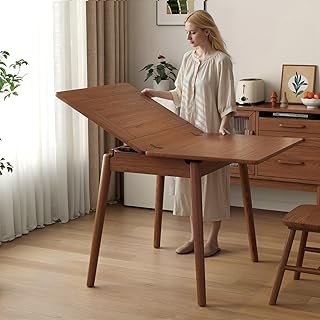
Solid Wood Small Dining Table for 2-6, 23.6"L-47.2"L Expandable Kitchen Table, Designed for Small Spaces, Easy Assembly, Suitable for Kitchen, Dining Room, Living Room, Apartment (Walnut)
An expandable table sized for small spaces speaks directly to the article's kitchen-and-dining budget line, since it lets a reader picture a single purchase that scales from a compact studio setup to occasional larger seating without buying two tables. The pared-back walnut design and small-footprint focus align with a minimalist theme, and easy assembly is a relevant detail given the article's note that assembly costs are often left out of published furnishing ranges.
View on Amazon