Measure Your Apartment Before Buying Furniture: A Room-by-Room Checklist
Design theme: Minimalist
A room-by-room measuring checklist to complete on move-in day, so the sofa, bed, and dresser you order actually fit through the door and into the room.
As an Amazon Associate, Nido earns from qualifying purchases.
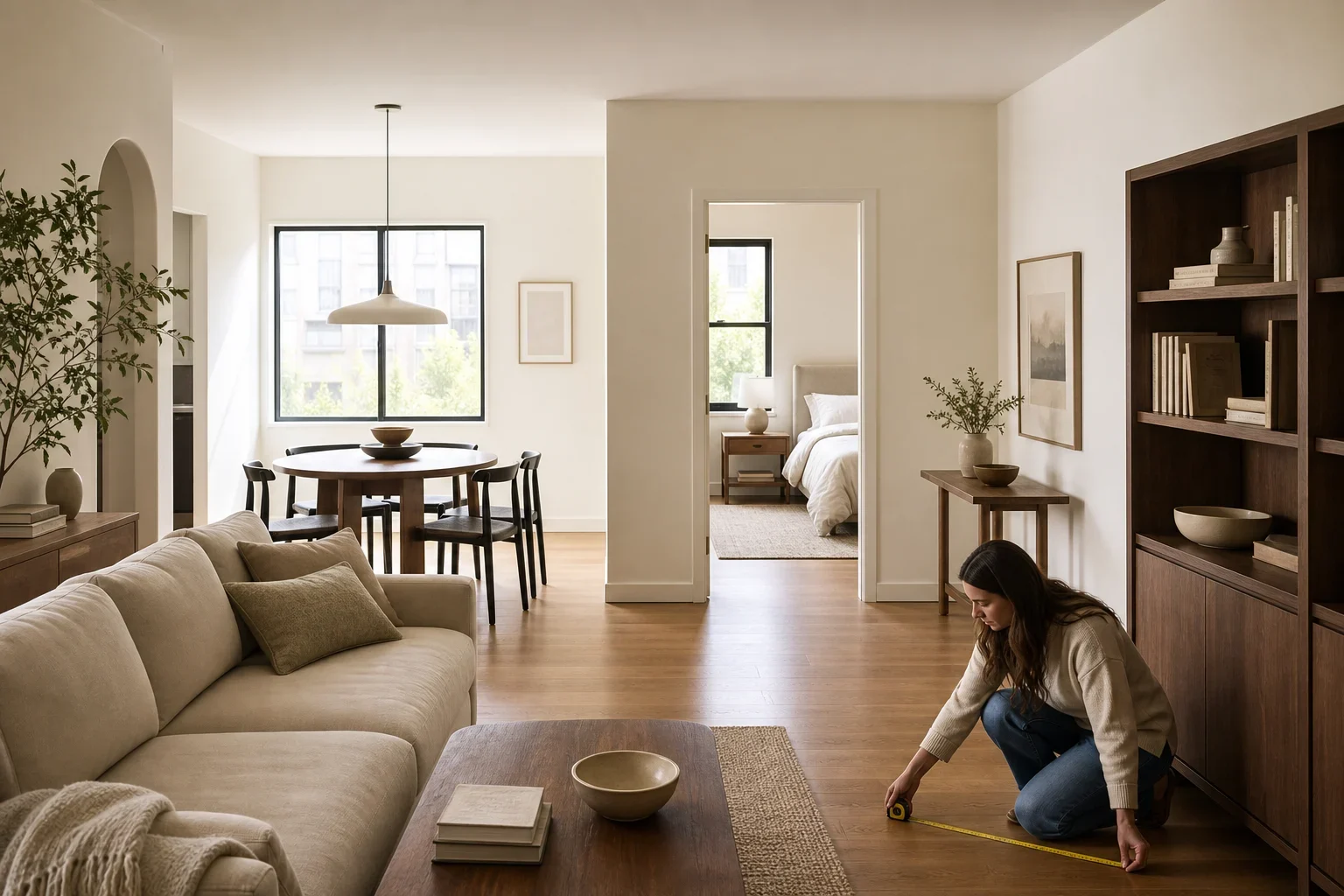
Before you order a single large piece, measure your apartment before buying furniture — it's a ten-minute task that prevents the single most expensive mistake in furnishing a first place: a sofa that won't clear the doorway, a bed frame that eats the only walking path in the bedroom, or a dresser that blocks an outlet you need. This checklist walks through exactly what to measure, room by room, before you place an order.
Do this on move-in day, before you shop, not after a piece arrives. It takes a tape measure, a notepad or your phone, and about twenty minutes per room.
Why measuring apartment space before buying furniture matters
Furniture that doesn't fit is expensive twice: once when you buy it, and again when you pay for a return, a re-delivery, or a swap. Guides that itemize furnishing costs consistently flag this as a preventable overspend rather than an occasional bad luck story. One cost breakdown lists measuring every doorway and room as a specific money-saving move, noting that the piece that won't fit or gets returned is often the most expensive one you buy. A separate furnishing guide puts a number on it: sizing mistakes like a sofa that blocks a doorway or a rug too small for the room typically cost $200 to $2,000 in returns, re-delivery, and replacement once you add it up. Measuring first is the cheapest step in the entire process.
The Room-by-Room Checklist to Measure Your Apartment Before Buying Furniture
Work room by room and write down every number before you shop. For each room, capture:
- Wall lengths — measure every full wall, not just the one you think furniture will sit against. A sofa or dresser plan often shifts once you see the numbers.
- Doorway width and height — measure the door opening itself, not the door. If there's a turn from hallway to room, measure that hallway's width too.
- Ceiling height — matters for floor lamps, tall bookcases, and any bed frame with a headboard.
- Window placement and width — note where windows sit on the wall and how wide they are, so curtain rods and any furniture placed beneath them are sized correctly.
- Outlet and switch placement — mark where outlets sit relative to the wall corners. A nightstand, lamp, or media console needs to reach one without an extension cord running across the floor.
- Radiators, vents, or built-ins — anything fixed to the wall or floor that furniture has to work around.
Entryway and hallways
Measure the front door opening, any interior doorways furniture must pass through, and the narrowest point of the hallway leading to each room. If there's a turn, measure the width on both sides of the turn — a sofa can clear a straight hallway and still get stuck at a corner.
Minimalist product idea: Acanva Mellow Modern Tight Curved Back Velvet Sofa, 3 Seater, Cream | Minimalist Couch for Living Room Apartment, Modular Sectional, Hardwood Frame. This sofa's modular, sectional design is worth keeping in mind exactly where the checklist talks about walking a sectional in at an angle through a hallway turn — before ordering, measure the diagonal path from your entry door to the final resting wall, since a modular piece that separates into sections can sometimes be carried through a tighter turn than a one-piece sofa would need. Its clean-lined, tight-back look also fits a minimalist living room where you're keeping the sightline from door to window as open as the checklist recommends.
Living room
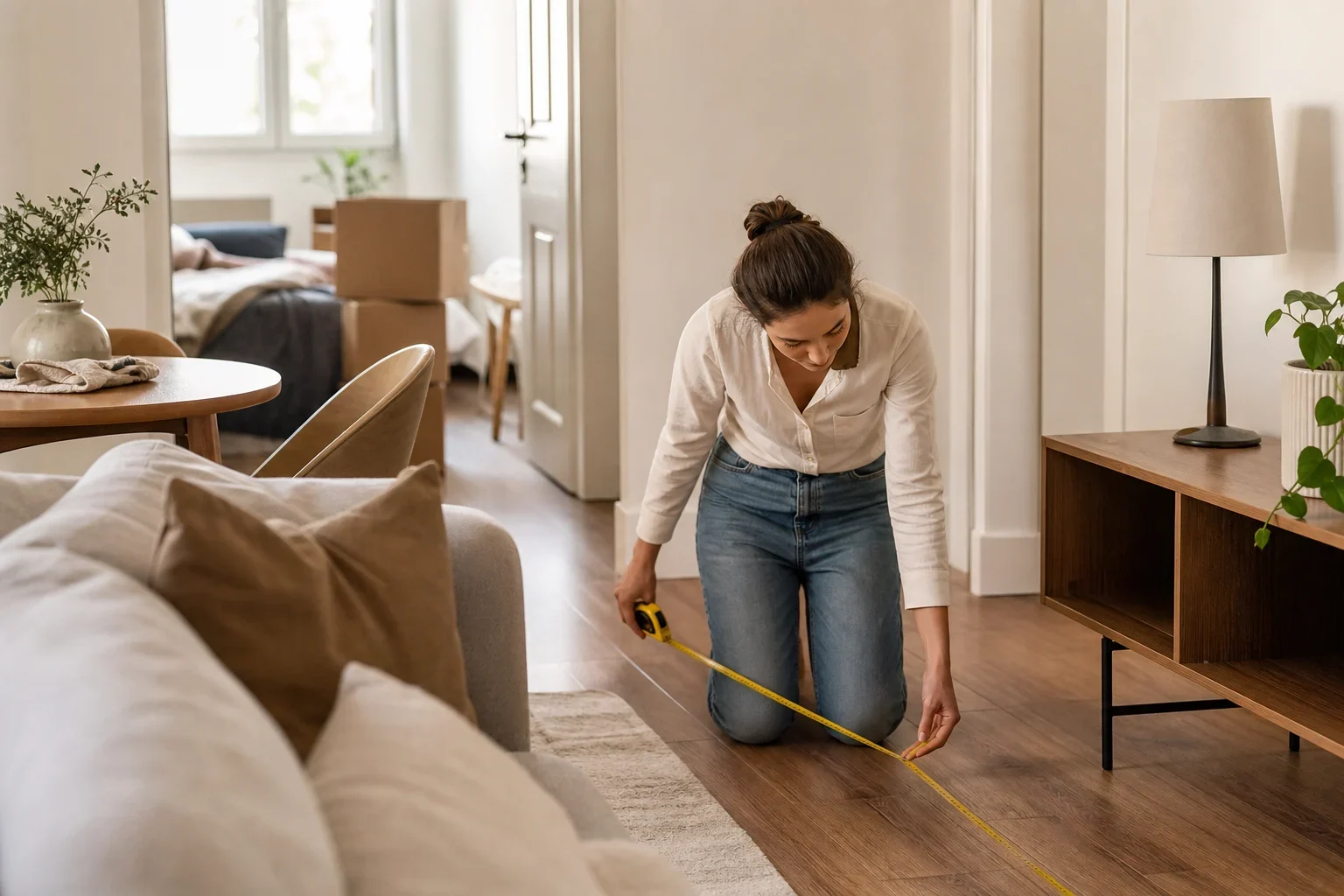
Measure all four walls, the doorway, and the distance from the entry point to where you'd place a sofa. If you're considering a sectional, measure the diagonal path from the door to the final resting spot, since sectionals often need to be walked in at an angle.
Bedroom
Measure wall length for the bed placement, the doorway width, and the path from the door to that wall. Also measure the space you'd need on each side of the bed to open nightstand drawers or walk past comfortably — a common miss is measuring the bed's footprint but not the walking space around it.
Kitchen and dining
Measure the space for a dining table plus at least 30 inches of pull-out chair clearance on each side people will sit. If stools are going under a counter or island, measure counter height and the knee clearance underneath.
Bathroom
Measure floor space for any freestanding storage and the swing radius of the door, since a hamper or shelf placed wrong can block the door from opening fully.
Worked example (hypothetical): measuring a one-bedroom apartment
This is an illustrative walkthrough, not a real household — it's here to show how the numbers get used, not to state facts about any specific apartment.
Minimalist product idea: Mellow Naturalista Classic - 12 Inch Solid Wood Platform Bed with Wooden Slats, No Box Spring Needed, Easy Assembly, Queen, Pine. A low-profile platform bed is a natural fit for the bedroom measuring steps in this checklist, since its slim frame height makes it easier to confirm ceiling clearance and to leave the walking space on each side of the bed that the guide flags as commonly missed. Because it skips a box spring, it's also simpler to test-fit against the wall length and outlet positions you've already measured, without an extra layer adding unplanned height or footprint to your numbers.
Say the living room measures 12 feet by 14 feet, with a doorway 32 inches wide and a hallway leading to it that's 36 inches wide with one 90-degree turn. A sofa that's 84 inches long and 38 inches deep will clear a 32-inch doorway traveling on its end, but the 90-degree hallway turn needs at least a few inches of extra clearance on the diagonal — worth checking against the sofa's specific dimensions before ordering, not after delivery. In the bedroom, a wall measuring 10 feet with two outlets 6 inches off each corner tells you exactly how wide a bed frame with lamps on both nightstands can be, and confirms the dresser won't land in front of the only outlet on the opposite wall. None of this requires guessing once the tape measure numbers are written down.
Turning the numbers into a shopping list
Once you have every measurement, the next step is matching real products to those constraints instead of shopping by eye. Nido's room-by-room planning lets you organize what each room still needs against the dimensions you just measured, so nothing gets picked before you know it fits. From there, AI-matched picks can surface real, in-stock furniture sized to the space and your budget, rather than a guess based on a photo. For the fuller sequencing of what to buy first across an entire first apartment, see the hub guide, What to Buy First for Your First Apartment: A Room-by-Room Priority Order.
Frequently asked questions
What tools do I need to measure an apartment before buying furniture?
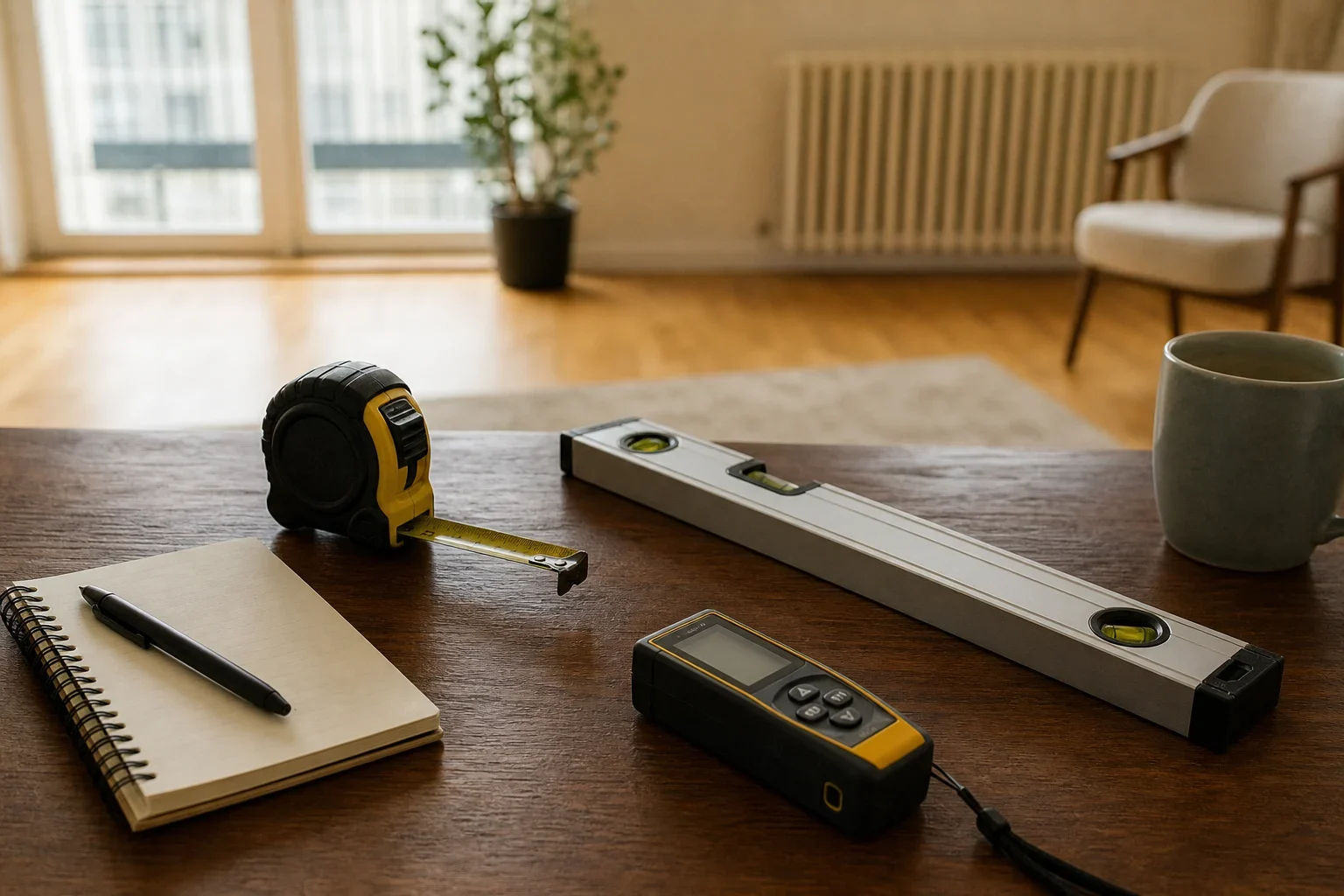
A tape measure, a notepad or your phone's notes app, and about twenty minutes per room are enough. Painter's tape is a useful extra if you want to mark a piece's footprint on the floor before you buy, so you can walk around it and confirm the space feels right.
Which measurements matter most for large furniture like a sofa or bed?
Wall length, doorway width, and the width of the path the piece has to travel from the front door to its final spot matter most. A sofa can fit the wall perfectly and still be unreturnable if it can't clear a hallway turn or a doorway along the way, so measure the entire path, not just the destination wall.
Minimalist product idea: DUMOS 6-Drawer Storage Cabinet, 59" Wide Modern Chest of Drawers, Wood | Storage TV Stand with Metal Handles, Wide Wooden Farmhouse Drawer Organizer for Bedroom, Living Room, Hallway, Home Office. This wide, multi-drawer storage piece is directly relevant to the checklist's warning about a dresser landing in front of the only outlet on a wall — at a considerable width, it's worth measuring the exact wall length and outlet placement first to confirm it won't cover a switch or block foot traffic. Its straightforward, boxy silhouette also suits a minimalist room where storage is meant to sit flush and unobtrusive rather than draw the eye.
How do I measure a doorway for delivery?
Measure the door opening itself — the frame width and height — not the door slab. If the piece will travel through more than one doorway or a hallway turn to reach its room, measure each of those points too, since the narrowest one determines whether the piece gets in at all.
What should I do with the measurements once I have them?
Write them down room by room and keep them next to your shopping list, not in a separate note you'll forget. Checking a product's listed dimensions against your notes before adding it to cart is what turns a measuring checklist into an actual savings, since sizing mistakes are a commonly cited source of costly returns and re-deliveries.
Do I need to measure outlets and light switches too?
Yes, especially in the bedroom and living room. A nightstand or console needs to be near a working outlet, and a dresser placed without checking outlet position can end up blocking the one outlet on that wall, forcing an extension cord or a rearrangement later.
How is measuring different for a studio apartment?
The process is the same, but the stakes are higher, since one room is doing the work of several. Measure every wall and the full path from the door before committing to any single large piece, because a poor fit in a studio has fewer other spots to absorb the mistake.
Shop the Minimalist look
As an Amazon Associate, Nido earns from qualifying purchases.

Acanva Mellow Modern Tight Curved Back Velvet Sofa, 3 Seater, Cream | Minimalist Couch for Living Room Apartment, Modular Sectional, Hardwood Frame
This sofa's modular, sectional design is worth keeping in mind exactly where the checklist talks about walking a sectional in at an angle through a hallway turn — before ordering, measure the diagonal path from your entry door to the final resting wall, since a modular piece that separates into sections can sometimes be carried through a tighter turn than a one-piece sofa would need. Its clean-lined, tight-back look also fits a minimalist living room where you're keeping the sightline from door to window as open as the checklist recommends.
View on Amazon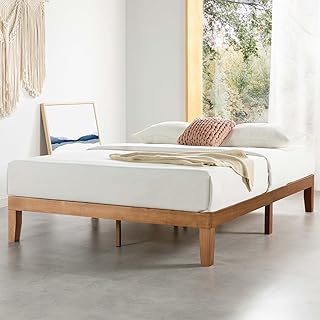
Mellow Naturalista Classic - 12 Inch Solid Wood Platform Bed with Wooden Slats, No Box Spring Needed, Easy Assembly, Queen, Pine
A low-profile platform bed is a natural fit for the bedroom measuring steps in this checklist, since its slim frame height makes it easier to confirm ceiling clearance and to leave the walking space on each side of the bed that the guide flags as commonly missed. Because it skips a box spring, it's also simpler to test-fit against the wall length and outlet positions you've already measured, without an extra layer adding unplanned height or footprint to your numbers.
View on Amazon
DUMOS 6-Drawer Storage Cabinet, 59" Wide Modern Chest of Drawers, Wood | Storage TV Stand with Metal Handles, Wide Wooden Farmhouse Drawer Organizer for Bedroom, Living Room, Hallway, Home Office
This wide, multi-drawer storage piece is directly relevant to the checklist's warning about a dresser landing in front of the only outlet on a wall — at a considerable width, it's worth measuring the exact wall length and outlet placement first to confirm it won't cover a switch or block foot traffic. Its straightforward, boxy silhouette also suits a minimalist room where storage is meant to sit flush and unobtrusive rather than draw the eye.
View on Amazon