First Apartment First Night Essentials: Your First 72 Hours
Design theme: Minimalist
A tight, sequenced checklist for your first three nights in a new apartment — what has to work by night one, and what can wait for the fuller room plan.

As an Amazon Associate, Nido earns from qualifying purchases.
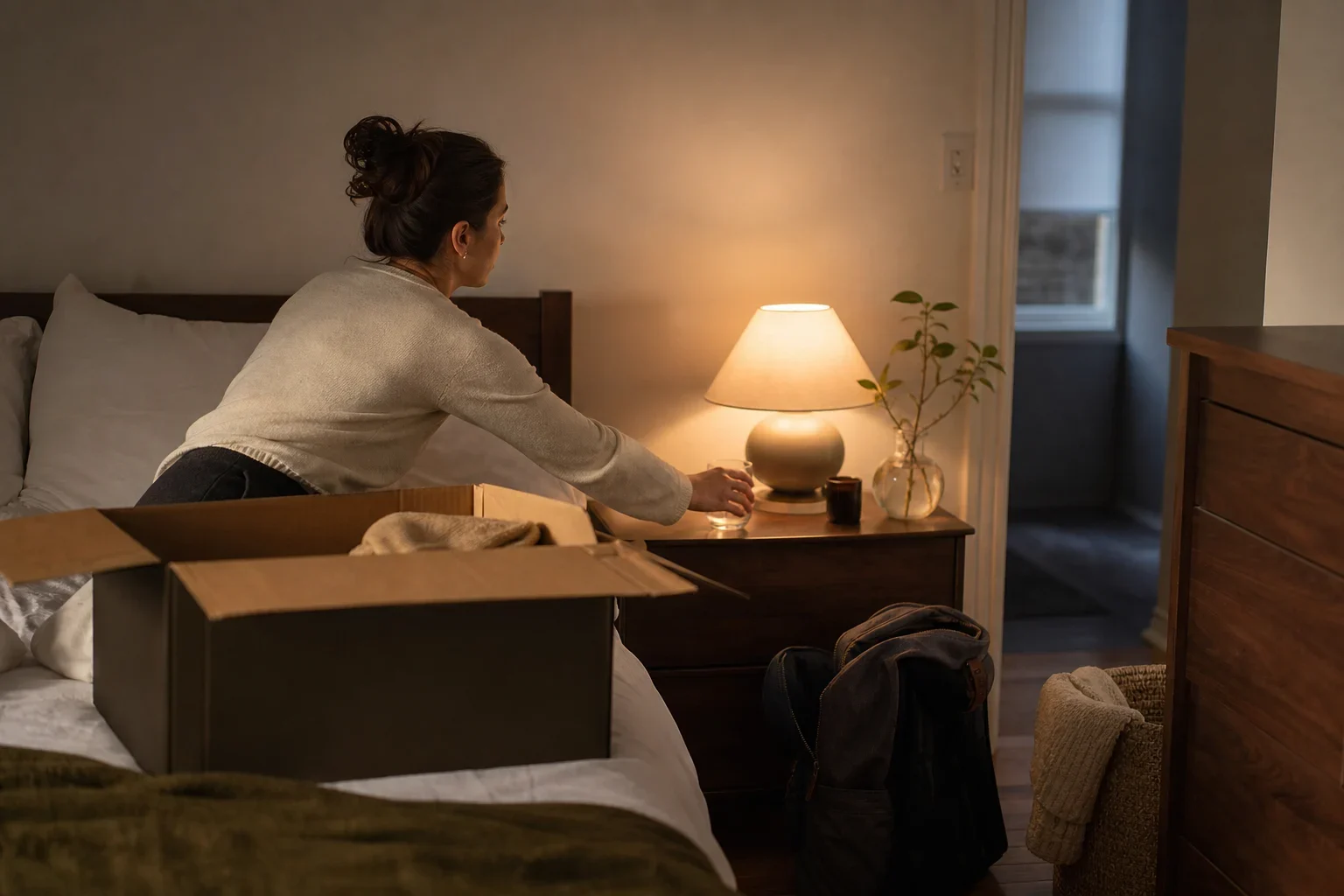
Your first apartment first night essentials should cover sleep, lighting, hygiene, and one basic meal before you tackle the rest of your boxes. Move-in day rarely looks like the finished apartment in your head. Boxes everywhere, no curtains, maybe no chairs. That's fine. The only real job in the first 72 hours is getting a handful of survival functions working: you can sleep, you can see, you can wash up, and you can eat one basic meal. Everything else — the sofa, the art, the matching lamps — belongs on your fuller room-by-room plan, not this list.
This guide is deliberately narrow. If you want the complete priority order for furnishing the whole apartment, that's covered in the room-by-room priority order. Here, we're only answering one question: what needs to work before you unpack a single box?
First apartment first night essentials: the four functions to cover
Independent moving guides consistently group first-apartment needs by room, but for the first three days, room boundaries don't matter — function does. Four things need to work, in this order:
- Sleep. Something to lie down on, off the floor if possible.
- Light. One working light source you control after dark.
- Hygiene. Enough to shower and use the bathroom without digging through boxes.
- One meal. Not a stocked kitchen — just the ability to eat something today.
Checklist: what to have ready before you unpack anything else
Night one
- Mattress or air mattress, set up before dark
- Sheets, one pillow, one blanket
- One lamp or plug-in light, plus a spare bulb
- Phone charger and a power strip (outlets are never where you expect)
- Toilet paper, hand soap, a towel
- Trash bags and a wastebasket (even a spare box works for now)
- A basic toolkit for anything that needs assembling in the dark, literally
Day two
- Shower curtain and liner, plus a bath mat
- One pot, one pan, one knife, a cutting board
- Enough plates, cutlery, and a glass for one person
- Dish soap and a sponge
- A basic first aid kit
Day three
- A place to hang or fold clothes, even temporarily (a rack or a cleared shelf)
- Cleaning basics: all-purpose spray, paper towels, a broom or a Swiffer-style mop
- A second light source if your main room still feels dark after sunset
Notice what's missing on purpose: no sofa, no dining table, no dresser, no TV. Those matter, but not in 72 hours. General first-apartment guides recommend assessing your budget and separating must-haves from nice-to-haves before you shop for anything else, and that separation is exactly what this list draws.
Minimalist product idea: Foldable Floor Bed Frame, Breathable Wooden Roll-Up Slats Base for Japanese Futon Mattress, Low Profile Sleep Bedding (Queen). Night one only requires getting a mattress off the floor, and a low-profile, foldable frame like this can be unrolled and set up in minutes without tools, right alongside boxes still waiting to be opened. Its low, simple silhouette also fits the minimalist theme, since it skips a bulky headboard or frame that would otherwise clutter a room you haven't organized yet.

Worked example: a hypothetical first night
This is a hypothetical walkthrough to show how the sequencing works in practice — not a real household or product recommendation.
Imagine a reader named Priya picks up her keys at 4 p.m. on a Friday. Her truck has a mattress, two boxes of kitchen basics, and a duffel bag of clothes and toiletries. By 7 p.m. she has the mattress made up with sheets, one lamp plugged in near the door, and toilet paper and soap in the bathroom. She orders dinner rather than cooking, because the kitchen box stays sealed until Saturday morning. Saturday, she unpacks the one pot, one pan, and a few dishes, sets up the shower curtain, and does a load of laundry using the building machines since her own clothes are still in the duffel. By Sunday night, she's slept two nights, cooked one simple meal, and showered without hunting for a towel — and the sofa, dining table, and dresser are still on next weekend's list, not this weekend's.
Where this fits in the bigger plan
The first 72 hours are a small, sequenced slice of a much longer furnishing timeline. Once the survival basics are handled, the next decisions — bed frame, seating, storage, a real kitchen setup — deserve their own budget and their own order, matched to the rooms you actually have. A short setup conversation can turn your move-in date into a complete room-by-room plan for what to buy next, so the first-night scramble doesn't turn into weeks of guessing. And once you're past survival mode, organizing what's left to buy by room — instead of by whatever catches your eye online — keeps the next few paychecks from disappearing into things you didn't actually need yet.
What to skip in the first 72 hours
- Matching decor, art, or throw pillows
- A stocked spice rack or specialty kitchen tools
- A dresser or closet system — a duffel bag or a laundry basket holds clothes for a few days
- A coffee table, TV stand, or bookshelf
- Guest bedding or anything for visitors you don't have yet
None of these affect whether you can sleep, see, wash up, or eat tonight. They belong on the list for week two and beyond, once you've lived in the space long enough to know what you actually need.

Minimalist product idea: Bedside Table Lamps, Table Lamp for Bedroom, Lamps for Night Stands with Linen Lampshades, Small Table Lamp for Living Room, Office (Bulb Excluded). This is exactly the 'one working light source you control after dark' the first-night checklist calls for: plug it in near the bed or door and you have usable light before you've unpacked anything else. A small lamp with a simple linen shade also keeps the space visually calm, which suits a minimalist first night where you're avoiding clutter, not adding decor.
Continue planning: What to Buy First for Your First Apartment: A Room-by-Room Priority Order.
Frequently asked questions
What are the essentials for the first night in my apartment?
Have your sleeping setup and bedding ready, one working light, a phone charger, toilet paper, hand soap and a towel. Keep those items accessible so you do not need to search through every box on arrival.
Do I need a fully stocked kitchen on moving day?
No. Focus on being able to eat one basic meal. The next-day checklist adds a pot, pan, knife, cutting board, a few dishes and utensils, plus dish soap and a sponge.
Minimalist product idea: M MELENTA Pots and Pans Set 7 piece, Non Stick Teal Ceramic Cookware Set | Compact Starter Cookware, Nonstick Pots and Pans Set, Induction Cookware, Kitchen Cooking Set, PFAS & PFOA Free. The article's day-two list calls for one pot, one pan, and basic cooking tools to manage a single simple meal, and a compact starter cookware set covers that without unpacking a full kitchen. Choosing one small, uniform set rather than mismatched pieces also keeps the counter minimal while you're still living out of boxes.
When should I set up my bed?
Set up your mattress or temporary sleeping arrangement and bedding before dark if you can. Completing that task early gives you a usable place to rest even when most boxes remain packed.
Can I wait to buy a dresser or sofa?
Yes. The first-72-hours plan leaves larger furniture purchases for the fuller furnishing plan. A temporary place for clothes can serve while you decide what storage and seating suit the apartment.
What should I leave off my first-night shopping list?
Matching decor, art, throw pillows, specialty kitchen tools and furniture for visitors can wait. Cover sleeping, seeing, washing and eating first, then plan later purchases around the rooms and budget you actually have.
Shop the Minimalist look
As an Amazon Associate, Nido earns from qualifying purchases.

Foldable Floor Bed Frame, Breathable Wooden Roll-Up Slats Base for Japanese Futon Mattress, Low Profile Sleep Bedding (Queen)
Night one only requires getting a mattress off the floor, and a low-profile, foldable frame like this can be unrolled and set up in minutes without tools, right alongside boxes still waiting to be opened. Its low, simple silhouette also fits the minimalist theme, since it skips a bulky headboard or frame that would otherwise clutter a room you haven't organized yet.
View on Amazon
Bedside Table Lamps, Table Lamp for Bedroom, Lamps for Night Stands with Linen Lampshades, Small Table Lamp for Living Room, Office (Bulb Excluded)
This is exactly the 'one working light source you control after dark' the first-night checklist calls for: plug it in near the bed or door and you have usable light before you've unpacked anything else. A small lamp with a simple linen shade also keeps the space visually calm, which suits a minimalist first night where you're avoiding clutter, not adding decor.
View on Amazon
M MELENTA Pots and Pans Set 7 piece, Non Stick Teal Ceramic Cookware Set | Compact Starter Cookware, Nonstick Pots and Pans Set, Induction Cookware, Kitchen Cooking Set, PFAS & PFOA Free
The article's day-two list calls for one pot, one pan, and basic cooking tools to manage a single simple meal, and a compact starter cookware set covers that without unpacking a full kitchen. Choosing one small, uniform set rather than mismatched pieces also keeps the counter minimal while you're still living out of boxes.
View on Amazon