The First Apartment Lighting Checklist: What to Buy Before It Gets Dark
Design theme: Minimalist
A room-by-room first apartment lighting checklist covering floor lamps, table lamps, and bulb warmth — the overlooked category most day-one lists bury in a single line.
As an Amazon Associate, Nido earns from qualifying purchases.
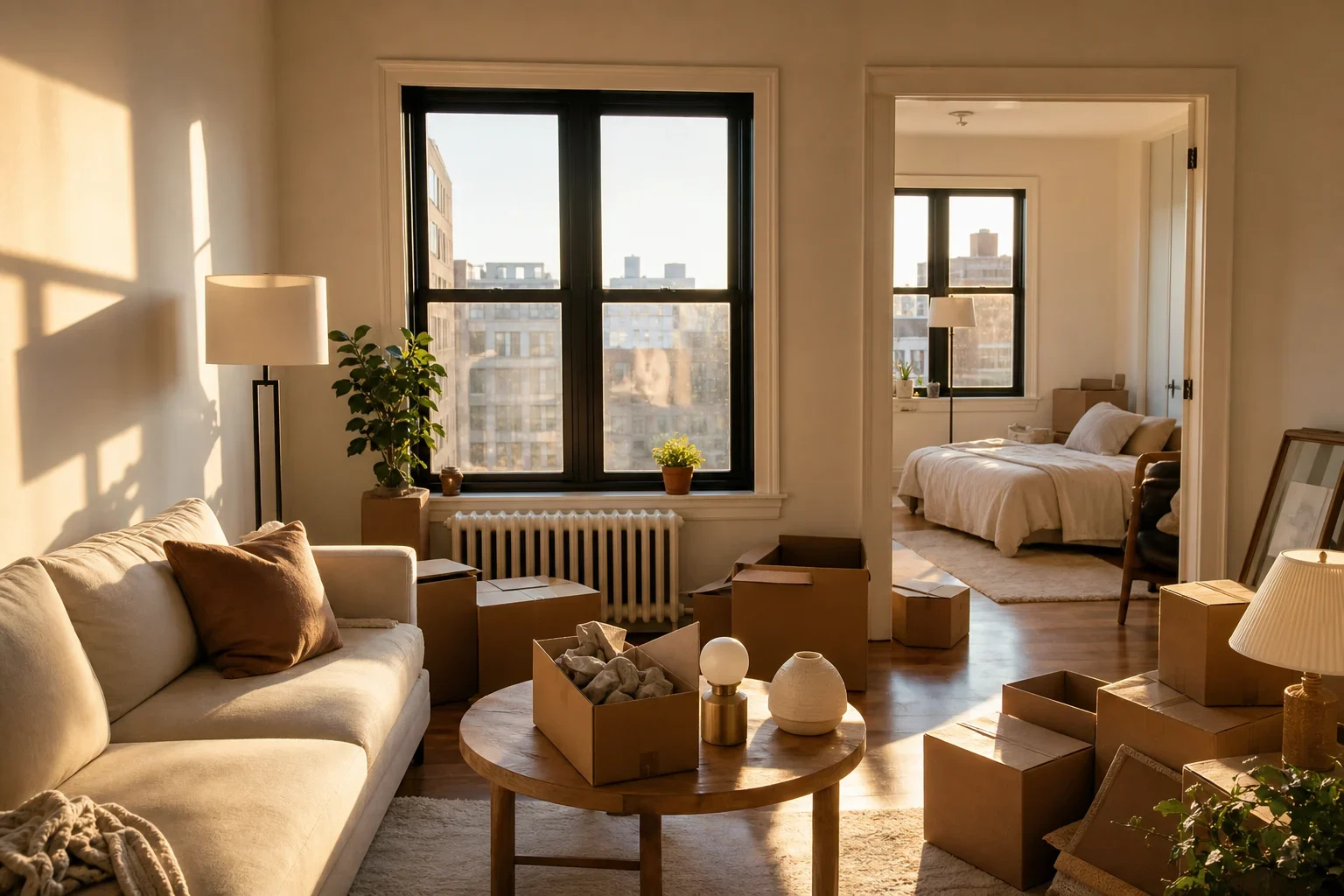
Most first-apartment lists mention lighting once, as a throwaway line inside a bigger day-one kit: "lamps." Then move-in night arrives, the sun goes down, and the only light in the apartment is whatever bulb the previous tenant left in the ceiling fixture, if there's a ceiling fixture at all. This first apartment lighting checklist treats lighting as its own category, with its own budget and its own buying order, so you're not shopping for lamps by flashlight.
If you haven't yet mapped out the rest of your move, our room-by-room priority order for a first apartment covers the bigger sequencing question of what to buy first overall. This guide zooms in on one piece of that plan: light.
Why lighting gets skipped
Lighting is easy to underbudget because it hides inside other purchases. A sofa is one line item with an obvious price tag. A lamp feels optional until you're sitting in a dark room at 8pm with a laptop and no outlet nearby. Renters also tend to assume the apartment comes with enough overhead lighting, but many first apartments, especially older buildings, have only one or two ceiling fixtures and no lighting at all in the bedroom beyond a single bulb.
The result is a familiar pattern: everything else gets planned in advance, and lighting gets bought in a panic on move-in week, usually at whatever price the nearest store charges.
The first apartment lighting checklist
Here is a lamp-by-lamp list to work through before move-in day, organized by room. Treat it the same way you'd treat a furniture list: something to check off, not something to remember.
Minimalist product idea: EDISHINE 59.84" LED Corner Floor Lamp, 3000K & Stepless Dimmable, Black. A tall corner floor lamp is exactly the living room ambient source this checklist calls for, and the listed 3000K warm-white setting matches the guide's advice to keep relaxing spaces on the cozy end of the Kelvin scale rather than a stark daylight tone. The stepless dimmer also means one lamp can flex between full ambient light and a softer evening glow, which suits the minimalist goal of covering a layer of lighting without adding extra fixtures or clutter to the room. Its slim, corner-fitting profile is a practical fit for a first apartment where floor space is tight and a bulky lamp base would compete with limited furniture.
Living room
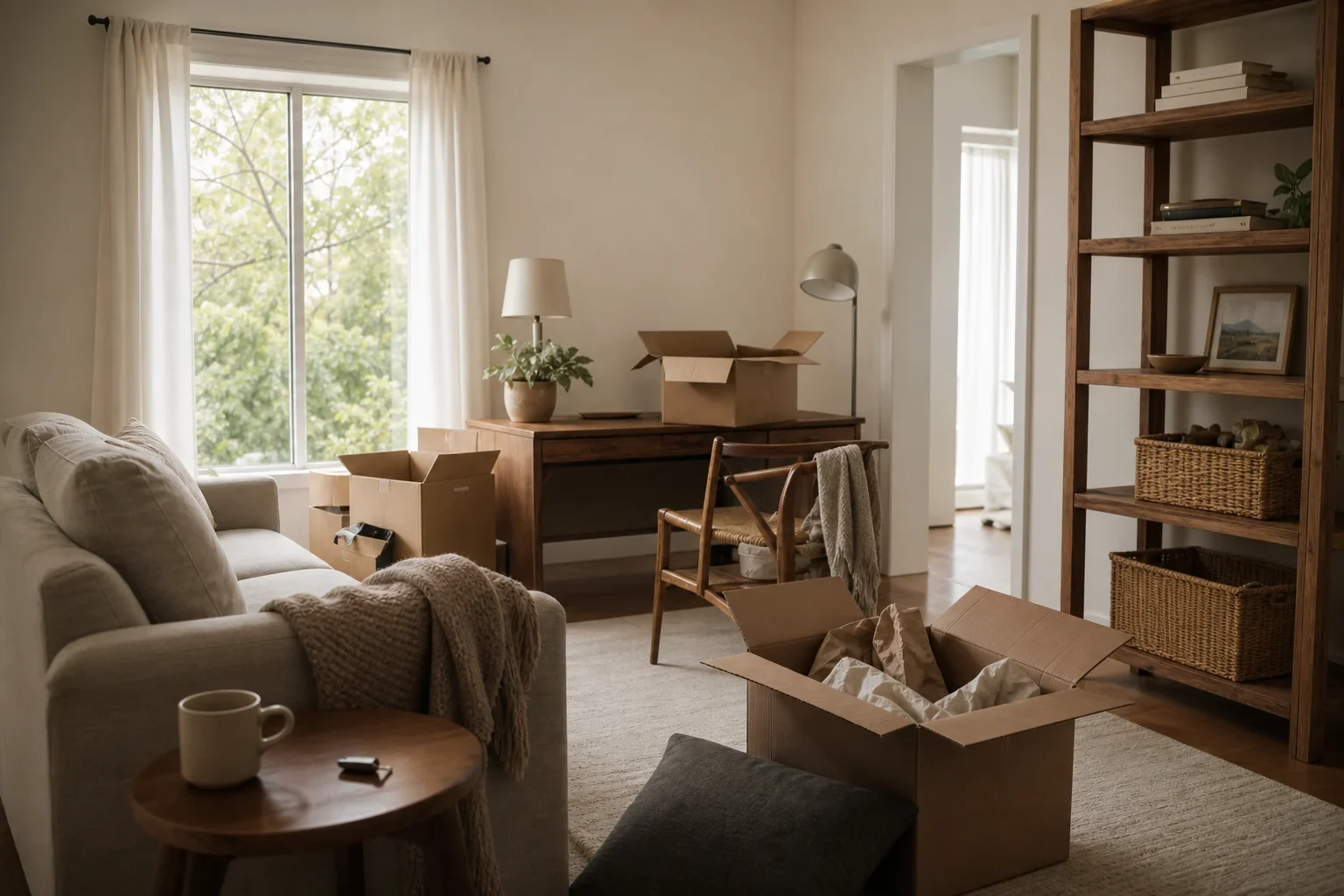
- One floor lamp near the main seating area, for general ambient light
- One table lamp on a side table or console, for a softer secondary source
- A backup bulb for whichever fixture is already installed, since you won't know if it works until you flip the switch
Bedroom
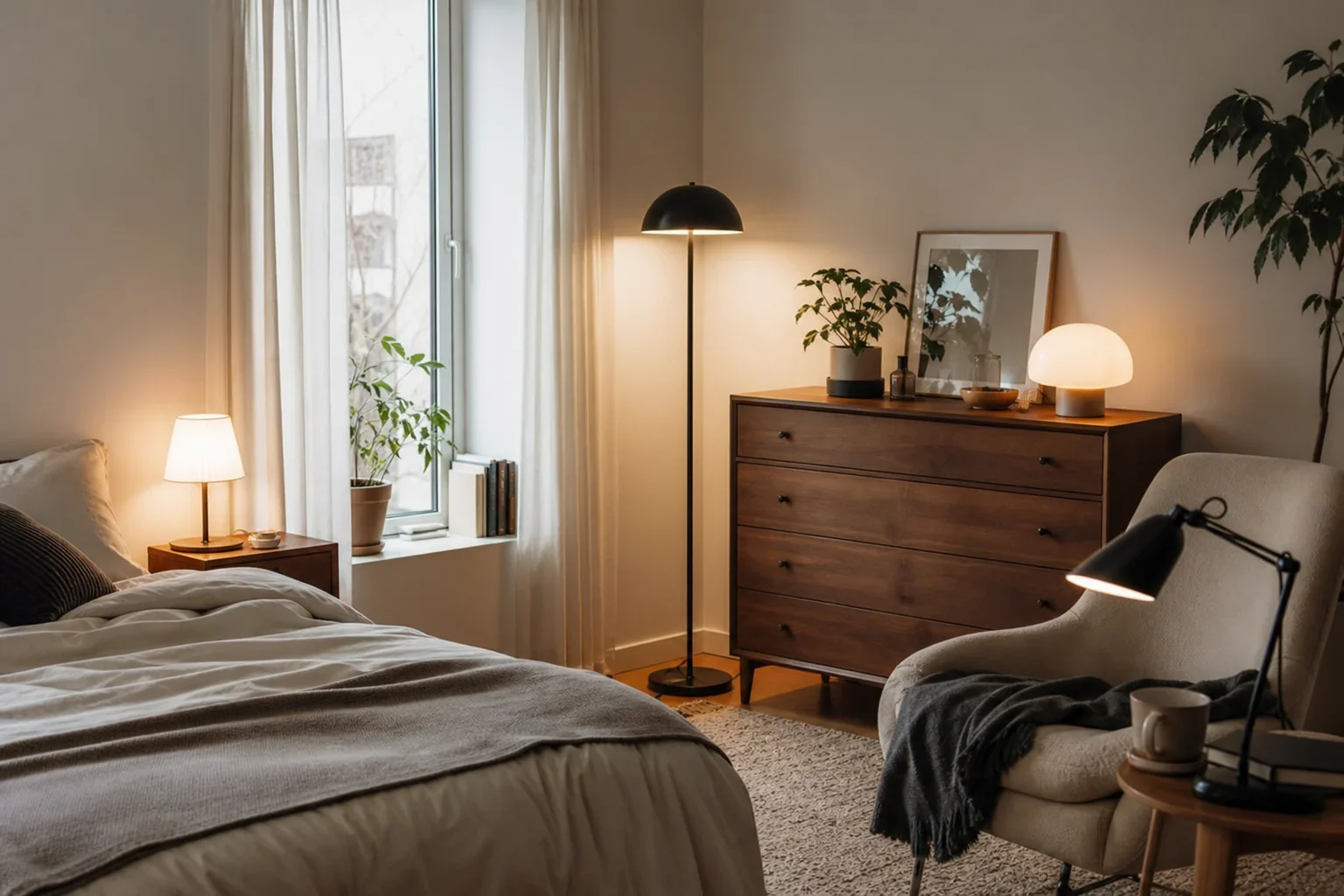
- A pair of nightstand or table lamps, one on each side of the bed if space allows
- A dimmable bulb if the fixture supports it, since bedrooms rarely need full brightness at night
Kitchen and dining
- A pendant or overhead fixture if one isn't already installed (renter-friendly plug-in pendants exist if you can't rewire)
- A small task light under cabinets or over a counter, if the room is dim
Bathroom
- A brighter, whiter bulb for the vanity area, since this is the one room where true color matters for grooming
Entry and hallway
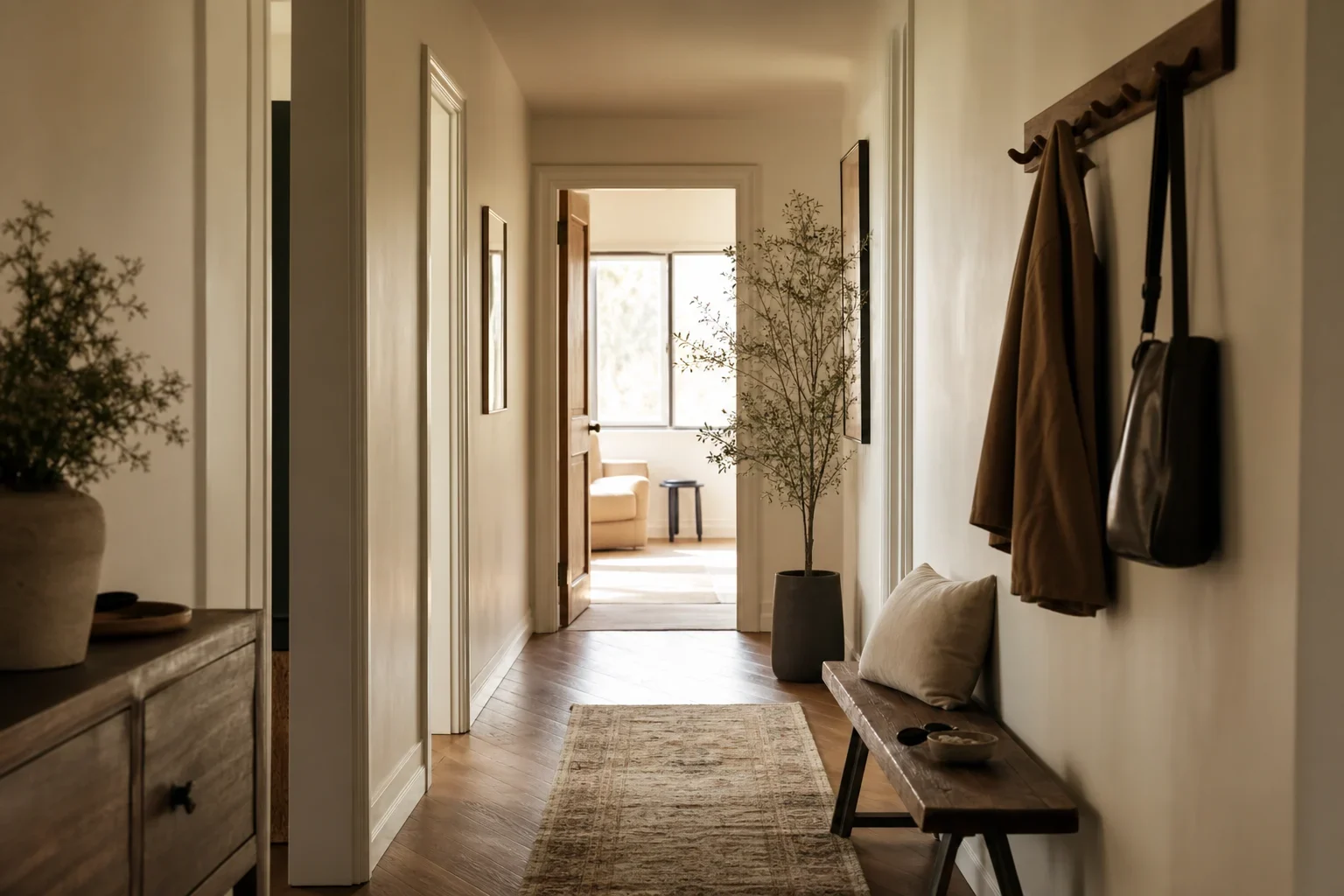
- One small lamp or plug-in sconce near the door, so you're not fumbling for a switch in the dark
Bulb warmth: the part nobody explains
Buying the lamp is only half the job. The bulb inside it determines whether a room feels calm or clinical. Bulbs are labeled in Kelvin (K):
- Warm white (2700K–3000K): the yellowish, cozy light most living rooms and bedrooms want. Closest to an old incandescent bulb.
- Neutral white (3500K–4100K): a balanced, slightly whiter light that works well in kitchens.
- Daylight (5000K–6500K): a bright, bluish-white light best reserved for bathroom vanities or a desk task lamp, where true color and alertness matter more than coziness.
A simple rule: use warm bulbs anywhere you relax, and reserve cooler, brighter bulbs for anywhere you need to see detail clearly, like a bathroom mirror or a reading desk.
Ambient, task, and accent: the three jobs a room's lighting has to do
Lighting designers often talk about three layers, and it's a useful filter for a first apartment too. Ambient light fills the room generally (a ceiling fixture or floor lamp). Task light is aimed at a specific activity (a desk lamp, an under-cabinet light). Accent light is decorative (a small lamp in a corner, a string of warm bulbs). Most first apartments only need one source per layer per room — you don't need three lamps in a studio living room, but you probably need more than the one overhead bulb the apartment came with.
A worked example: furnishing a one-bedroom's lighting on a real budget
The following is a hypothetical, illustrative example, not a quoted price from any retailer.
Imagine a one-bedroom apartment with a living room, bedroom, small kitchen, and one bathroom. A reasonable lighting-only shopping list might look like: one living room floor lamp, one living room table lamp, a pair of bedroom nightstand lamps, one kitchen under-cabinet task light, and a brighter bulb swap for the bathroom vanity. That's six purchases across four rooms, none of them major, but skip the planning step and you'll end up buying two of them twice because you forgot what you already had.
Minimalist product idea: Table Lamps for Bedrooms Set of 2, Minimalist Bedside Lamps Set with Round Fabric Linen Shade,Reading Small Desk Lamp Set of 2 for Kids Room, Night Nightstand Lamp Set for Living Room, Office. This set of two matches the checklist's specific call for a nightstand lamp pair, one on each side of the bed, so a single purchase can check off that bedroom line item rather than buying two mismatched lamps separately. A simple round fabric shade reads as unfussy and uncluttered, aligning with a minimalist theme that favors plain forms over ornate lamp bases. Pairing this set with a warm, dimmable bulb (as the article recommends) would let renters get soft, even bedside light on both sides without overpowering a small room.
Some published cost breakdowns give a sense of scale for this category. One itemized apartment furnishing guide lists floor-plus-table lamp pairs for a living room at roughly $119 on a value build and $329 on a premium build, as part of a full one-bedroom fit-out. A separate room-by-room cost breakdown puts a budget-tier floor lamp and table lamp combination at roughly $60 to $120, rising to roughly $200 to $500 for a mid-range lighting setup that adds a pendant, and lists bedroom lamp pairs at roughly $40 to $80 on a budget tier. These are general market ranges, not Nido prices, but they're a useful sanity check when you're deciding how much of your budget lighting should actually take up.
Where a room-by-room plan helps
Because lighting spans nearly every room but rarely gets its own line in a moving budget, it's easy to lose track of what you've already bought versus what's still missing. Nido's room-by-room planning breaks a full move into every room and every item, including the smaller categories like lighting that longer lists tend to bury, so a floor lamp for the living room and a task light for the kitchen show up as separate, trackable decisions instead of one vague "lamps" line. And because lighting choices are visual as much as practical, Nido's AI-matched product picks can suggest real, in-stock lamps and fixtures sized to your rooms and your budget, rather than leaving you to guess at warmth and scale from a product photo alone.
Frequently asked questions
How many lamps does a first apartment actually need?
For a typical one-bedroom, plan on roughly five to seven light sources total: two in the living room (floor plus table lamp), two in the bedroom (a nightstand pair), one in the kitchen if the overhead fixture is weak, one in the entry, and a bulb swap in the bathroom. A studio can usually get by with fewer, since one or two well-placed lamps often cover both the sleeping and living zones.
What's the difference between warm and cool light bulbs?
Warm bulbs (around 2700K to 3000K) give off a yellowish, relaxed light and suit living rooms and bedrooms. Cool or daylight bulbs (around 5000K to 6500K) are brighter and bluer, and work best where you need to see true color and detail clearly, like a bathroom vanity or a desk lamp for close work.
Minimalist product idea: Gritin 10.2inch Under Cabinet Lighting Rechargeable 2 Pack. This two-pack of rechargeable under-cabinet lights maps directly onto the checklist's kitchen task-lighting suggestion for dim counters, and being rechargeable rather than hardwired makes it a renter-friendly way to add task light without any installation or landlord approval. Two units let a first apartment cover both sides of a small kitchen counter or under a run of cabinets, echoing the article's point that task light should be aimed narrowly at a work surface rather than lighting the whole room. Its compact, low-profile design also suits a minimalist kitchen where visible fixtures and cords would otherwise clutter the counter.
Do I need a ceiling light, or is a floor lamp enough?
It depends on the room and what's already installed. If your apartment came with a working overhead fixture, a floor lamp or table lamp can supplement it for softer evening light. If a room has no overhead fixture at all, which is common in older bedrooms, a floor lamp or a renter-friendly plug-in pendant becomes your main light source rather than a backup.
How much should I budget for lighting in a first apartment?
Published cost breakdowns suggest a rough range: a budget floor lamp and table lamp pair for a living room can run about $60 to $120, with mid-range setups (including a pendant) closer to $200 to $500, and bedroom lamp pairs starting around $40 to $80 at a budget tier. Treat these as general market ranges to plan around, not guaranteed prices, and confirm current costs before you buy.
Should I buy lighting before or after the rest of my furniture?
Buy at least one lamp per main room before move-in day, alongside your other day-one essentials. Lighting is cheap and small enough to bring with you, and living without it for even a few nights is more disruptive than living without a coffee table. Save decorative or accent lighting for later, once the bigger furniture is in place.
What bulb type works best for a rented apartment?
A dimmable, warm-white LED bulb is a safe default for living rooms and bedrooms, since it lets you adjust brightness without buying a second lamp, and LEDs run cooler and last longer than older bulb types. For a bathroom vanity, a brighter, more neutral or daylight bulb will show true color better when you're getting ready.
Shop the Minimalist look
As an Amazon Associate, Nido earns from qualifying purchases.

EDISHINE 59.84" LED Corner Floor Lamp, 3000K & Stepless Dimmable, Black
A tall corner floor lamp is exactly the living room ambient source this checklist calls for, and the listed 3000K warm-white setting matches the guide's advice to keep relaxing spaces on the cozy end of the Kelvin scale rather than a stark daylight tone. The stepless dimmer also means one lamp can flex between full ambient light and a softer evening glow, which suits the minimalist goal of covering a layer of lighting without adding extra fixtures or clutter to the room. Its slim, corner-fitting profile is a practical fit for a first apartment where floor space is tight and a bulky lamp base would compete with limited furniture.
View on Amazon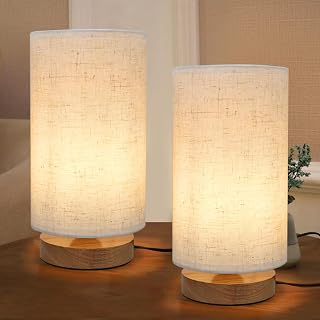
Table Lamps for Bedrooms Set of 2, Minimalist Bedside Lamps Set with Round Fabric Linen Shade,Reading Small Desk Lamp Set of 2 for Kids Room, Night Nightstand Lamp Set for Living Room, Office
This set of two matches the checklist's specific call for a nightstand lamp pair, one on each side of the bed, so a single purchase can check off that bedroom line item rather than buying two mismatched lamps separately. A simple round fabric shade reads as unfussy and uncluttered, aligning with a minimalist theme that favors plain forms over ornate lamp bases. Pairing this set with a warm, dimmable bulb (as the article recommends) would let renters get soft, even bedside light on both sides without overpowering a small room.
View on Amazon
Gritin 10.2inch Under Cabinet Lighting Rechargeable 2 Pack
This two-pack of rechargeable under-cabinet lights maps directly onto the checklist's kitchen task-lighting suggestion for dim counters, and being rechargeable rather than hardwired makes it a renter-friendly way to add task light without any installation or landlord approval. Two units let a first apartment cover both sides of a small kitchen counter or under a run of cabinets, echoing the article's point that task light should be aimed narrowly at a work surface rather than lighting the whole room. Its compact, low-profile design also suits a minimalist kitchen where visible fixtures and cords would otherwise clutter the counter.
View on Amazon