The College Off Campus Apartment Checklist for First-Time Movers
Design theme: Minimalist
A room-by-room college off campus apartment checklist for students moving from a dorm into their first shared rental on a tight back-to-school timeline.
As an Amazon Associate, Nido earns from qualifying purchases.
Moving off campus for the first time squeezes a dorm-to-apartment transition into just a few weeks around the start of the semester. A dorm room came with a bed frame, a desk, and someone else handling the kitchen. An apartment comes with none of that — and a lease start date that doesn't move. This college off campus apartment checklist is scoped specifically to that gap: the handful of categories a student actually needs to solve before classes start, in the order they need to be solved, without trying to replicate a fully furnished home in one shopping trip.
The goal isn't a complete apartment on day one. It's a livable one — sleep, basic cooking, storage for the things you're bringing from home or a dorm, and a plan for what's shared versus individual with roommates. Everything else can wait past syllabus week.
What's different about a dorm-to-apartment move
Dorm furniture is built in: a twin bed, a desk, sometimes a dresser. An off-campus apartment starts empty, and students moving into one for the first time are often doing it on a tighter budget and a shorter runway than a typical first-time renter, since the move has to land before classes begin. General first-apartment guidance from renter resources suggests total furnishing costs commonly land anywhere from around $2,000 for a stripped-down setup to $5,000–$8,000 for a more complete one-bedroom, depending on how much is bought new versus secondhand and how many rooms need filling at once. For a student apartment split with roommates, the per-person number is usually much lower, since shared items like a sofa or dining table get bought once and split, not duplicated.
The college off campus apartment checklist: five priorities before day one
Instead of one long undifferentiated list, sort what you need into five categories and work through them in this order. Each one answers a specific question your dorm answered for you automatically.
1. Sleep (bed frame, mattress, bedding)
If you're not bringing a dorm mattress or a bed from home, this is the first purchase to make, not the last. A basic bed frame and mattress commonly run in the range of a few hundred dollars for a functional setup, and bedding — sheets, a pillow, a blanket — adds another modest amount on top. This is worth buying new rather than secondhand, since mattress quality directly affects sleep and can't be easily inspected used.
Minimalist product idea: Mellow Naturalista Classic - 12 Inch Solid Wood Platform Bed with Wooden Slats, No Box Spring Needed, Easy Assembly, Queen, Pine. This fits the checklist's first priority: sleep. A low-profile solid wood platform that skips the box spring keeps the bedroom setup simple and easy to assemble during a tight move-in window, which suits a minimalist approach where the bed frame is a clean, single-piece solution rather than an added layer of parts to source and coordinate.

2. Basic kitchen (cook four meals, not forty)
You don't need a full cookware set in week one. A knife, a cutting board, one pan, one pot, a few utensils, and enough plates and cups for the people living there covers real cooking. Small appliances — a toaster, a microwave, a coffee maker — are worth checking against what the apartment already provides before buying duplicates, especially in a shared kitchen.
3. Storage (closet gaps, not a full dresser)
Many off-campus apartments have smaller closets than a dorm room's built-in wardrobe space. Before buying a dresser, check what the closet can actually hold with a hanging organizer or storage bins — a dresser can often wait until after move-in, once you know what's genuinely overflowing.
4. Shared living decisions (what roommates buy together)
A sofa, coffee table, and dining set are one-time shared purchases in most off-campus apartments — buying them individually per roommate is the single most common overspend in a shared move-in. Agree in writing, before move-in day, on who's buying what shared item and how the cost splits, so two people don't both show up with a couch.
5. Move-in day logistics (what has to work immediately)
Confirm before the lease starts: which utilities are the tenant's responsibility, whether the unit has any furniture already (a stove, a fridge), and whether move-in day overlaps with a roommate's move-in so bathrooms, parking, and elevator or stairwell access aren't a surprise.
A worked example: two roommates, three weeks out (hypothetical)
To make this concrete, here's a hypothetical illustration — not a real case study — of how two students splitting a two-bedroom off-campus apartment might divide the checklist above with three weeks until the semester starts.

Minimalist product idea: Homsorout Hanging Closet Organizer 4 Tier - Clothes Hanging Shelves, Space-Saving Closet System, Fabric Storage Bins Bedroom Organization, Collapsible Baskets for Home, Dorm, Rv, Beige. This addresses the checklist's storage step directly: closing closet gaps before committing to a full dresser. A tiered hanging organizer with collapsible fabric bins adds vertical storage inside an existing closet, which matches the minimalist, space-conscious approach of solving overflow without introducing bulky furniture during move-in.
- Week 1: Each roommate buys their own bed and bedding individually (bedroom items, not shared). They agree together on one sofa and one coffee table, splitting the cost 50/50.
- Week 2: One roommate buys the basic cookware set since they cook more; the other covers plates, glasses, and cutlery for both. They check the unit listing and confirm a stove and fridge are already included, so no large appliance purchase is needed.
- Week 3: Storage gets solved last — each roommate buys a hanging closet organizer for their own room instead of a dresser, planning to revisit furniture needs after a month of actually living there.
The pattern in this hypothetical example holds generally: bedroom items stay individual, living-room and kitchen basics get split, and anything that isn't urgent — a rug, wall art, extra storage — gets pushed past move-in day. Nido's setup flow can turn a lease start date and a room list into this kind of sequenced plan automatically, and room-by-room planning keeps shared versus individual items sorted so nothing gets bought twice.
For the narrower question of what has to work in the very first days after keys are in hand, a related guide on first apartment first-night essentials breaks down the survival-only subset of this list.
Frequently asked questions
What's the minimum I actually need before move-in day?
At a minimum: something to sleep on, basic bedding, a way to cook one simple meal, and a plan with roommates for who's covering shared items like a sofa. Everything else — a dresser, decor, a full cookware set — can be added in the weeks after you've moved in and know what you're actually missing.
Should roommates buy furniture together or separately?
Bedroom items like beds and dressers are almost always individual purchases, since they're used by one person. Shared-space items — a sofa, coffee table, and dining set — are worth agreeing on together and splitting the cost, since buying one per roommate is a common and avoidable overspend in shared apartments.

Minimalist product idea: CAROTE 21pcs Pots and Pans Set Non Stick, Detachable Handle Cookware, Black | Induction Compatible, Dishwasher & Oven Safe, Space Saving, for Camping/RV/Traveling, Kitchen Cooking Set, House Warming Gift. While the checklist recommends starting with just one pan, one pot, and basic utensils rather than a full set, this cookware's space-saving, detachable-handle design is worth noting for roommates who want fewer bulky pieces taking up shared kitchen storage, which aligns with a minimalist, low-clutter approach even though it exceeds the week-one minimum described in the article.
Do I need a full kitchen set on day one?
No. A knife, a cutting board, one pan, one pot, basic utensils, and place settings for the people living there cover real cooking. A larger cookware set, specialty appliances, and bakeware can wait until you know what you actually cook regularly.
What should I check before buying furniture for an off-campus apartment?
Confirm what the unit already includes — a stove, a fridge, sometimes a dishwasher — before budgeting for those items. Also check closet size and layout before buying a dresser; many off-campus apartments have less built-in storage than a dorm room, but a hanging organizer or bins can close the gap without a large furniture purchase.
How much does furnishing a shared off-campus apartment typically cost per person?
General first-apartment cost guidance suggests total furnishing spend for a full one-bedroom setup commonly ranges from around $2,000 to $8,000 depending on how much is new versus secondhand. Splitting shared items like a sofa and dining set across two or more roommates brings the per-person share down meaningfully compared to furnishing a solo apartment.
When should I start shopping if the semester starts in three weeks?
Start with sleep and any shared-item agreements with roommates in the first week, since those take the longest to source and coordinate. Basic kitchen items and storage solutions can be picked up in the final week or two, once you've confirmed what the unit already provides and what your closet space actually looks like.
Shop the Minimalist look
As an Amazon Associate, Nido earns from qualifying purchases.
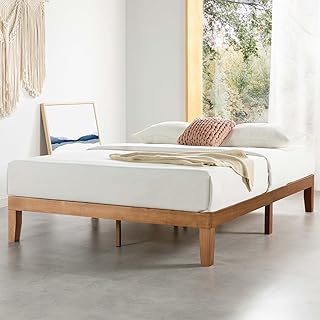
Mellow Naturalista Classic - 12 Inch Solid Wood Platform Bed with Wooden Slats, No Box Spring Needed, Easy Assembly, Queen, Pine
This fits the checklist's first priority: sleep. A low-profile solid wood platform that skips the box spring keeps the bedroom setup simple and easy to assemble during a tight move-in window, which suits a minimalist approach where the bed frame is a clean, single-piece solution rather than an added layer of parts to source and coordinate.
View on Amazon
Homsorout Hanging Closet Organizer 4 Tier - Clothes Hanging Shelves, Space-Saving Closet System, Fabric Storage Bins Bedroom Organization, Collapsible Baskets for Home, Dorm, Rv, Beige
This addresses the checklist's storage step directly: closing closet gaps before committing to a full dresser. A tiered hanging organizer with collapsible fabric bins adds vertical storage inside an existing closet, which matches the minimalist, space-conscious approach of solving overflow without introducing bulky furniture during move-in.
View on Amazon
CAROTE 21pcs Pots and Pans Set Non Stick, Detachable Handle Cookware, Black | Induction Compatible, Dishwasher & Oven Safe, Space Saving, for Camping/RV/Traveling, Kitchen Cooking Set, House Warming Gift
While the checklist recommends starting with just one pan, one pot, and basic utensils rather than a full set, this cookware's space-saving, detachable-handle design is worth noting for roommates who want fewer bulky pieces taking up shared kitchen storage, which aligns with a minimalist, low-clutter approach even though it exceeds the week-one minimum described in the article.
View on Amazon