The First Apartment Tool Kit: What to Buy Before You Assemble Anything
Design theme: Minimalist
A complete first apartment tool kit for furniture assembly: the exact tools worth buying, what can wait, a worked weekend example, and how to plan around it.

As an Amazon Associate, Nido earns from qualifying purchases.
Every first apartment checklist tells you to buy a bed, a dresser, and a bookshelf. Almost none of them tell you what you need to actually put those pieces together. A first apartment tool kit for furniture assembly is a short, specific list — not a garage full of gear — and getting it right before delivery day means you're not standing over a half-built bed frame at 10 p.m. with the wrong size hex key.
This guide covers the core tools worth owning, what can reasonably wait, a worked example of a typical assembly weekend, and how to fold tool shopping into the rest of your move-in plan.
Why a tool kit belongs on your first apartment checklist
Flat-pack furniture — the kind most first apartments are furnished with — almost always ships with a cheap, undersized hex key and a handful of proprietary screws. That tool works, barely, for one build. If you're assembling a bed frame, a dresser, and a few shelves in the same week, that flimsy included wrench will slow you down and can strip screws before you're halfway through the first piece.
A proper kit also covers everyday apartment life beyond assembly: hanging curtains, mounting a mirror, tightening a loose cabinet hinge, or fixing a wobbly chair leg. Renters don't need a contractor's toolbox, but a toolbox of the right essentials is worth having from day one.
The first apartment tool kit for furniture assembly
You don't need every tool on every retailer's "ultimate kit" list. Most everyday apartment tasks and furniture assembly jobs are covered by a focused set of items. Here's a practical starting point, organized by what it's actually for:
| Tool | Main use | Buy before move-in? |
|---|---|---|
| Phillips and flathead screwdrivers (or a multi-bit driver) | Most furniture brackets, slides, and panel fasteners | Yes |
| Metric hex key set | Cam bolts and connector screws on flat-pack beds, desks, and shelving | Yes |
| Tape measure (16–25 ft) | Checking furniture fit, wall spacing, and window dimensions before you buy or hang anything | Yes |
| Small claw hammer or rubber mallet | Seating dowels gently, tapping picture hooks, light assembly work | Yes |
| Level (torpedo or keychain-sized) | Hanging art, curtain rods, and shelves straight | Yes |
| Adjustable wrench | Tightening metal bed frame bolts, appliance feet, and loose plumbing fittings | Yes |
| Utility knife | Opening moving boxes and flat-pack furniture cartons cleanly | Yes |
| Stud finder | Locating solid anchor points before hanging anything heavy | Recommended |
| Assorted nails, screws, and drywall anchors | Replacing missing hardware and hanging items on rental walls | Recommended |
| Flashlight or headlamp | Working in closets, under sinks, or during a power outage | Recommended |
| Cordless drill | Speeds up repeated screws across several pieces of furniture | Optional — see decision filter below |
Several renter-focused guides converge on this same core set — a hammer, tape measure, screwdrivers, a hex or Allen key set, and an adjustable wrench appear on nearly every reputable list, because they cover the vast majority of apartment-living and assembly tasks.
Minimalist product idea: CRAFTSMAN 10-Compartment Small Tool Storage Organizer, Plastic (CMST14021). A small compartmented organizer like this is a practical home for the hex keys, screwdriver bits, spare screws, and drywall anchors the article recommends keeping together. Sorting hardware into labeled compartments before assembly day lines up directly with the worked example's advice to separate hardware by piece before the first screw goes in, and a compact case fits the minimalist goal of a lean kit that tucks onto a closet shelf rather than sprawling across a counter.
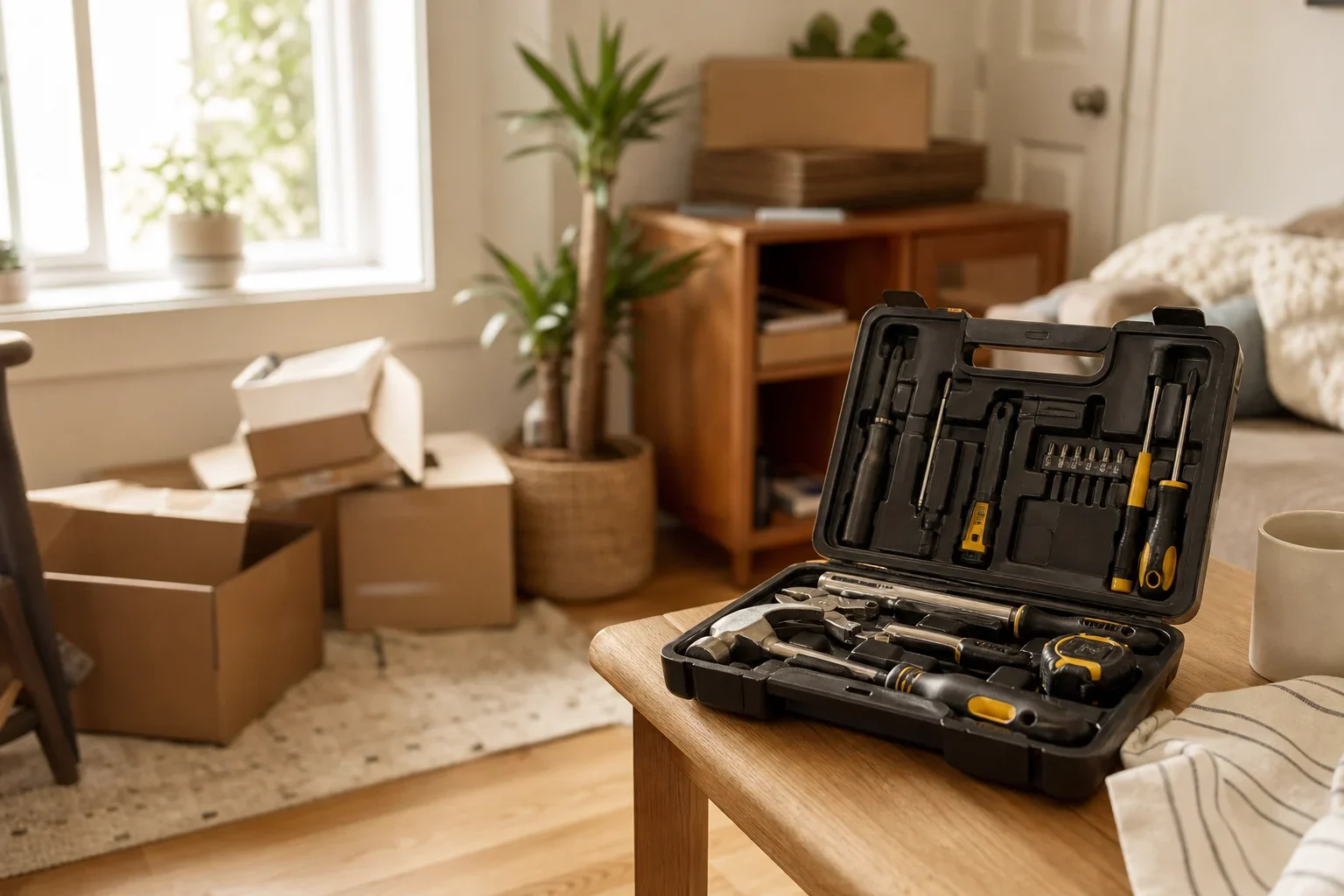
What can wait
Specialty items — a full socket set, a hacksaw, precision electronics screwdrivers, or a large multi-tool case — are worth adding later if a specific project calls for them. Start lean, store the kit somewhere easy to reach (a closet shelf or a bin under the bed works fine), and build out from there as you discover what you actually use.
Worked example: a hypothetical assembly weekend
To make this concrete, here's a hypothetical scenario — not a report of any real move, just a worked example of how the kit above plays out in practice.
Imagine a renter, Dana, moving into a one-bedroom apartment on a Saturday. Three flat-pack boxes arrive that afternoon: a platform bed frame, a four-drawer dresser, and a two-shelf bookcase. Dana's plan might look like this:
- Saturday afternoon: Unbox everything with a utility knife, sort hardware into small piles by piece, and dry-fit the bed frame's side rails before tightening anything.
- Bed frame: The included hex key is small and awkward in the tight space under the headboard, so Dana swaps in the metric hex set from the kit to finish the cam bolts without sore hands.
- Dresser: A Phillips screwdriver handles the drawer slides and back panel; the level checks that the top sits flat before Dana loads it with clothes.
- Bookcase: Before mounting an anti-tip strap to the wall, Dana runs the stud finder across the intended spot to confirm a solid anchor point rather than guessing.
- Sunday morning: With assembly done, Dana uses the tape measure and level to hang two curtain rods and a mirror, finishing the room in under an hour.
In this example, nothing exotic was needed — just the core kit, used in the right order, with hardware sorted before the first screw went in.
Tools vs. furniture: keeping the two lists separate
It's easy to let tool shopping get buried inside a general furniture list, which is exactly why it gets skipped. Keeping a dedicated, room-independent tool checklist — separate from your bedroom, kitchen, or living room plans — makes it much less likely you'll be assembling a bed frame with nothing but a butter knife and good intentions. If you're mapping out everything you need room by room, Nido's room-by-room planning keeps furniture and setup tasks organized by space and budget, so a tool-kit line item doesn't fall through the cracks between the "bedroom" and "living room" sections of your plan.
If you're not sure where to start at all, answering a few quick questions through Nido's new home setup conversation turns your move-in details into a complete, room-by-room plan — which is a natural place to flag that assembly is coming and a tool kit needs to be on the list before furniture arrives, not after.
Minimalist product idea: Mellow Naturalista Classic - 12 Inch Solid Wood Platform Bed with Wooden Slats, No Box Spring Needed, Easy Assembly, Queen, Pine. This solid wood platform bed is the kind of flat-pack piece the article's worked assembly example centers on, with slats and no box spring meaning fewer parts and a cleaner under-bed line once built. Its stated easy-assembly design is a good illustration of why swapping the included hex key for a proper metric set, as Dana does in the example, keeps the cam bolts from feeling awkward to tighten in tight frame corners. The simple pine construction also fits a minimalist bedroom aesthetic without extra hardware clutter.

Tracking the one-time cost
A basic kit is a one-time purchase, but it still competes with everything else on a first-apartment budget. Logging it as its own line item — rather than letting it blend into "miscellaneous" — makes it easier to see where it fits. Nido's budget tracker can hold a tool kit alongside furniture and moving costs so the full picture of what you're spending stays visible before you overspend elsewhere.
Where to go deeper
This hub is the starting point. A few related questions get their own full answer elsewhere in this series:
- Whether a cordless drill is worth the cost for your specific move, or a hand screwdriver is enough — a dedicated drill-or-no-drill decision guide covers this with a cost comparison.
- Matching the exact hex key and screwdriver bit sizes used by major flat-pack furniture brands, so you're not guessing mid-build.
- A weight-based rule for when to use a stud mount versus a drywall anchor on a rental wall.
- What to do in the moment a screw strips or a cam-lock won't catch, instead of forcing it and damaging the piece.
- How two roommates can split ownership of a shared tool kit so nothing gets bought twice.
- Where a small tool kit can actually live in an apartment with no garage or utility closet.
For the furniture side of your move-in plan, see What to Buy First for First Apartment Living, Measure Your Apartment Before Buying Furniture, and Small Apartment Storage Furniture. If you're moving in with a roommate and splitting costs more broadly, Buy Used Furniture First Apartment is a useful companion read for the furniture side of that conversation.
Once assembly is done, a simple way to keep track of what you own and where it's packed matters again at your next move — Nido's moving inventory tool photographs items and labels boxes by QR code so you're not reassembling your tool-kit knowledge from scratch the next time you relocate.
Frequently asked questions
What's the minimum tool kit for a first apartment?
A Phillips and flathead screwdriver, a metric hex key set, a tape measure, a small hammer, a level, an adjustable wrench, and a utility knife cover the large majority of furniture assembly and everyday apartment fixes. This core set shows up consistently across renter-focused toolkit guides because it handles the most common jobs without unnecessary bulk.
Do I really need a cordless drill to assemble flat-pack furniture?
Not necessarily. A drill speeds up repeated screws across several pieces and reduces hand fatigue, which matters more if you're assembling a bed, dresser, and shelving in one weekend. But hand tools can handle the same jobs if you're building one or two pieces and aren't in a rush — it's a question of time saved versus the added cost of a power tool.

Minimalist product idea: PERFNIQUE Irregular Asymmetrical Wall Mirror, 32"x24" Gold Bathroom Mirror. This wall mirror is a good stand-in for the finishing step described in the worked example, where a level and stud finder confirm a solid anchor point before hanging anything heavier than a curtain rod. Its asymmetrical, irregular shape can read as a deliberate minimalist accent against a plain wall, though the gold finish is a bolder choice some minimalist rooms may want to balance with otherwise neutral decor.
Why does the hex key included with my furniture feel so flimsy?
Most flat-pack furniture ships with a basic, undersized hex key meant for a single build rather than repeated use. It can work in a pinch, but it tires your hand quickly and is more likely to round off a bolt than a full metric set with a proper grip, especially on cam locks that need several turns to seat.
What should I do if a screw strips while I'm assembling furniture?
Stop before forcing it further — continuing to turn a stripped screw usually makes the hole wider and weakens the joint. In many cases backing out slowly, switching to a slightly larger screw, or adding a dab of wood glue into a loose hole before reinserting the original screw helps the fastener grip again; if the panel itself is cracked or the hole has crumbled, contacting the manufacturer for a replacement part is the safer route.
How do I know if I need a drywall anchor or a stud for hanging something?
It depends on the item's weight and what it's being mounted on. Lightweight items like small frames or curtain rods can often rely on an appropriate anchor, while anything heavy — a wall-mounted TV, a large mirror, or substantial shelving — is safer secured into a stud or with an anchor explicitly rated for that weight. Always check the anchor's packaging for its stated weight limit before relying on it.
Where should I store my tool kit in a small apartment?
A compact case or a soft zippered bag that fits in a closet, under a bed, or in the bottom of a cabinet is usually enough — you don't need a dedicated workspace. The goal is a kit you can grab quickly for a five-minute fix, not one that takes up prime storage space you need for everyday items.
Should I buy tools before or after my furniture arrives?
Before, if at all possible. Having the right screwdriver, hex key set, and level on hand before delivery day means you can start assembly as soon as boxes arrive instead of making an emergency hardware store run mid-build, which is especially useful if several pieces of furniture are scheduled to arrive close together.
Shop the Minimalist look
As an Amazon Associate, Nido earns from qualifying purchases.

CRAFTSMAN 10-Compartment Small Tool Storage Organizer, Plastic (CMST14021)
A small compartmented organizer like this is a practical home for the hex keys, screwdriver bits, spare screws, and drywall anchors the article recommends keeping together. Sorting hardware into labeled compartments before assembly day lines up directly with the worked example's advice to separate hardware by piece before the first screw goes in, and a compact case fits the minimalist goal of a lean kit that tucks onto a closet shelf rather than sprawling across a counter.
View on Amazon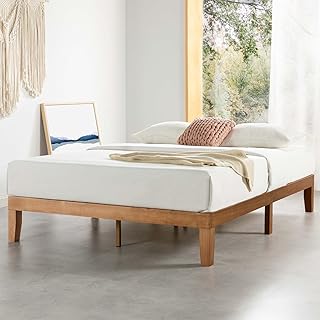
Mellow Naturalista Classic - 12 Inch Solid Wood Platform Bed with Wooden Slats, No Box Spring Needed, Easy Assembly, Queen, Pine
This solid wood platform bed is the kind of flat-pack piece the article's worked assembly example centers on, with slats and no box spring meaning fewer parts and a cleaner under-bed line once built. Its stated easy-assembly design is a good illustration of why swapping the included hex key for a proper metric set, as Dana does in the example, keeps the cam bolts from feeling awkward to tighten in tight frame corners. The simple pine construction also fits a minimalist bedroom aesthetic without extra hardware clutter.
View on Amazon
PERFNIQUE Irregular Asymmetrical Wall Mirror, 32"x24" Gold Bathroom Mirror
This wall mirror is a good stand-in for the finishing step described in the worked example, where a level and stud finder confirm a solid anchor point before hanging anything heavier than a curtain rod. Its asymmetrical, irregular shape can read as a deliberate minimalist accent against a plain wall, though the gold finish is a bolder choice some minimalist rooms may want to balance with otherwise neutral decor.
View on Amazon