Splitting Tool Kit Cost With a Roommate: A Shared-Ownership Checklist
Design theme: Minimalist
A practical worksheet for roommates splitting tool kit cost: what to buy jointly, how to divide the bill, where the kit lives, and who replaces what.

As an Amazon Associate, Nido earns from qualifying purchases.
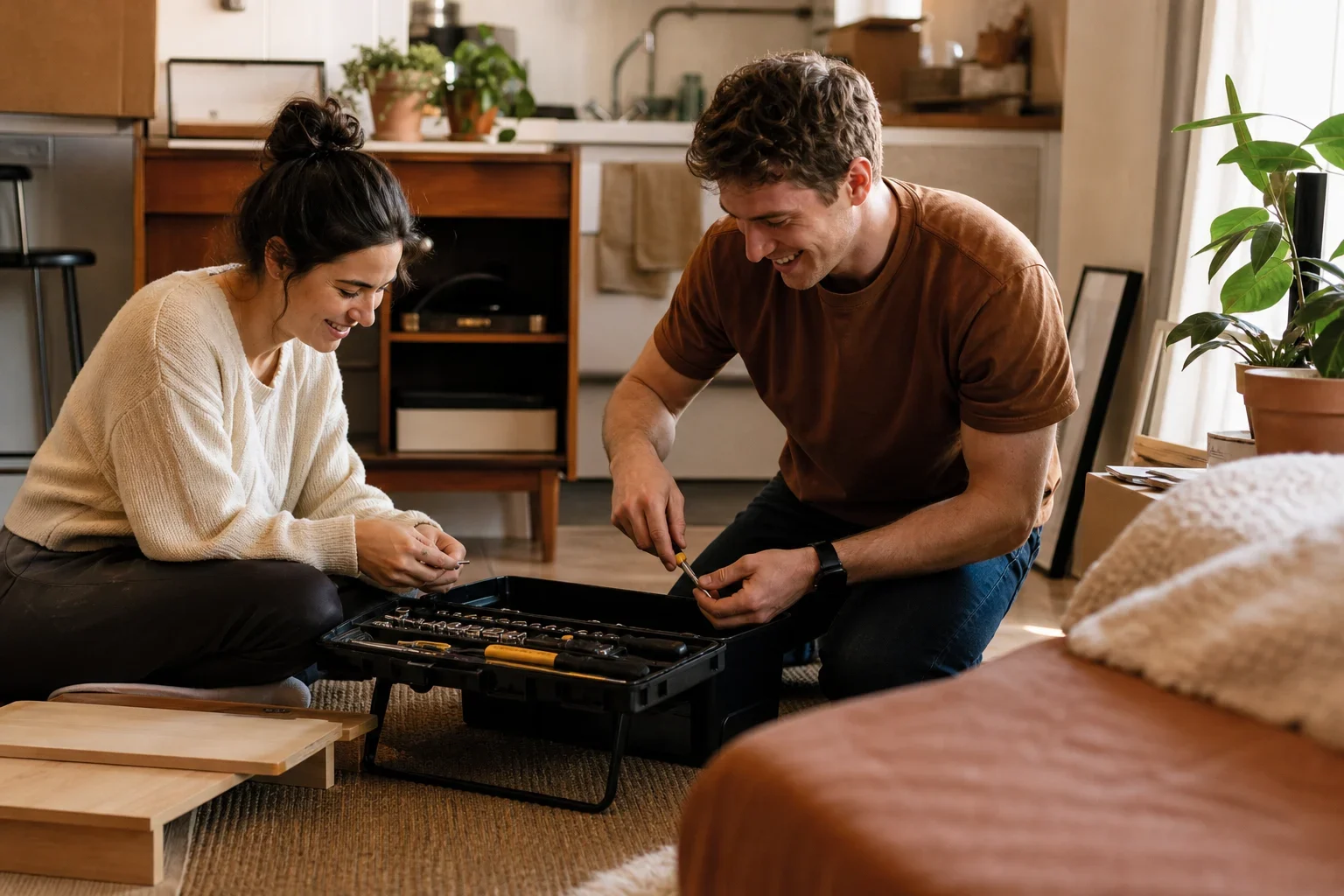
If you and a roommate are both assembling flat-pack beds, shelves, and dressers in the same apartment, you don't need two hammers, two hex key sets, and two tape measures cluttering two separate closets. Splitting tool kit cost with a roommate is one of the easiest ways to furnish for less — but only if you agree up front on what's shared, who pays what, and what happens when something breaks or one of you moves out. This guide walks through a simple worksheet for exactly that.
Why a shared tool kit makes sense for roommates
A basic apartment tool kit doesn't need to be large. Across move-in guides, the same core list keeps showing up: a tape measure, a hammer, a screwdriver set, a hex (Allen) wrench set, an adjustable wrench, a utility knife, and a flashlight or headlamp — with a cordless drill often named as the single most useful upgrade once more than a piece or two needs assembling.
None of those items wear out quickly, and almost none of them get used every day. That makes a tool kit a natural candidate for joint ownership — unlike a mattress or a desk, which only one person uses. The job is to agree on the split before the first delivery shows up, not after someone's already paid for the drill.
A worksheet for splitting tool kit cost with a roommate
Sit down together before move-in (or before your first big assembly weekend) and work through these four questions. Write the answers down somewhere both of you can see — a shared note, a spreadsheet, or a shared checklist in an app both of you can edit.
1. What goes in the shared kit?- Core shared items: hammer, screwdriver set (Phillips and flathead), hex/Allen key set, adjustable wrench, tape measure, utility knife, level, flashlight or headlamp, extension cord.
- Shared if you're assembling several large pieces: a cordless drill — one of the most-cited upgrades for cutting assembly time on multiple flat-pack items.
- Keep personal: anything one of you will use constantly for a hobby (a full socket set for a cyclist, a precision screwdriver set for electronics) — that stays with its owner.
Three fair options, pick whichever matches how you split other shared costs:
Minimalist product idea: FADAKWALT Cordless Drill Set,12V Power Drill Set with Battery and Charger, Electric Driver/Drill Bits, 3/8'' Keyless Chuck,21+1 Torque Setting, 180 inch-lbs, with LED Electric Drill Set (Green). The article singles out a cordless drill as the one upgrade worth buying jointly once more than a piece or two of flat-pack furniture needs assembling. A compact 12V set with its own battery, charger, and bit set gives both roommates one self-contained unit to check in and out of the shared kit, which fits the worksheet's point about splitting drill cost by usage rather than each buying a separate drill.
- 50/50 split on every shared item, paid up front by whoever's checking out, then settled via a shared expense tracker.
- One person buys the kit, the other covers an equivalent shared cost (cleaning supplies, a shared doormat, the first grocery run) — useful if you don't want to split every small receipt.
- Split by usage — if one roommate is assembling three times as much flat-pack furniture, they cover a larger share (say 70/30) of the drill specifically, while basics like the hammer and tape measure stay 50/50.
Agree on one home for the kit — an entryway closet shelf, an under-bed bin, or a labeled bag in a hall closet — so neither of you has to ask where it is mid-assembly. Put it somewhere both of you can reach without asking permission, and put it back in the same spot every time.
4. Who replaces what, and when?Tools don't break often, but bits strip, batteries die, and drills eventually wear out. Decide now: does the person who breaks or loses an item replace it, or does the cost come out of the shared kit fund? A simple default — whoever uses it last checks it's in working order, and replacement cost is split the same way the original purchase was — avoids arguments later.
A worked example (hypothetical)
Say two roommates, Priya and Sam, are moving into a two-bedroom apartment together. Priya has a bed frame, a bookshelf, and a desk to assemble; Sam has a dresser and two sets of shelving. Here's a hypothetical way they might work through the worksheet above:
- Shared kit: hammer, screwdriver set, hex key set, tape measure, utility knife, level — split 50/50, total cost divided evenly since both will use every item.
- Cordless drill: since Sam has more pieces to assemble, they agree Sam covers 60% and Priya covers 40%.
- Kit location: a labeled bin on the hall closet's bottom shelf, agreed on day one.
- Replacement rule: whoever breaks a bit or drains the drill battery replaces it; everything else splits the same way it was bought.
This is a hypothetical scenario to illustrate the worksheet, not a specific Nido case study — your own split should reflect how much assembly each of you actually has ahead.
Minimalist product idea: Shoe Storage Bin and Organizer for Hallway, Entryway or Mudroom. Space saver for many pairs of footware to store in one stylish container.. The worksheet's 'where does the kit live' step calls for one agreed home for shared tools, like an entryway or hall closet shelf. A dedicated entryway storage bin can double as that single, visible spot for the shared kit, keeping it out of one roommate's room and easy for both people to reach without asking permission — which suits a minimalist approach of containing shared items in one clear container rather than scattering them.

Keeping the split visible after move-in
The worksheet above only works if both roommates can see it later — not just agree to it once and forget. A shared moving checklist that both of you can edit keeps the tool-kit split, the 'who buys what' list, and the running budget in one place instead of scattered across texts. Nido's shared checklist for roommates and partners lets you assign who buys what, split the cost, and see updates live, so a tool-kit disagreement three months in doesn't start with 'I thought you bought that.' Pairing that with a shared budget view also makes it easy to see the tool kit's cost next to everything else you're splitting for the apartment, so it doesn't quietly become one person's unspoken expense.
Frequently asked questions
What's the simplest way to start splitting tool kit cost with a roommate?
Agree on the core list first — hammer, screwdriver set, hex key set, tape measure, utility knife, and a level cover most apartment assembly and repair needs — then split that short list 50/50 before you buy anything bigger like a cordless drill. Starting small avoids arguing over edge cases before you've even moved in.
Should we buy one cordless drill together or should each of us have our own?
One shared drill is usually enough for a typical apartment's worth of flat-pack furniture; a drill is one of the most frequently recommended upgrades once more than a piece or two needs assembling, but it doesn't need to be used daily by either roommate. If one of you has significantly more assembly ahead, consider splitting its cost unevenly rather than buying two.
What if one roommate already owns most of the tools?
If one of you is moving in with an existing kit, treat it as a contribution rather than a free pass — agree on a rough value and have the other roommate cover an equivalent shared cost elsewhere, or contribute toward any gaps in the kit (a missing hex size, a dead flashlight battery) instead of paying for tools that already exist.
Minimalist product idea: Travel Toiletry bag for Women and Men,Small Cosmetic Bag Hanging Lightweight Makeup Bag Small Tool Bag Travel Organizer accessories for Women Men - Black. The guide recommends a labeled bag as one option for housing a shared tool kit so hex keys, bits, and small hardware don't scatter. A compact zip organizer sized for small items can serve that labeled-bag role, giving the kit one portable, closed container both roommates recognize and return tools to, which supports the minimalist goal of keeping shared gear contained rather than loose in a drawer.

Who pays if a shared tool gets lost or breaks?
Decide this before it happens. A simple default is that whoever was using the tool last replaces it, while routine wear (a drill battery wearing out over time) gets split the same way the original purchase was. Writing the rule down avoids a disagreement over a $10 screwdriver turning into a bigger issue.
What happens to the shared tool kit if one roommate moves out?
Agree on this at the same time you set up the split, not when someone's already packing. Common options are: the remaining roommate buys out the other's share at a fair used value, the kit splits by item (whoever contributed more of a given tool keeps it), or it's sold and the proceeds are divided the way the original cost was split.
Does the tool kit need to include a full set, or just the basics?
For most apartments, a focused list of well-made basics covers the large majority of common fixes and furniture assembly — you don't need a massive, pre-filled kit. Add specialty items only if one of you has a specific recurring need, like a precision screwdriver set for electronics work.
Where should we keep a shared kit if neither of us has a garage?
Pick one accessible spot — a closet shelf, an under-bed bin, or a labeled bag — that both of you can reach without digging through someone else's things, and agree to always return tools there after use. Consistency matters more than the exact location.
Shop the Minimalist look
As an Amazon Associate, Nido earns from qualifying purchases.

FADAKWALT Cordless Drill Set,12V Power Drill Set with Battery and Charger, Electric Driver/Drill Bits, 3/8'' Keyless Chuck,21+1 Torque Setting, 180 inch-lbs, with LED Electric Drill Set (Green)
The article singles out a cordless drill as the one upgrade worth buying jointly once more than a piece or two of flat-pack furniture needs assembling. A compact 12V set with its own battery, charger, and bit set gives both roommates one self-contained unit to check in and out of the shared kit, which fits the worksheet's point about splitting drill cost by usage rather than each buying a separate drill.
View on Amazon
Shoe Storage Bin and Organizer for Hallway, Entryway or Mudroom. Space saver for many pairs of footware to store in one stylish container.
The worksheet's 'where does the kit live' step calls for one agreed home for shared tools, like an entryway or hall closet shelf. A dedicated entryway storage bin can double as that single, visible spot for the shared kit, keeping it out of one roommate's room and easy for both people to reach without asking permission — which suits a minimalist approach of containing shared items in one clear container rather than scattering them.
View on Amazon
Travel Toiletry bag for Women and Men,Small Cosmetic Bag Hanging Lightweight Makeup Bag Small Tool Bag Travel Organizer accessories for Women Men - Black
The guide recommends a labeled bag as one option for housing a shared tool kit so hex keys, bits, and small hardware don't scatter. A compact zip organizer sized for small items can serve that labeled-bag role, giving the kit one portable, closed container both roommates recognize and return tools to, which supports the minimalist goal of keeping shared gear contained rather than loose in a drawer.
View on Amazon