Stud Finder or Drywall Anchor? A Weight-Based Decision Filter for an Apartment Shelf
Design theme: Minimalist
A simple weight-threshold table and worked example for deciding when a rental wall needs a stud finder and direct mount versus when a drywall anchor is strong enough.
As an Amazon Associate, Nido earns from qualifying purchases.
Every renter toolkit guide tells you to own a stud finder, but almost none tell you when you actually need one. The real question — stud finder or drywall anchor apartment shelf hardware — comes down to one thing: how much weight is going on the wall, loaded, not empty. This guide gives you a weight-based filter you can use before you drill a single hole, plus a worked example comparing a floating shelf to a mounted TV so you can see the logic in action.
If you haven't built your basic tool kit yet, start with our guide to the first apartment tool kit — a stud finder and a small set of drywall anchors both belong on that list.
Why the stud-or-anchor decision matters
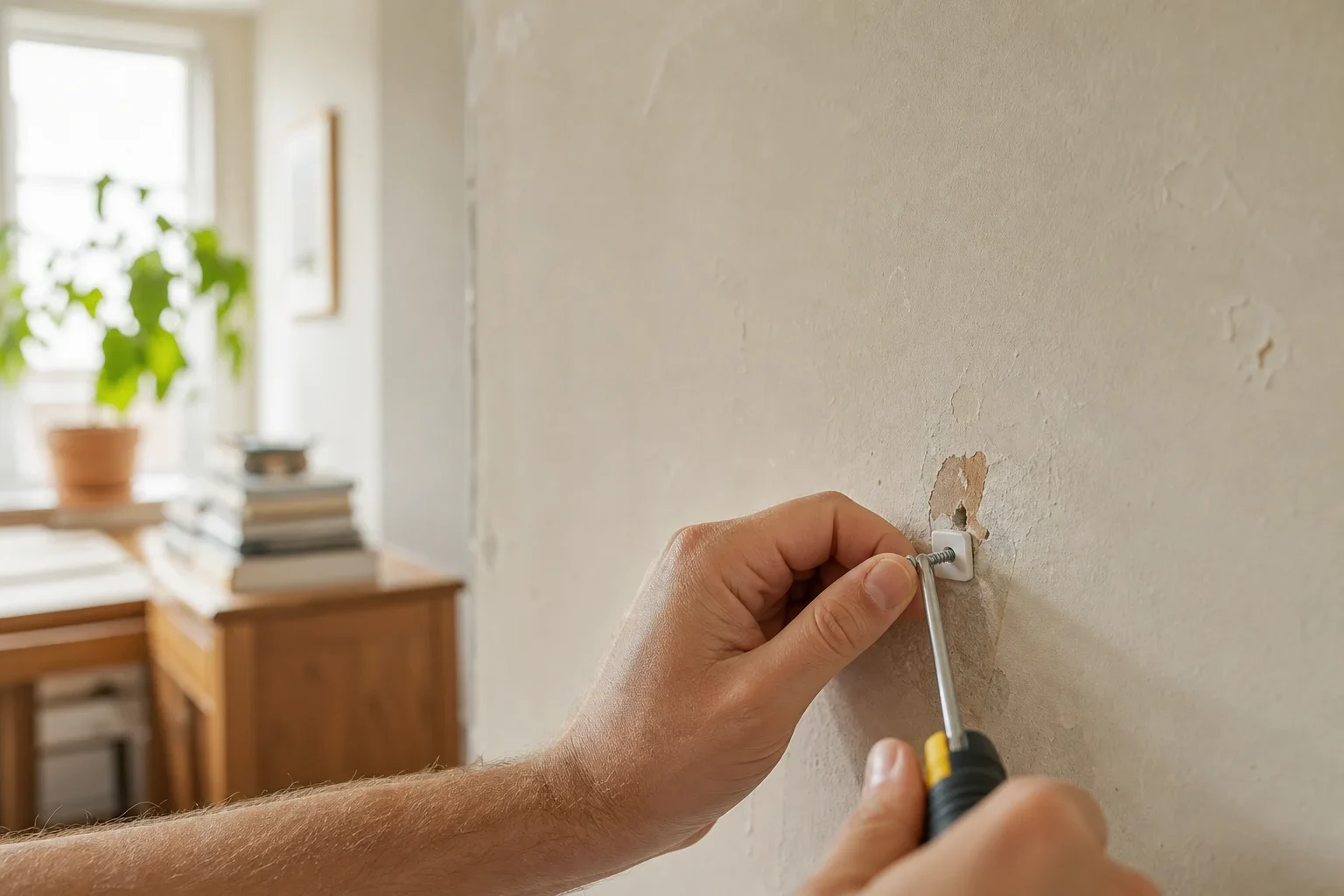
A stud is solid wood framing behind the drywall — the strongest anchor point in any rental wall. A drywall anchor is a fastener that spreads the load across the drywall itself when there's no stud in a useful spot. Anchors are rated for specific weights, and that rating only holds if you match the anchor to the wall type and the load. One source notes that a 3/16-inch toggle anchor might hold around 70 pounds in drywall but fail instantly in masonry or plaster — which is why checking the anchor's packaging for its load rating and wall-type guidance matters more than guessing.
Stud finder or drywall anchor apartment shelf: the weight-threshold table
Use this as a starting filter. These are general categories, not a guarantee — always confirm the specific anchor's rated capacity on its packaging before you commit to it.
| Item and typical loaded weight | Recommended approach |
|---|---|
| Light decor — picture frames, mirrors, small art (roughly under 10 lbs) | A standard plastic or light-duty drywall anchor is generally sufficient. |
| Medium items — a floating shelf with books, a small curtain rod (roughly 10–35 lbs loaded) | Step up to a heavy-duty or toggle-style anchor rated for the load, or use a stud if one falls within range. |
| Heavy or cantilevered items — a mounted TV, a heavy bookshelf, anything that pulls outward from the wall (roughly 35 lbs and up) | A stud mount is the safer default. If no stud lines up, use a heavy-duty toggle anchor explicitly rated for the full loaded weight, and check the mount manufacturer's hardware recommendation. |
Worked hypothetical: floating shelf vs. mounted TV
This is a worked example to illustrate the filter, not a real product recommendation.

Minimalist product idea: xympo Floating Invisible Bookshelf Wall Mounted (Set of 4) - Aluminum - Turn Books into Floating Shelves. This set turns stacked books themselves into the visible shelf edge, which fits the minimalist goal of keeping wall hardware nearly invisible. Since each bracket is meant to be used in multiples and the load builds as you add books, treat it with the medium-weight filter from this guide: check whether a stud falls within the mounting points, and if not, size a toggle-style anchor to the loaded weight of a full stack rather than the weight of a single book.
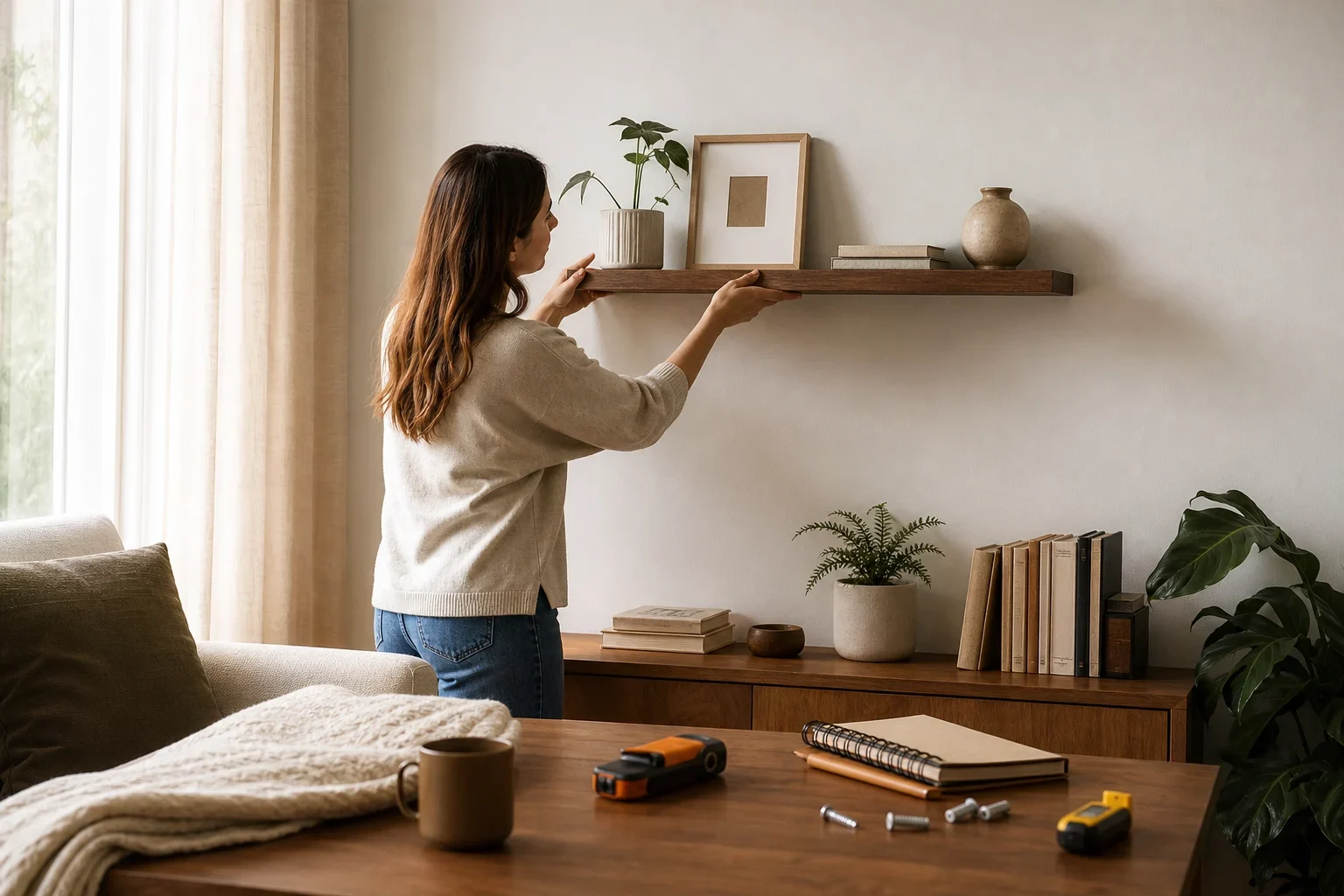
Scenario A — a 24-inch floating shelf. Say you plan to display a handful of paperbacks and a small plant, landing around 15–18 pounds once loaded. That falls in the medium band. If a stud happens to fall within the shelf's mounting points, use it. If not, a toggle-style drywall anchor rated above 20 pounds per anchor point (two anchors typically share the load) is a reasonable match, as long as the packaging confirms that rating for drywall.
Scenario B — a 43-inch wall-mounted TV. The TV itself might weigh 20–25 pounds, but the mount bracket adds leverage: as the arm extends, the effective pulling force on the wall increases beyond the TV's static weight. This is exactly the kind of cantilevered load where a stud finder and a direct stud mount are the right call rather than relying on an anchor alone. Slide the stud finder slowly across the area, then confirm the find with a small finish nail a few inches away from any marked outlets before you commit to the final hole.
How to confirm a stud before you drill
A stud finder narrows down a general location, but it's worth confirming before you drill the real hole. One practical method: find the approximate stud location with the finder, then tap a small finish nail into that spot a few inches above the baseboard — away from any wiring near outlets — to physically confirm solid wood before moving to the final mounting holes.
When an anchor is the right call
Not every item needs a stud. Most light and medium decor — the bulk of what goes up in a first apartment — is a better fit for a properly rated anchor than for forcing a stud location that doesn't line up with your shelf brackets or curtain rod. The goal isn't to use a stud for everything; it's to match the anchor type to the loaded weight and always check the rating on the packaging before you trust it with something you don't want crashing down.

Minimalist product idea: UL Listed Fixed TV Wall Mount for 37-86 Inch Screens, Low Profile TV Mount Fits 16", 18", 24" Studs, Wall Mount Bracket with Quick Release Lock, Max VESA 600x400mm, Holds up to 132 lbs by USX STAR. A fixed, low-profile mount keeps a screen flat against the wall instead of jutting out, which suits a minimalist room, but its listed stud spacing and weight capacity also make it the clearest match for this guide's heavy, cantilevered category — exactly the case where the article recommends locating and confirming a stud rather than relying on a drywall anchor alone.
Once you've worked out what's going on each wall, a room-by-room plan makes it easier to sequence which mounting hardware to buy first and which walls need studs located before delivery day.
Frequently asked questions
How do I know if I need a stud finder or a drywall anchor for an apartment shelf?
Start with the loaded weight of the item, not its empty weight. Light decor under roughly 10 pounds is usually fine on a rated drywall anchor. Once you're loading a shelf with books or mounting something that pulls outward from the wall, like a TV, a stud finder and direct stud mount become the safer choice.
What's the difference between a drywall anchor and a toggle anchor?
Both spread the fastening load across the drywall instead of relying on a single screw bite, but toggle anchors are generally rated for heavier loads than basic plastic anchors. Their rated capacity still depends on the wall material — one example anchor rated for around 70 pounds in drywall can fail instantly in masonry or plaster, so always match the anchor to the actual wall type.
Can I use a drywall anchor on plaster walls in an older apartment?
Plaster behaves differently from drywall and can crack or crumble around a standard anchor. If your apartment has plaster walls, check the anchor packaging specifically for plaster compatibility, and treat heavier or cantilevered items as a stud-mount situation rather than risking an anchor rated for drywall only.
Minimalist product idea: Boswillon Floating Shelves Set of 2, Small Wall Shelf with Lip, 16in, Black. A small lipped shelf pair reads as clean, understated storage, in keeping with a minimalist look, and the lip detail is worth noting when loading it with books or decor since items won't slide forward. Use this guide's weight filter on whatever you plan to display: light items suit a properly rated drywall anchor, while anything pushing into the medium range is worth checking against a stud before you commit.
How do I confirm I've actually found a stud, not just a dense spot?
Run the stud finder slowly and mark where it signals a change. Then confirm with a small test hole or finish nail a few inches from your intended mounting point, staying clear of any area near outlets or switches, before drilling the final holes.
Do I need a stud finder for every item I hang in a rental?
No. Most light and medium apartment decor — frames, mirrors, small shelves — can go up safely on a properly rated drywall anchor. Reach for the stud finder specifically when the loaded weight climbs into the heavier range or when the mount design adds leverage, like a TV bracket or a heavy, deep shelf.
What should I check on anchor packaging before buying?
Look for the stated weight rating and the wall types it's designed for — drywall, plaster, or masonry ratings can differ significantly for the same anchor. Keeping the packaging after installation is also useful, since it typically lists the exact drill-bit size needed if you ever need to replace or match the anchor.
Shop the Minimalist look
As an Amazon Associate, Nido earns from qualifying purchases.

xympo Floating Invisible Bookshelf Wall Mounted (Set of 4) - Aluminum - Turn Books into Floating Shelves
This set turns stacked books themselves into the visible shelf edge, which fits the minimalist goal of keeping wall hardware nearly invisible. Since each bracket is meant to be used in multiples and the load builds as you add books, treat it with the medium-weight filter from this guide: check whether a stud falls within the mounting points, and if not, size a toggle-style anchor to the loaded weight of a full stack rather than the weight of a single book.
View on Amazon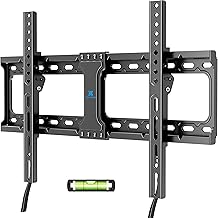
UL Listed Fixed TV Wall Mount for 37-86 Inch Screens, Low Profile TV Mount Fits 16", 18", 24" Studs, Wall Mount Bracket with Quick Release Lock, Max VESA 600x400mm, Holds up to 132 lbs by USX STAR
A fixed, low-profile mount keeps a screen flat against the wall instead of jutting out, which suits a minimalist room, but its listed stud spacing and weight capacity also make it the clearest match for this guide's heavy, cantilevered category — exactly the case where the article recommends locating and confirming a stud rather than relying on a drywall anchor alone.
View on Amazon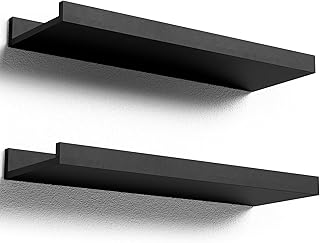
Boswillon Floating Shelves Set of 2, Small Wall Shelf with Lip, 16in, Black
A small lipped shelf pair reads as clean, understated storage, in keeping with a minimalist look, and the lip detail is worth noting when loading it with books or decor since items won't slide forward. Use this guide's weight filter on whatever you plan to display: light items suit a properly rated drywall anchor, while anything pushing into the medium range is worth checking against a stud before you commit.
View on Amazon