The Stripped-Screw Fix: A Troubleshooting Walkthrough for Flat-Pack Furniture
Design theme: Minimalist
A stripped screw or a cam-lock that won't catch doesn't mean a ruined piece of furniture. Here's a step-by-step walkthrough for fixing it, plus when to stop and call for a replacement part.

As an Amazon Associate, Nido earns from qualifying purchases.
You're two-thirds through building a dresser when a screw starts spinning freely instead of tightening, or a cam-lock just won't catch no matter how many times you turn it. A stripped screw furniture assembly fix is one of the most common mid-build problems first-apartment furnishers run into, and it's rarely a sign you've ruined the piece. It usually means one of a few specific things went wrong, and most of them have a straightforward fix if you stop before forcing it.
This walkthrough covers what's actually happening when a hole strips or a cam-lock won't grab, the order of fixes to try, and a labeled worked example you can compare your own situation against. If you haven't put together your basic kit yet, the hub guide on what to buy before you assemble anything covers the tools this walkthrough assumes you have on hand.
Why screws strip and cam-locks fail to catch
Two different problems get lumped together as "stripped," and they call for different fixes.
A stripped screw hole happens when the threads inside particleboard or MDF have been chewed up, usually by an ill-fitting bit, a driver turned too fast, or a screw driven in and backed out several times. Once the hole is stripped, the screw spins without biting into anything.
A cam-lock that won't catch is a connector-style fastener (common in flat-pack dressers and bookcases) that's supposed to pull two panels tight when you turn it a quarter-turn with a screwdriver. If the cam bolt isn't seated in its hole first, or the dowel isn't aligned, the lock spins without ever pulling the joint closed.
Minimalist product idea: ELEAD 31-Piece Hex Key Set - Allen Wrench Set, SAE and Metric Allen Keys MM(0.7mm-10mm) SAE(0.028"-3/8) Heat-Treated, Torque Handle, High Leverage, Long & Short Keys, Easy Organization. The walkthrough stresses that a mismatched hex key is one of the most common reasons a fastener rounds out before it ever reaches the hole, so having a full range of metric and SAE sizes on hand means you can match the exact key called for instead of forcing a close-but-wrong fit. For a minimalist setup, one organized case covering both measurement systems replaces a drawer of loose, mismatched keys, which fits a pared-down approach to tool storage.
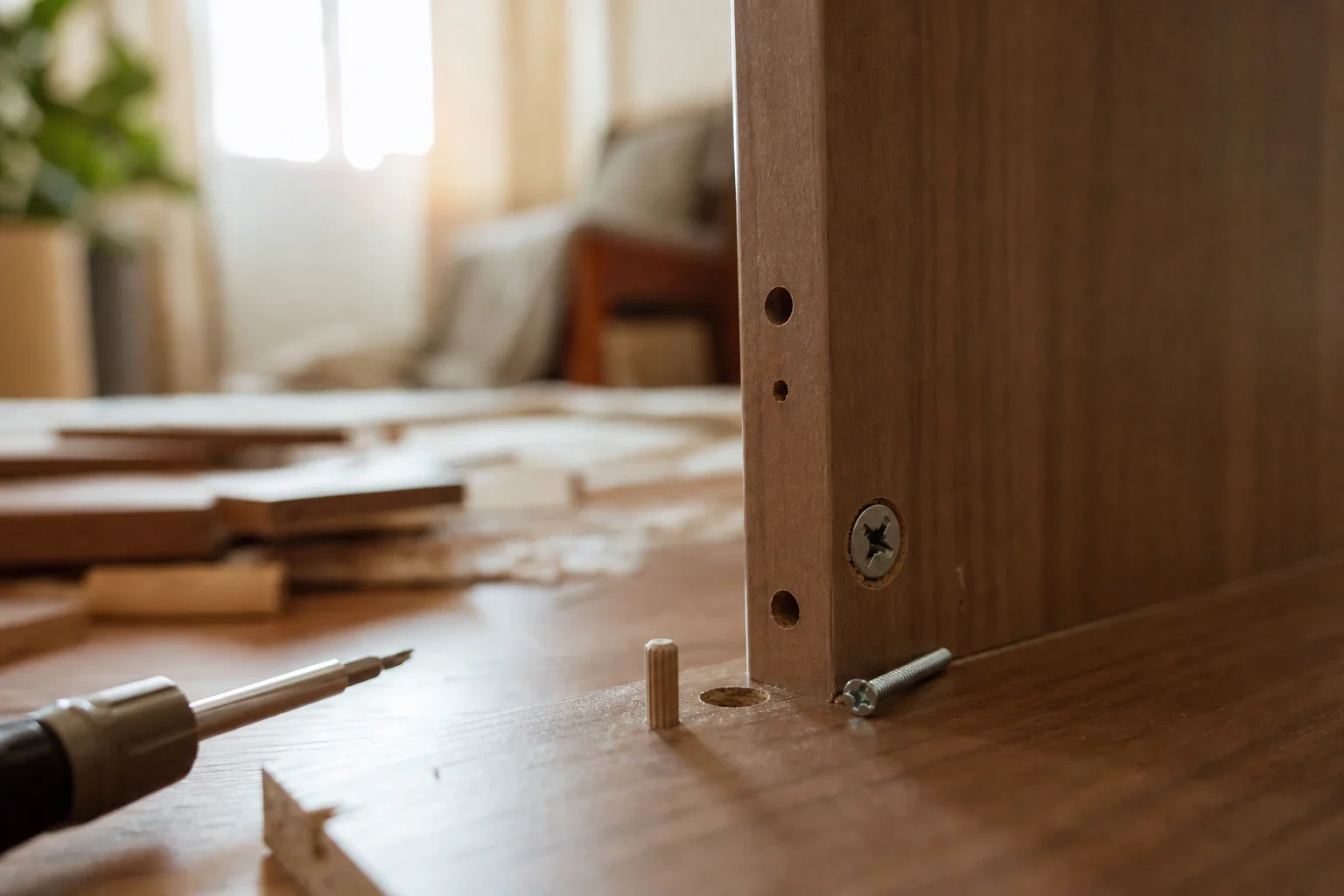
One supplier guide on furniture assembly tool kits notes that a loose-fitting bit, an undersized hex key, or tightening one side of a frame before checking the whole structure are among the most common mistakes that lead to stripped screws and misaligned builds in the first place — and once one of those happens, the fix usually starts with stopping, not pushing harder.
The stripped screw furniture assembly fix: step by step
- Stop turning. If a screw spins without resistance or a cam-lock turns past where it should stop, continuing to force it usually makes the hole or threading worse, not better.
- Check the bit-to-fastener fit. A driver tip or hex key that's even slightly undersized will slip and round out the fastener head before it ever gets to the hole. Swap to the exact size called for in the instructions before trying again.
- Back the screw out and inspect the hole. Look for chewed threads, splintered particleboard, or a hole that's visibly wider than the screw shaft. A clean hole with intact threads just needs a different approach on reinsertion; a chewed-out hole needs reinforcement.
- Try the toothpick-and-glue fix for a mildly stripped hole. Break off a few wooden toothpicks or matchsticks, dip them in wood glue, and pack them into the hole until it's snug. Let the glue set according to the label (this is usually a wait of at least a few hours), then re-drive the original screw into the packed hole. This works because the toothpicks give the threads something solid to bite into again.
- For a cam-lock that won't catch, recheck alignment first. Pull the panels apart slightly, confirm the cam bolt is fully seated in its drilled hole, and make sure the connecting dowel is lined up before turning the lock again. Most cam-lock failures are an alignment problem, not a broken part.
- If the hole is badly stripped or the hardware is physically broken, stop and look at the parts list. Flat-pack furniture almost always ships with a few spare screws and cam locks taped inside the box or a parts bag — check there before assuming you need a replacement.
- Contact the manufacturer for a replacement part if the spares don't cover it. Most flat-pack brands will ship a replacement panel, screw set, or cam lock at no cost when you report a manufacturing or hardware issue — it's usually faster and more reliable than trying to re-engineer a badly damaged connection point yourself.
When the fix isn't worth attempting
A toothpick repair is a reasonable fix for a single stripped hole on a low-stress joint, like a drawer front or a shelf pin. It's not a good fix for a load-bearing joint, such as a bed frame rail or the main structural panel of a wardrobe. If the stripped hole is somewhere that needs to hold real weight, request a replacement panel instead of patching it — a weak joint there is a safety issue, not just a cosmetic one.
Worked example: a hypothetical dresser drawer slide
To make the steps concrete, here's a labeled hypothetical — not a specific product or real customer story, just a worked-through scenario.
Hypothetical scenario: You're attaching a drawer slide to the inside panel of a flat-pack dresser. The second screw spins freely after a few turns and won't tighten.
Minimalist product idea: Gorilla Wood Glue, Fast Clamp, Water Resistant PVA, 8 oz. This is the glue the toothpick-and-glue fix in the walkthrough depends on: packing glue-dipped toothpicks into a stripped hole only works if the glue sets reliably and holds under normal screw tension, which is the basic job of a wood glue. Keeping a single small bottle for this kind of patch job fits a minimalist approach of solving a specific repair without adding a shelf of specialty adhesives.

- Step 1 (stop turning): You notice the screw head isn't getting any tighter and back it out immediately instead of continuing to turn.
- Step 2 (check bit fit): The screwdriver tip looks correct, so the bit isn't the issue.
- Step 3 (inspect the hole): The pre-drilled hole looks slightly enlarged compared to the first screw's hole, suggesting the threads are stripped.
- Step 4 (toothpick fix): You pack two glue-dipped toothpicks into the hole, let the glue cure overnight, then re-drive the same screw. It tightens normally.
- Outcome: The drawer slide sits flush and the drawer opens and closes without rubbing. Because this joint carries a moderate, not heavy, load, the patched hole is an appropriate fix rather than a reason to request a replacement panel.
If that same stripped hole had shown up on a bed frame's main support rail instead of a drawer slide, the right move would be requesting a replacement part rather than patching it, since that joint is load-bearing.
Getting help when a build goes sideways
If you're mid-assembly and unsure whether a hardware issue is something to fix yourself or something to report, Ask Nido can help you think through next steps for the room you're setting up — describe what you're building and get a shoppable list of backup hardware, extra hex keys, or replacement tools sized to your budget, instead of guessing at the hardware aisle.
Frequently asked questions
What's the fastest way to fix a stripped screw in flat-pack furniture?
For a mildly stripped hole in particleboard or MDF, packing the hole with a few wood-glue-dipped toothpicks, letting the glue cure, and re-driving the original screw is the quickest reliable fix. It works because the toothpicks give the screw threads fresh material to grip instead of the chewed-out original hole.
Why does my cam-lock keep spinning without tightening?
Most cam-locks that spin without catching are an alignment problem rather than a broken part. Pull the panels apart slightly, confirm the cam bolt is fully seated in its hole, and check that the connecting dowel lines up correctly before turning the lock again.
Minimalist product idea: 170PCS Cam Locks for Furniture,3-in-1 Eccentric Hardware Wheels,Furniture Fasteners & Connectors with Multi-Size Nuts,Bolts and Wood Dowel Pins-Assortment Kit for Furniture Assembly/Repair. The article points out that cam-lock failures are usually an alignment issue and that checking for spare hardware is the step before contacting a manufacturer; an assortment of cam locks, nuts, bolts, and dowel pins gives you replacement parts on hand if a connector is actually damaged rather than just misaligned. For a minimalist setup, one compact assortment kit covers multiple fastener sizes instead of buying several single-purpose hardware packs.
Should I use a power drill to fix a stripped screw?
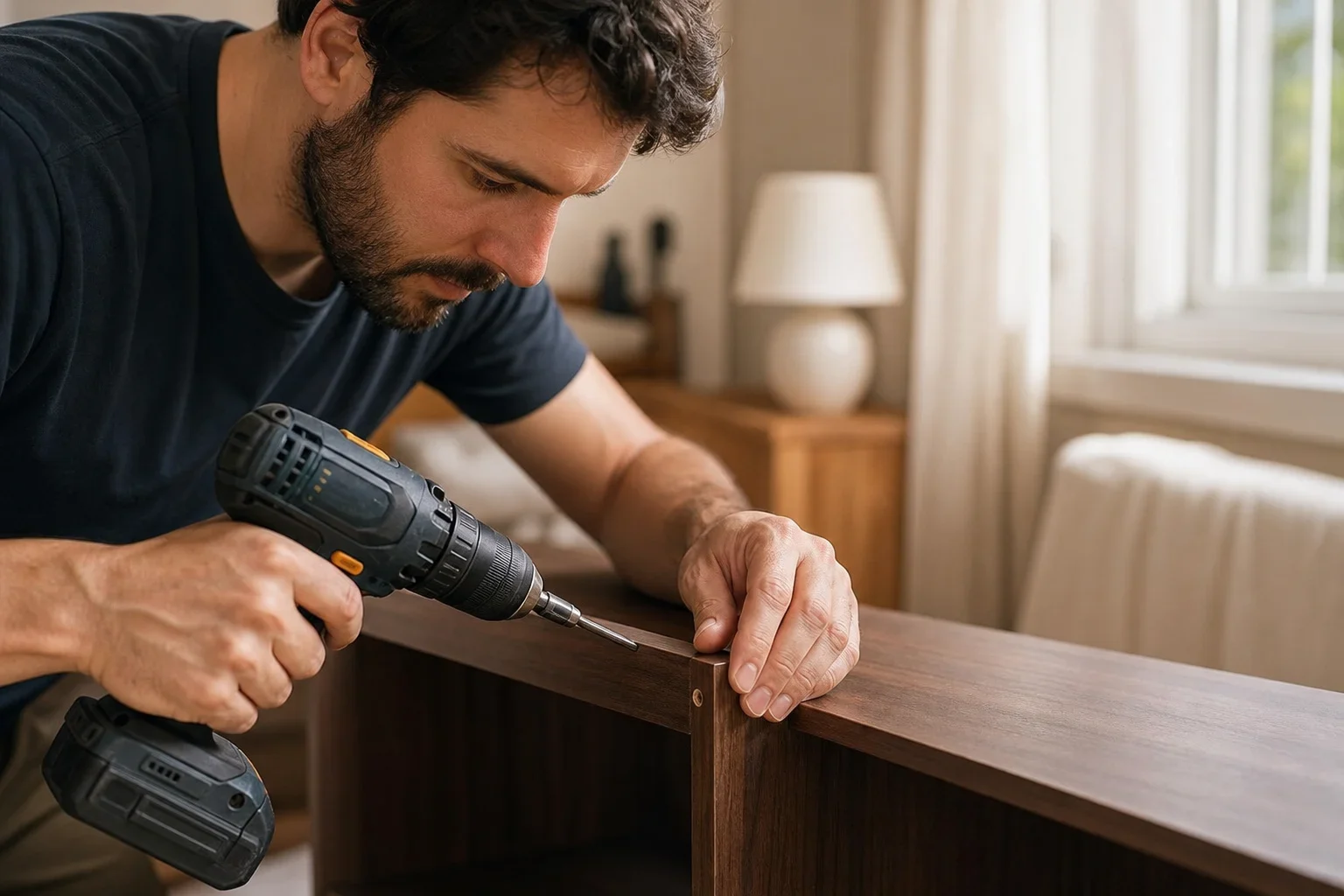
Generally no. Driving a screw back in with a power drill at full speed is one of the more common ways joints get overdriven and holes get stripped in the first place. Start any screw by hand, and if you use a powered driver, keep it on a low, controlled setting and stop as soon as the joint feels snug.
When should I contact the manufacturer instead of fixing it myself?
Contact the manufacturer when the stripped hole or broken hardware is on a load-bearing joint — a bed rail, a main support panel, or anywhere the piece needs to hold real weight — or when the spare screws and cam locks that shipped in the box don't cover the damage. Most flat-pack brands will send a replacement part rather than leave you to patch a structural connection.
Can I prevent stripped screws before they happen?
Matching the bit or hex key exactly to the fastener size, starting every screw by hand before finishing with a driver, and tightening joints in stages rather than cranking one side fully before checking the whole frame all reduce the chance of stripping a hole during assembly.
Does every flat-pack piece come with spare hardware?
Most do include a few extra screws or cam locks in the parts bag, which is worth checking before assuming you need a replacement from the manufacturer. It's not guaranteed on every brand or piece, so check your specific instructions and parts list first.
Shop the Minimalist look
As an Amazon Associate, Nido earns from qualifying purchases.

ELEAD 31-Piece Hex Key Set - Allen Wrench Set, SAE and Metric Allen Keys MM(0.7mm-10mm) SAE(0.028"-3/8) Heat-Treated, Torque Handle, High Leverage, Long & Short Keys, Easy Organization
The walkthrough stresses that a mismatched hex key is one of the most common reasons a fastener rounds out before it ever reaches the hole, so having a full range of metric and SAE sizes on hand means you can match the exact key called for instead of forcing a close-but-wrong fit. For a minimalist setup, one organized case covering both measurement systems replaces a drawer of loose, mismatched keys, which fits a pared-down approach to tool storage.
View on Amazon
Gorilla Wood Glue, Fast Clamp, Water Resistant PVA, 8 oz
This is the glue the toothpick-and-glue fix in the walkthrough depends on: packing glue-dipped toothpicks into a stripped hole only works if the glue sets reliably and holds under normal screw tension, which is the basic job of a wood glue. Keeping a single small bottle for this kind of patch job fits a minimalist approach of solving a specific repair without adding a shelf of specialty adhesives.
View on Amazon
170PCS Cam Locks for Furniture,3-in-1 Eccentric Hardware Wheels,Furniture Fasteners & Connectors with Multi-Size Nuts,Bolts and Wood Dowel Pins-Assortment Kit for Furniture Assembly/Repair
The article points out that cam-lock failures are usually an alignment issue and that checking for spare hardware is the step before contacting a manufacturer; an assortment of cam locks, nuts, bolts, and dowel pins gives you replacement parts on hand if a connector is actually damaged rather than just misaligned. For a minimalist setup, one compact assortment kit covers multiple fastener sizes instead of buying several single-purpose hardware packs.
View on Amazon