Should I Float My Sofa in a Small Apartment? A Decision Filter
Design theme: Minimalist
Not sure if you should float your sofa in a small apartment or push it to the wall? Use this three-question filter and a worked example to decide.
As an Amazon Associate, Nido earns from qualifying purchases.
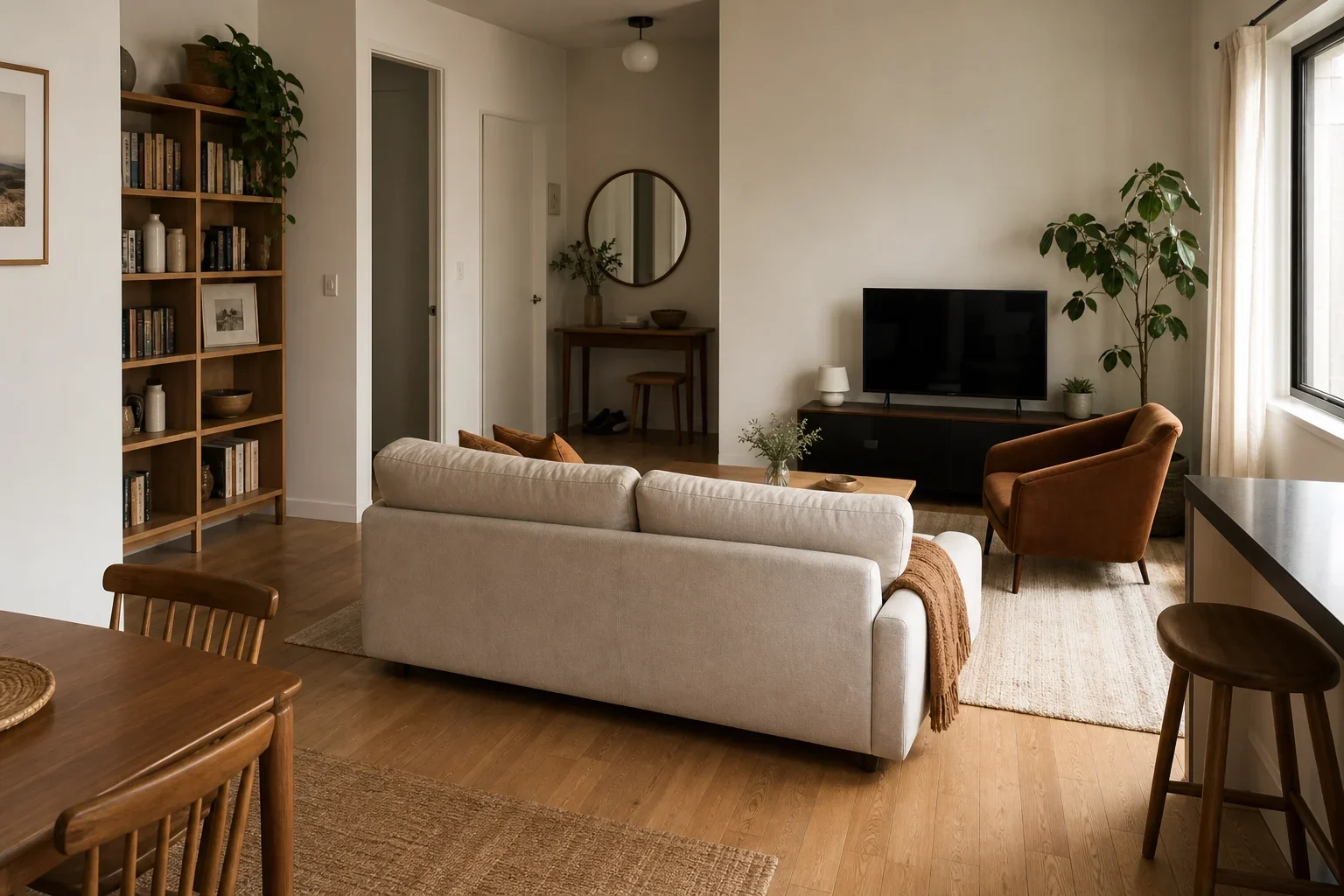
"Should I float my sofa in my small apartment, or is it safer to push it against the wall?" is one of the most common layout questions first-time furnishers ask once the sofa is actually sitting in the room. The honest answer is: it depends on three things you can check in about five minutes, not on a general style rule. This guide walks through that decision filter, then applies it to a worked example so you can see exactly how the reasoning plays out before you commit to a layout.
Should I Float My Sofa? The Three-Question Filter
Before you decide, answer these three questions about your actual room — not a photo of someone else's room.
1. How big is the room, really?
Floating works best when a room has enough depth to hold a sofa, a walkway behind it, and the seating zone in front — without any single gap shrinking below a usable width. As a baseline, interior design guidance commonly treats 36 inches as the standard clearance for a primary walkway, with 30 inches as a workable minimum in smaller or secondary paths. If pulling the sofa off the wall would leave less than 30 inches behind it for people to pass, the room is telling you to push the sofa back.
2. Where does the main traffic path actually fall?
This is the question most people skip. Walk the room the way you actually move through it — door to kitchen, entry to hallway — and notice where your feet naturally go. If that path runs behind where the sofa would sit, floating the sofa can work well, because the space behind it becomes a real walkway rather than wasted wall-hugging space. If the main path runs in front of the sofa instead, floating doesn't add usable circulation; it just eats into your seating-to-table clearance, which designers generally recommend keeping around 18 inches at minimum.
3. Do you need the wall for storage or a console?
One often-overlooked case for floating: it frees up wall space. Designers interviewed on the topic note that pushing furniture to the perimeter sacrifices wall space you could otherwise use for shelving, a console table, or artwork, while floating the sofa opens that wall up for storage or display. If your small apartment is short on storage, this can tip the decision toward floating even in a modestly sized room.
A Worked Example: Floating a Sofa in an 11×13 Studio Living Corner
This is a hypothetical walkthrough, not a real household — use it to see how the filter applies, then run the same steps on your own measurements.
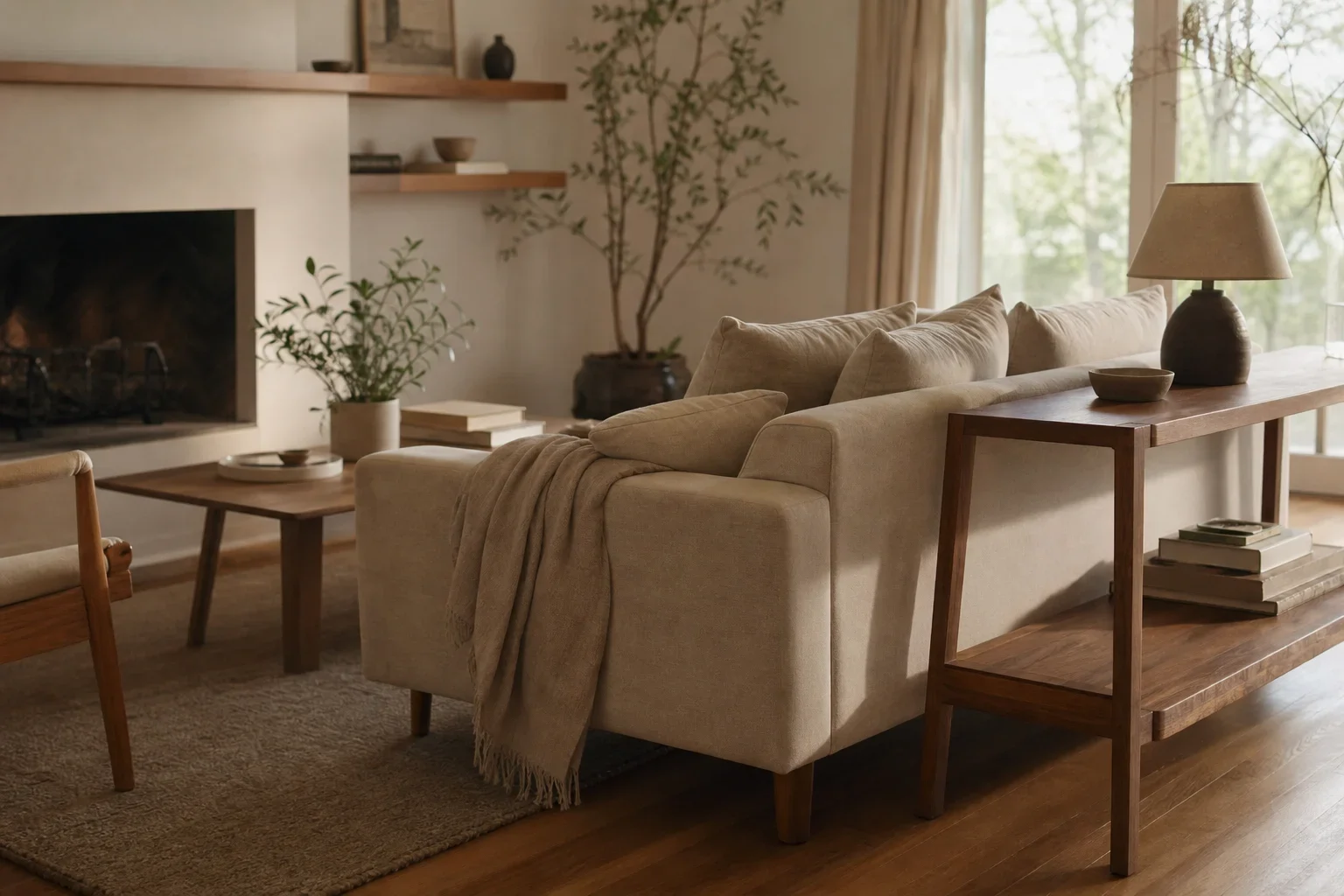
Minimalist product idea: Bamboo Narrow Console Table, 39.4"(L) Wood Small Entryway Table, Accent Slim Hallway Tables, Thin Sofa Side Tables for Hallway, Living Room, Bedroom, Foyer, Walnut. A narrow console like this fits the exact scenario described in the worked example, where floating the sofa frees up wall space for a slim table to catch mail and keys. Because it's described as slim and narrow, it suits the tight clearance a floated sofa typically leaves, making it a practical option to test behind the sofa once you've confirmed the walkway measurement works in your own room.
The room: An 11-foot by 13-foot studio living corner. The only entry to the kitchen and bathroom is through this corner, and the main door is on the short wall facing the sofa's long wall.
Before: A 78-inch sofa sits flush against the long wall. The coffee table sits 18 inches in front of it. The remaining open floor between the table and the kitchen doorway measures about 34 inches — workable, but every time someone carries groceries through, they brush the table corner.
Applying the filter:
- Room size: At 11 feet wide, there's enough depth to float the sofa roughly 10 inches off the wall and still keep a clear path behind it.
- Traffic path: The main route to the kitchen runs along the back wall, not across the seating zone. Floating the sofa would route that traffic behind the sofa instead of squeezing it past the coffee table.
- Storage need: The household wants a console table for mail and shoes near the door, and there's nowhere else to put one.
After: The sofa moves 10 inches off the long wall. A slim console sits behind it, catching mail and keys. The kitchen walkway behind the sofa now measures about 34 inches, and the coffee-table clearance in front stays at 18 inches — both pieces of the room now do a job, instead of one wall absorbing everything.
All three answers pointed the same direction in this example. If even one had gone the other way — say, the main path ran in front of the sofa instead of behind it — pushing the sofa to the wall would likely have kept the room working better.
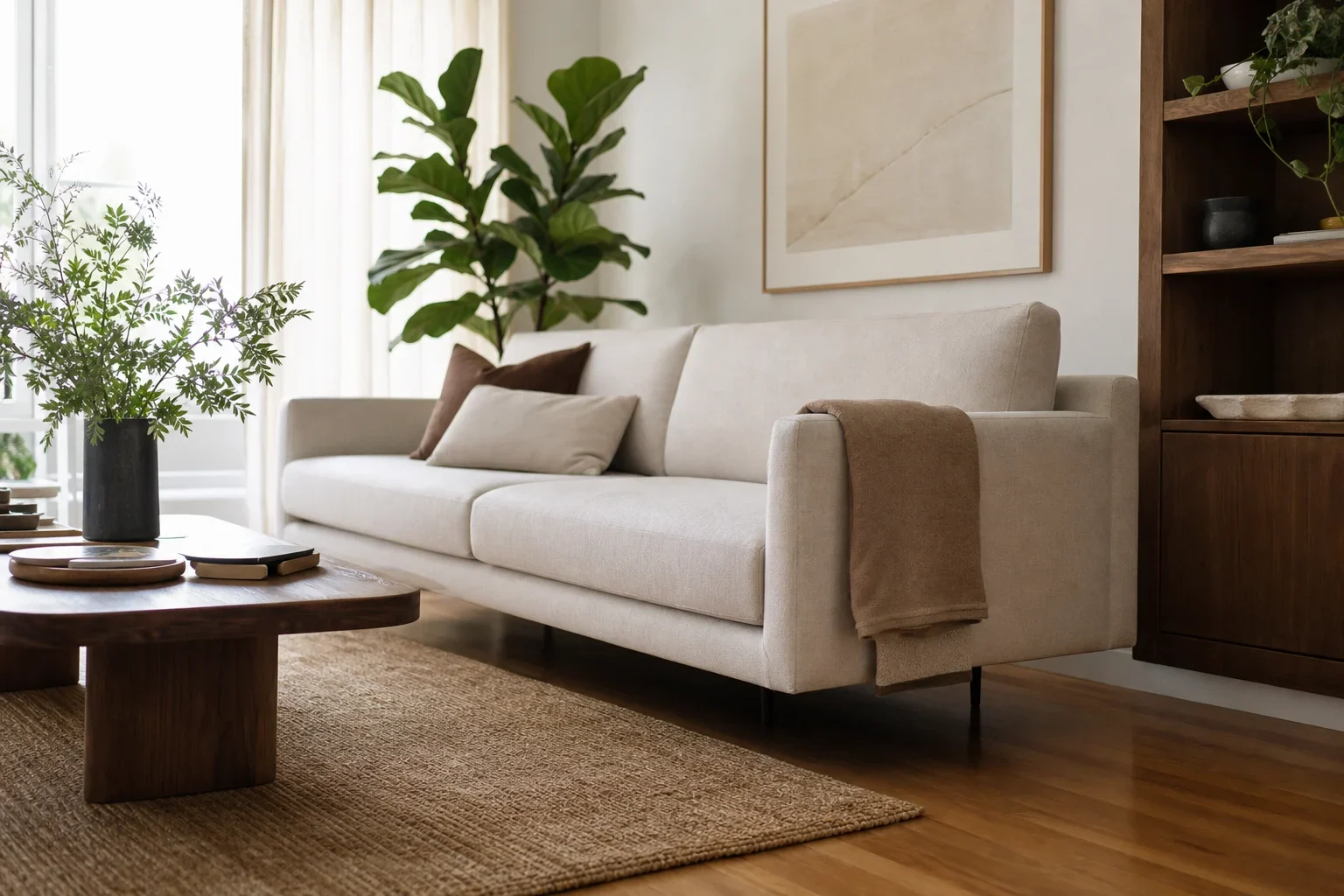
Minimalist product idea: Pauwer 5x7 Area Rugs for Living Room, Modern Non Slip Washable Rug, Beige | Arch Pattern, Soft Fluffy, Neutral, Boho Accent, Solid Color Floor Carpet for Kids Room Dining Room Nursery Entryway. A rug sized for a living room can support the 'reach the front legs' tactic mentioned as an alternative to floating, helping a pushed-back sofa still read as open. In a minimalist layout, a solid-color, non-slip rug in a neutral tone keeps the floor plan visually calm while anchoring the seating zone, which is useful whether you ultimately float the sofa or keep it against the wall.
Quick Floating-Sofa Checklist
- Measure the gap you'd create behind the sofa if floated — aim for at least 30 inches, 36 if it's a primary path.
- Walk your actual daily route through the room and note whether it falls in front of or behind the sofa's current position.
- Check whether a floated sofa would free up wall space you actually need for storage, a console, or shelving.
- Confirm the coffee-table gap stays workable (commonly cited around 18 inches) after the move.
- Test with painter's tape on the floor before moving anything heavy — it's faster to correct tape than a sofa.
When Pushing to the Wall Still Wins
Floating isn't automatically better. In a narrow room where the only walkway is in front of the sofa, pulling it off the wall just shrinks your coffee-table clearance without creating a new path anywhere. In that case, keep the sofa against the wall and look for other ways to add openness — visible furniture legs and a rug that reaches the front legs of your seating are two tactics worth considering instead, since they change how open a room feels without changing the footprint.
How Nido Helps You Test the Layout
Working through this filter is easier with your actual room dimensions in front of you. Nido's room-by-room planning tool lets you lay out each piece against your real measurements before you commit, and Nido's chat-based planning assistant can walk through a question like "should I float my sofa in this room layout" using the specifics you describe, turning the answer into a concrete next step rather than a general rule.
This is one piece of the bigger picture — see the full small apartment furniture layout guide for the complete set of arrangement rules, including walking clearance, visible legs, and rug anchoring.
Frequently asked questions
Should I float my sofa in a small apartment if the room is under 10 feet wide?
It depends on where your main walkway falls. If the room is under 10 feet wide and the only traffic path runs in front of the sofa, floating it usually shrinks your coffee-table clearance without adding a usable walkway elsewhere, so pushing it to the wall is often the safer choice in that specific case.
How much space do I need behind a floated sofa?
If the space behind a floated sofa will be used as a walkway, aim for at least 30 inches, with 36 inches recommended for a primary path. If the gap is only for airflow or a thin console, a much smaller buffer can work, since that space isn't carrying foot traffic.
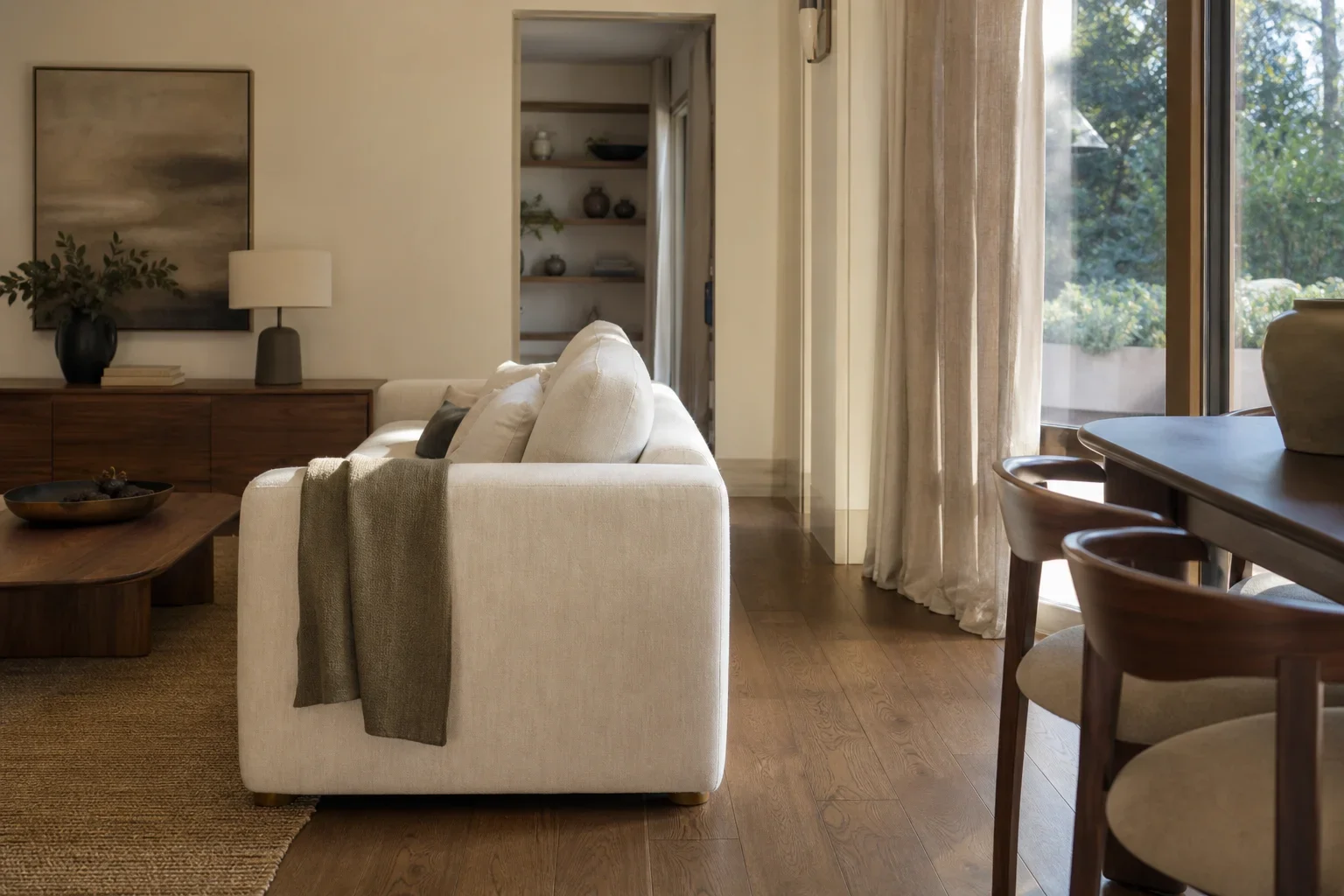
Minimalist product idea: Plastic Couch Legs 1 inch, Screw-In Round Furniture Legs - Black, 4pcs. Swapping in visible furniture legs is one of the two tactics the article recommends when you decide to keep your sofa against the wall instead of floating it, since raised legs can make a room feel more open without changing its footprint. Screw-in legs like these offer a straightforward way to test that effect before committing to a full layout change.
Does floating a sofa make a small room look bigger or smaller?
Designers who use floating layouts often cite the opposite of the intuitive assumption: pulling furniture off the walls can make a room feel more open, partly because it frees the perimeter for storage or shelving and partly because it allows 360-degree interaction with the piece instead of boxing it against a wall. The effect depends on execution, so check your specific clearances rather than assuming floating always reads as more spacious.
What if my studio apartment needs the sofa to double as a room divider?
Floating is specifically useful here. Positioning a sofa back-out toward an open area, rather than against a wall, is a common way designers create a sense of separate zones without adding walls — the sofa's back becomes the boundary between, say, a sleeping area and a living area.
Should the coffee table move with the sofa if I float it?
Yes. Keep the same relative gap between the sofa and coffee table when you move the sofa — commonly around 18 inches — so the seating zone still functions. Floating the sofa without adjusting the table position can accidentally shrink that gap below a comfortable distance.
How do I test a floating layout before committing to it?
Mark the sofa's footprint and the proposed walkway with painter's tape on the floor, then walk your normal daily routes through the space for a day. If you have to turn sideways or interrupt your stride anywhere along the tape, adjust before moving the actual furniture.
Shop the Minimalist look
As an Amazon Associate, Nido earns from qualifying purchases.

Bamboo Narrow Console Table, 39.4"(L) Wood Small Entryway Table, Accent Slim Hallway Tables, Thin Sofa Side Tables for Hallway, Living Room, Bedroom, Foyer, Walnut
A narrow console like this fits the exact scenario described in the worked example, where floating the sofa frees up wall space for a slim table to catch mail and keys. Because it's described as slim and narrow, it suits the tight clearance a floated sofa typically leaves, making it a practical option to test behind the sofa once you've confirmed the walkway measurement works in your own room.
View on Amazon
Pauwer 5x7 Area Rugs for Living Room, Modern Non Slip Washable Rug, Beige | Arch Pattern, Soft Fluffy, Neutral, Boho Accent, Solid Color Floor Carpet for Kids Room Dining Room Nursery Entryway
A rug sized for a living room can support the 'reach the front legs' tactic mentioned as an alternative to floating, helping a pushed-back sofa still read as open. In a minimalist layout, a solid-color, non-slip rug in a neutral tone keeps the floor plan visually calm while anchoring the seating zone, which is useful whether you ultimately float the sofa or keep it against the wall.
View on Amazon
Plastic Couch Legs 1 inch, Screw-In Round Furniture Legs - Black, 4pcs
Swapping in visible furniture legs is one of the two tactics the article recommends when you decide to keep your sofa against the wall instead of floating it, since raised legs can make a room feel more open without changing its footprint. Screw-in legs like these offer a straightforward way to test that effect before committing to a full layout change.
View on Amazon