Coastal or Farmhouse? Two Light-Palette Living Room Trios on the Same Budget
Design theme: Coastal
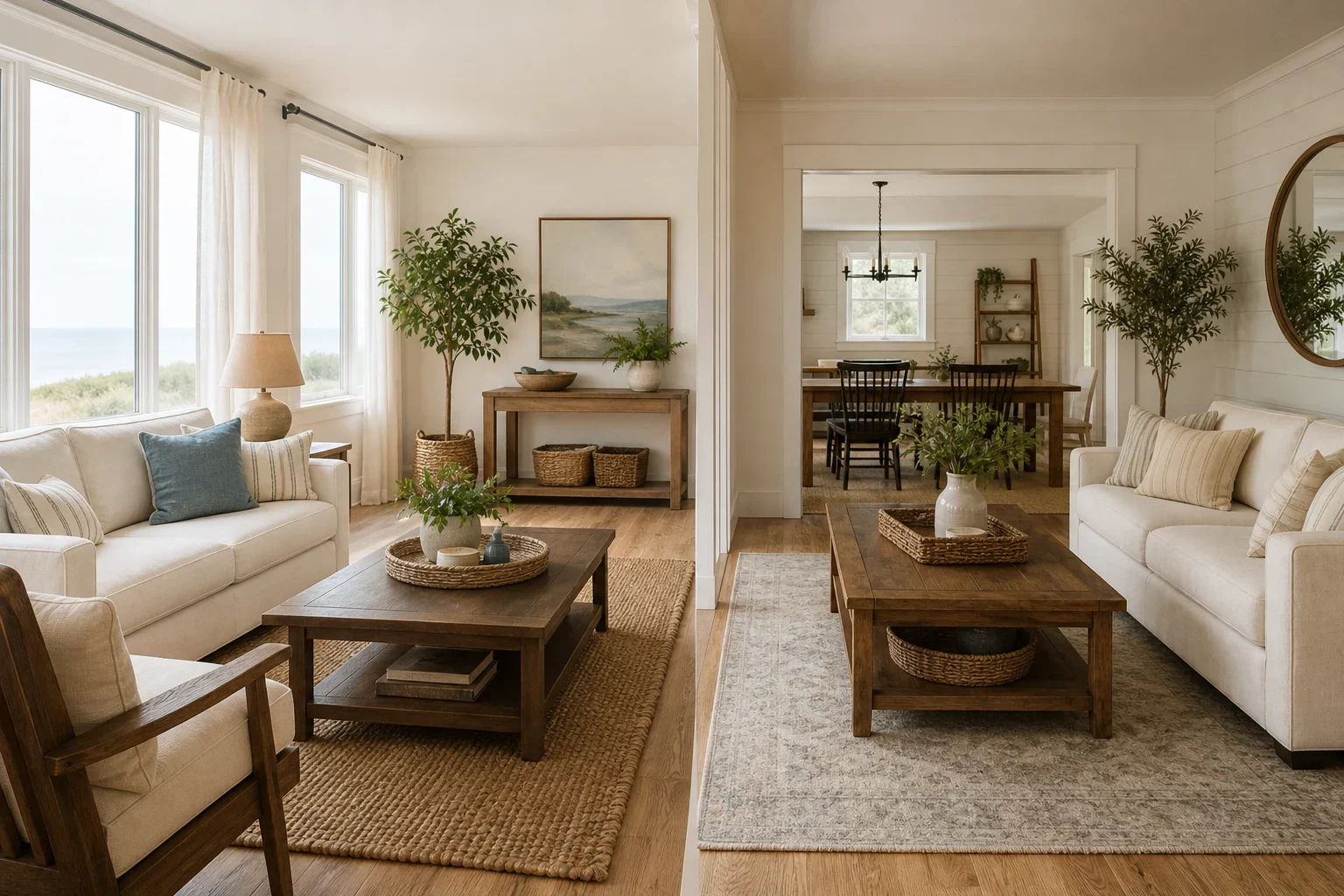
Comparing a coastal farmhouse living room budget side by side: two worked sofa-rug-lamp trios, one airy and coastal, one warm and farmhouse, so you can pick before you shop.
As an Amazon Associate, Nido earns from qualifying purchases.
Setting a coastal or farmhouse living room budget gets a lot easier once you stop shopping piece by piece and start comparing two complete looks side by side. Both styles lean on a light, sunny palette, but the sofa shape, rug texture, and lamp finish that make each one feel authentic are different enough that mixing them halfway often reads as neither. This guide walks through two hypothetical trios — a coastal sofa, rug, and lamp set, and a farmhouse version — built to the same budget, so you can see exactly where the money goes and why, before you commit to either direction.
Neither example below reflects a real product or price; they're worked illustrations to show how the three pieces support each other. Use the same structure with your own numbers and, if you want real in-stock matches, a tool that pairs recommendations to your rooms and budget can speed up the shopping part once you've settled on a direction.
What a coastal farmhouse living room budget actually has to balance
Both coastal and farmhouse rooms share a light-palette, natural-material starting point, which is partly why they get lumped together in budget roundups. Coastal design leans into breeziness — the goal is capturing the feel of being near water, with airy textures like cotton, seagrass, and linen doing the tactile work while sheer curtains and reflective surfaces keep light moving through the room. Farmhouse has moved on from barn-door clichés toward a more restrained look, where one or two structural, natural elements carry the style instead of a room full of matching rustic accents. That distinction matters when you're deciding where your three core pieces — sofa, rug, and floor lamp — should lean warmer and more structural versus lighter and more relaxed.
The two-trio method: coastal vs. farmhouse
Instead of picking a style and buying blind, lay out the same three categories for both aesthetics and compare them line by line: sofa silhouette and fabric, rug material and weave, and lamp shape and finish. Treating the three as one decision — rather than three separate purchases — is the single habit that keeps a budget room from feeling like leftover pieces pushed together.
Worked example 1: a coastal trio on a hypothetical $1,400 budget
Imagine a reader furnishing a sunny, smallish living room who wants the coastal feel without buying anything precious. Here's how the budget might split across the three pieces:
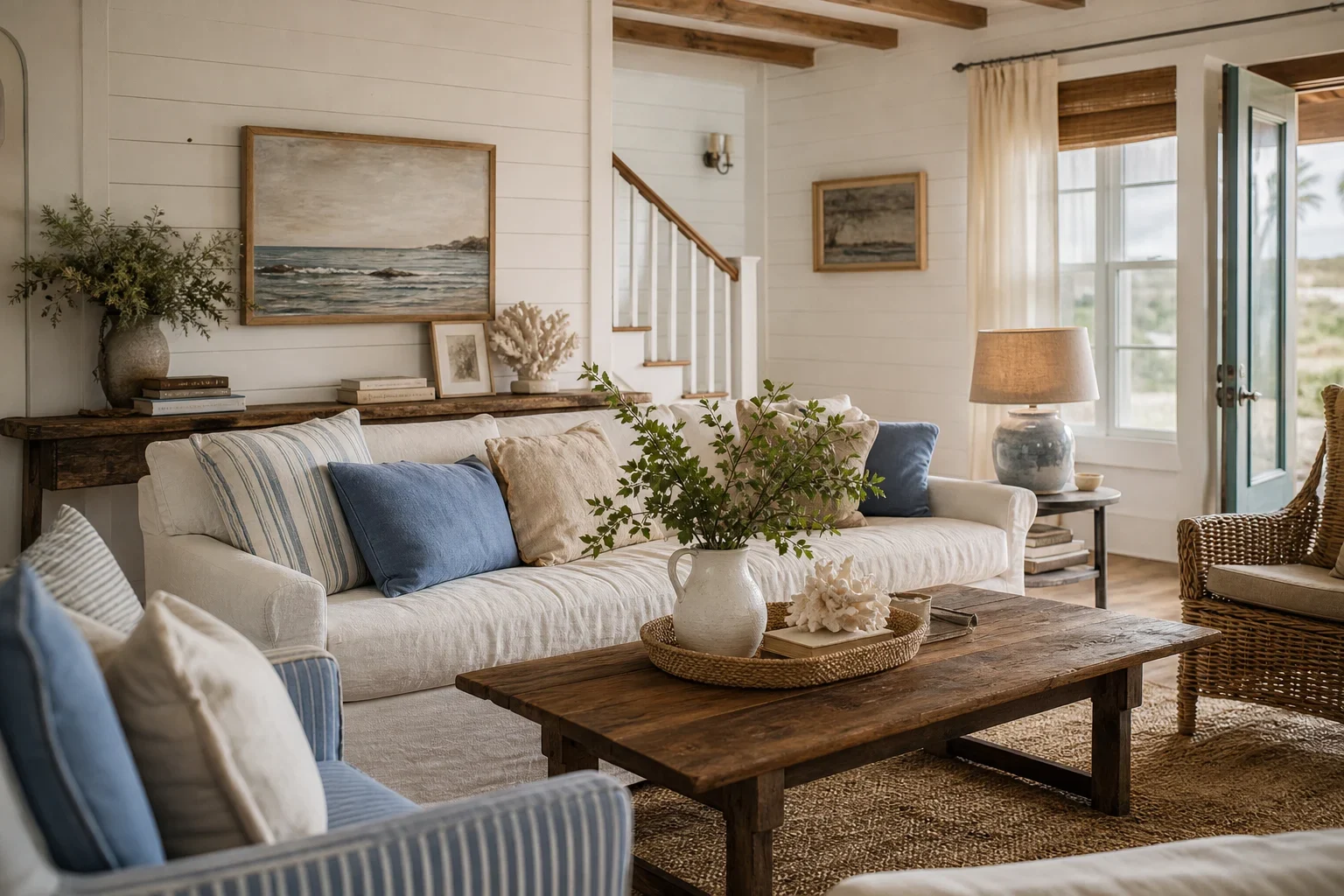
Coastal product idea: Barefoot Bungalow Atlantis Reversible Slipcover - Furniture Protector - Sofa - Jade. A reversible slipcover is a practical way to test the coastal trio's slipcovered-sofa look from the worked $1,400 example without committing to new upholstery. Because it slips over an existing frame, it's a lower-cost entry point for the airy, relaxed silhouette the article describes, and the reversible design means you can switch sides if the room's light or accent colors shift later in your coastal planning.
- Sofa (~$800): a slipcovered or light woven-fabric sofa in off-white or soft sand, with visible wood or rattan-wrapped legs so light passes underneath and the floor reads as continuous.
- Rug (~$350): a flatweave jute or cotton rug in a natural or pale tone, sized so it extends well beyond the sofa's footprint rather than floating under just the coffee table.
- Floor lamp (~$250): a slim lamp with a linen or rattan shade that diffuses light softly, placed in a reading corner to add height without visual weight.
The logic: every material stays light and breathable, and the rug and lamp both do double duty softening a room that might otherwise feel sparse once the sofa is in.
Worked example 2: a farmhouse trio on the same hypothetical $1,400 budget
Now picture the same budget spent on a farmhouse-leaning room instead:
- Sofa (~$850): a turned-leg or slightly structured sofa in a durable neutral fabric — canvas or a tight weave rather than a loose slipcover — since farmhouse style reads more tailored than coastal.
- Rug (~$300): a braided or chunky-weave wool rug in oatmeal or warm taupe, which holds up to daily traffic and adds the grounded, lived-in texture farmhouse rooms rely on.
- Floor lamp (~$250): a lamp with a warm metal or wood base — think blackened iron or turned wood — paired with a simple fabric shade, echoing the one or two structural natural elements that keep farmhouse looks from feeling costume-y.
The logic here flips slightly: instead of airiness, the budget buys durability and one clear structural statement (the lamp base or the sofa's turned legs), with everything else kept quiet around it.
A quick proportion check for both trios
Whichever direction you pick, the rug is where most budget rooms go wrong, and it's an easy fix before you buy. A rug that's too small for the seating area is consistently flagged as the most common and costly styling mistake, because it makes an otherwise well-chosen sofa and lamp look disconnected from the floor. As a baseline, aim for a rug that extends at least 6 to 8 inches beyond the sofa on each side, with at minimum the front legs of the sofa and any chairs resting on it; an 8x10 rug suits most medium rooms, moving up to 9x12 for larger or open-plan spaces. Check that against your floor lamp too — a tall, slim lamp usually needs its base fully on the rug or fully off it, not straddling the edge, so the three pieces read as one grouping rather than three separate purchases.
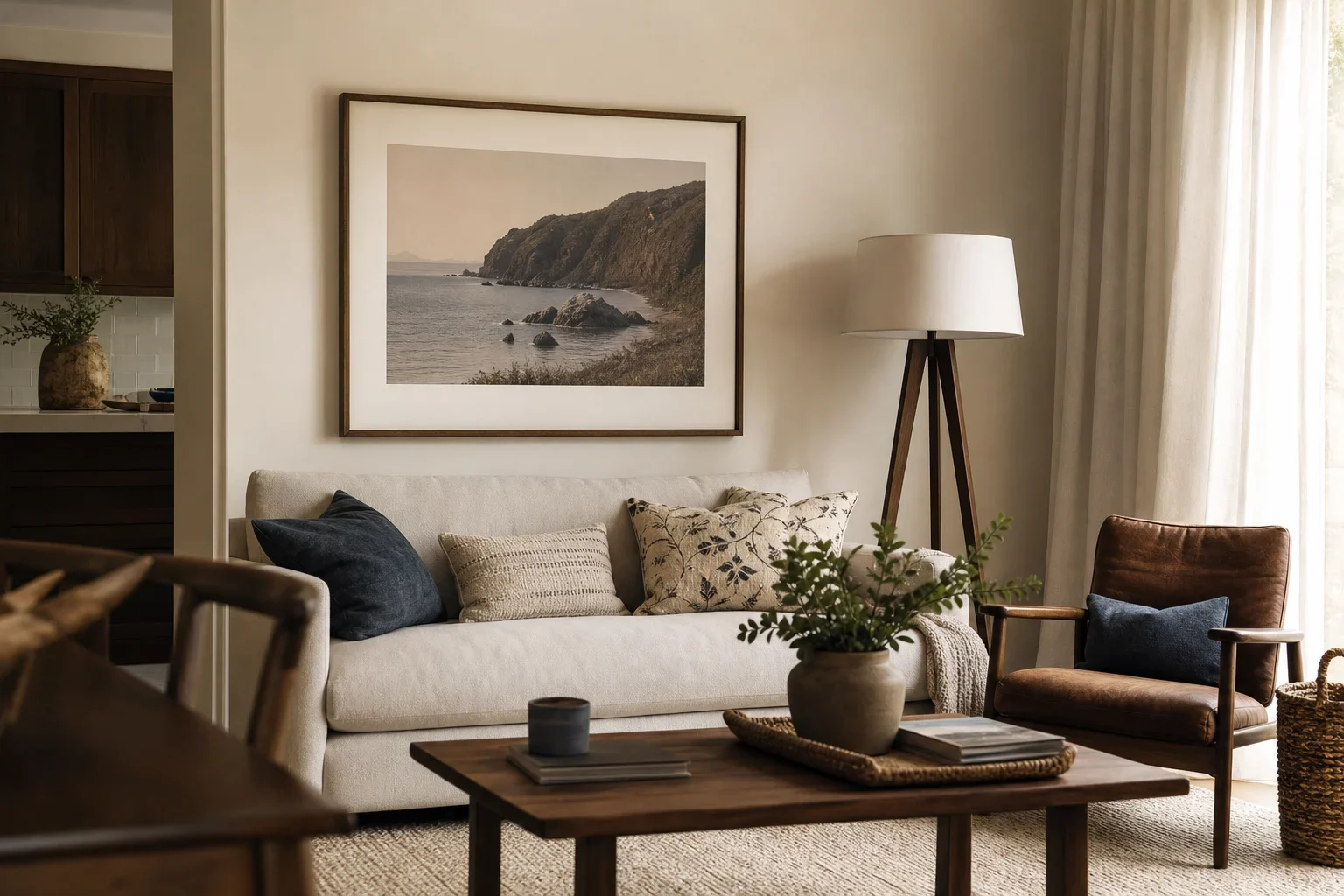
Coastal product idea: SAFAVIEH Natural Fiber Jute Area Rug 6x9, Natural & Navy NF874N. A jute weave is exactly the natural-fiber, flatweave texture the coastal trio calls for, giving the breathable, breezy foundation the article contrasts with farmhouse's chunkier wool rugs. The navy accent also echoes a classic coastal palette note. Since this is a 6x9, it suits a smaller living room; for the 8x10-to-9x12 range the article recommends for medium or open-plan spaces, measure your seating area first so the rug still extends beyond the sofa's front legs.
Making the choice: coastal or farmhouse
If your room gets strong natural light for most of the day and you want the space to feel breezy and low-effort, the coastal trio's lighter materials will show off that light well. If your room runs a little dim or you want something that reads cozier through a cold winter, the farmhouse trio's warmer wood and metal tones will carry more visual weight without needing extra accessories. Either way, resist spending the whole budget on the sofa alone — in both worked examples above, the rug and lamp together make up closer to half the spend, because they're doing the work of tying the look together, not just filling space.
Frequently asked questions
What's the real difference between a coastal and a farmhouse living room on a budget?
The core difference is weight and warmth, not price. Coastal rooms favor lighter, breezier materials like cotton, linen, and seagrass with reflective surfaces to amplify natural light, while farmhouse rooms lean on warmer, more structural natural elements — turned wood, braided textures, blackened metal — used sparingly so the room doesn't feel costume-y. Both can be built on the same budget; the money just gets allocated to different textures and finishes.
How big should my rug be for either style?
Start with an 8x10 rug for a medium living room and size up to 9x12 for a larger or open-plan space, making sure the rug extends at least 6 to 8 inches beyond your sofa on each side. At a minimum, the front legs of your sofa and any chairs should rest on the rug, since an undersized rug is one of the most common and most noticeable budget-decorating mistakes.
Can I mix coastal and farmhouse pieces instead of choosing one?
You can, but it works best if you pick one style to lead and borrow one or two accents from the other, rather than splitting the sofa, rug, and lamp evenly between the two aesthetics. Farmhouse guidance specifically warns against over-theming a room with too many structural elements at once, and the same restraint helps when blending two palettes — one grounding choice per piece keeps the room coherent.
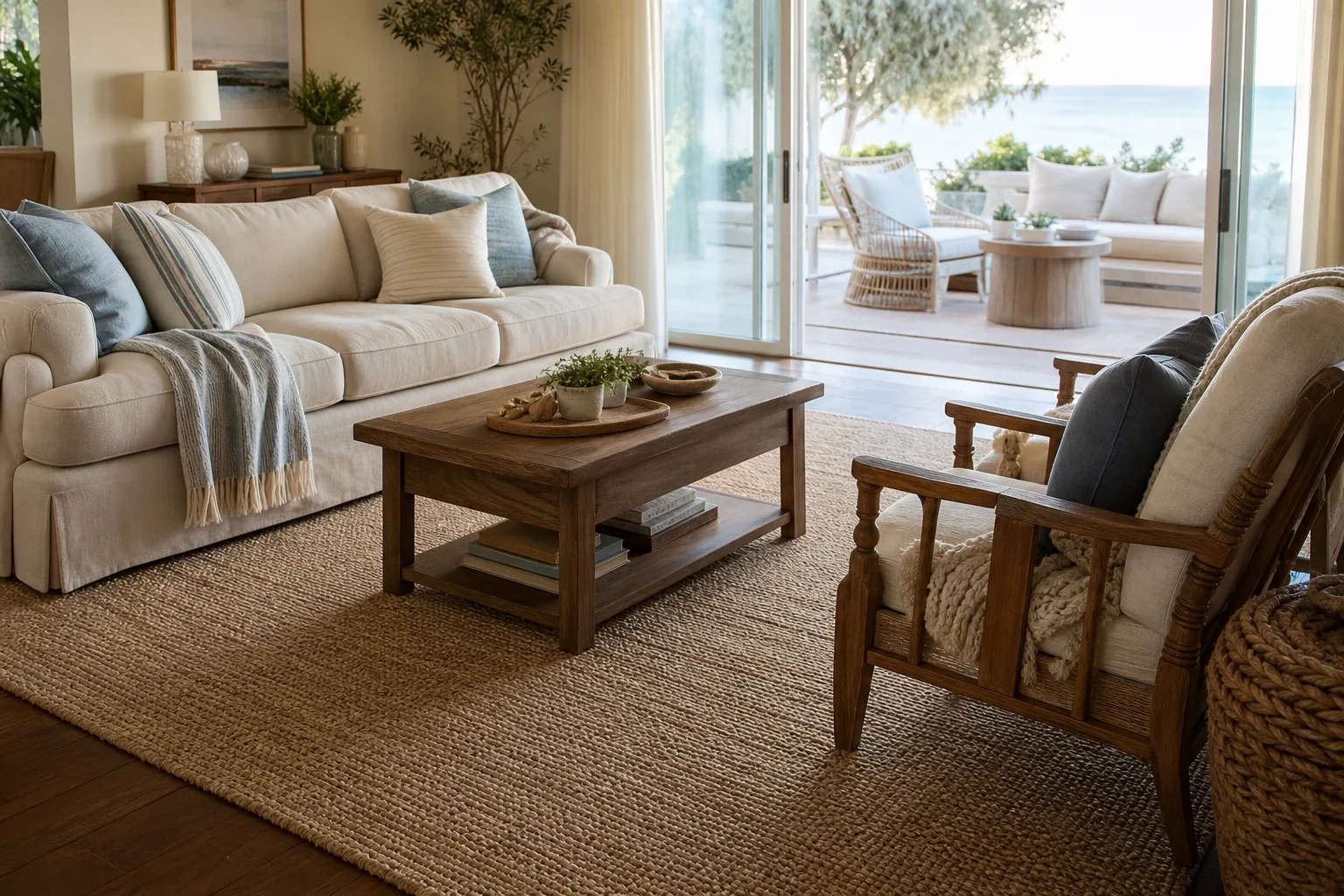
Coastal product idea: JONATHAN Y Nando 2-Light Coastal Rattan Floor Lamp 61", Brown Wood Finish. This rattan-shaded floor lamp lines up closely with the coastal trio's lighting pick — a slim lamp with a rattan or linen shade meant to diffuse light softly rather than cast hard shadows. Placed in a reading corner as the article suggests, its wood-finished base adds height without visual bulk, letting it anchor a seating grouping while staying visually light enough not to compete with an airy sofa and rug.
Which piece should I spend the most on in a coastal farmhouse living room budget?
In both worked examples above, the sofa takes the largest single share of the budget because it's the piece you use daily and the hardest to swap out later, but the rug and lamp together still account for close to half the total spend. Underfunding either of those two risks leaving the room feeling unfinished even if the sofa itself looks right.
Does lighting really matter as much as the sofa and rug?
Yes — the lamp's shade material and base finish do a lot of the style signaling in both looks: linen or rattan shades read coastal, while wood or blackened-metal bases read farmhouse. A mismatched lamp can undercut an otherwise well-matched sofa and rug, so it's worth choosing it alongside the other two pieces rather than as an afterthought.
How can I shortlist real products once I've picked a direction?
Once you know whether you're leaning coastal or farmhouse, a tool that matches recommendations to your room and stated budget can turn that decision into an actual shoppable list, rather than leaving you to browse endlessly for the right rug weave or lamp finish. Taking a short style quiz first can also help confirm which direction actually fits your taste before you commit the budget.
Shop the Coastal look
As an Amazon Associate, Nido earns from qualifying purchases.

Barefoot Bungalow Atlantis Reversible Slipcover - Furniture Protector - Sofa - Jade
A reversible slipcover is a practical way to test the coastal trio's slipcovered-sofa look from the worked $1,400 example without committing to new upholstery. Because it slips over an existing frame, it's a lower-cost entry point for the airy, relaxed silhouette the article describes, and the reversible design means you can switch sides if the room's light or accent colors shift later in your coastal planning.
View on Amazon
SAFAVIEH Natural Fiber Jute Area Rug 6x9, Natural & Navy NF874N
A jute weave is exactly the natural-fiber, flatweave texture the coastal trio calls for, giving the breathable, breezy foundation the article contrasts with farmhouse's chunkier wool rugs. The navy accent also echoes a classic coastal palette note. Since this is a 6x9, it suits a smaller living room; for the 8x10-to-9x12 range the article recommends for medium or open-plan spaces, measure your seating area first so the rug still extends beyond the sofa's front legs.
View on Amazon
JONATHAN Y Nando 2-Light Coastal Rattan Floor Lamp 61", Brown Wood Finish
This rattan-shaded floor lamp lines up closely with the coastal trio's lighting pick — a slim lamp with a rattan or linen shade meant to diffuse light softly rather than cast hard shadows. Placed in a reading corner as the article suggests, its wood-finished base adds height without visual bulk, letting it anchor a seating grouping while staying visually light enough not to compete with an airy sofa and rug.
View on Amazon