The Living Room Color Formula for Your Sofa, Rug, and Lamp
Design theme: Scandinavian
A repeatable three-step color formula for matching your sofa, rug, and floor lamp — plus a fill-in worksheet and a worked example you can copy for any style.
As an Amazon Associate, Nido earns from qualifying purchases.
If you've ever bought a sofa you loved, a rug you loved, and a lamp you loved — and then watched them fight each other in the actual room — you're not alone. This living room color formula for your sofa, rug, and lamp gives you a repeatable, three-step way to choose all three together, instead of picking each piece in isolation and hoping they get along.
The formula works the same way whether your aesthetic is Scandinavian, Japandi, industrial, boho, coastal, or farmhouse. You're not choosing colors you like in a vacuum — you're building them in a specific order so each layer supports the one before it.
Why color chaos happens in the first place
Most living rooms end up visually noisy for a simple reason: the sofa, rug, and lamp were each chosen to look good on their own, on a screen, under store lighting — not next to each other, in your room. One guide on budget living room decorating puts it plainly: pick two or three main colors plus a neutral before you shop, then use that palette to reject anything that would fight the room, because that one habit keeps the shopping list focused.
The three-step formula below builds that palette for you, using the sofa or rug as the anchor and working outward.
The living room color formula, step by step
This is the core of the worksheet: one grounding color, one contrast tone, one texture layer. Fill in each blank before you shop for the next piece.
Step 1: Pick your grounding color
Start with either your sofa or your rug — whichever one is harder to change later — and let it set the dominant tone for the room. One widely used styling principle treats this grounding piece as roughly 60% of the room's visual weight, with everything else supporting it rather than competing with it. If your sofa is a warm oatmeal or a deep charcoal, that's your grounding color. If you're starting from the rug instead, pick a rug whose dominant tone you're happy to see repeated everywhere else.
Scandinavian product idea: ELYONA Nordic Wood Tripod Floor Lamp, Modern Reading Standing Lamp for Living Room 3 Color Temperatures LED Bulb Included Flaxen Lamp Shade, Boho Natural Wooden floor lamp for Bedroom Office Kids Room. Think of this tripod floor lamp as your Step 3 accent layer. Its natural wood frame and flaxen shade give you a warm, light-toned finish rather than a bold metal one, which suits Scandinavian rooms where the accent note is meant to be gentle and textural rather than loud. Because it also offers multiple color temperatures, you can test which light tone best echoes the undertone you set with your grounding sofa or rug color before committing to the room's final palette.
Worksheet line 1: My grounding color is __________ and it comes from my __________ (sofa or rug).
Step 2: Add a contrast tone
Once the grounding color is set, choose one contrast tone for the second piece — the rug if you started with the sofa, or the sofa if you started with the rug. This should read as a clear but related shade: a contrast tone sits roughly in the secondary 30% role, present enough to notice but never competing for the main spot. Warm neutrals pair well with another warm neutral a few shades darker or lighter; a cooler charcoal sofa pairs well with a rug that has some cream or stone in it rather than a second cool gray that flattens the whole room.
Worksheet line 2: My contrast tone is __________ and it comes from my __________ (whichever piece you didn't use in Step 1).
Step 3: Layer in a texture or accent through the lamp
The floor lamp is your smallest surface area, so it's the right place for the accent note — a warm brass finish, a black metal arm, a linen or paper shade in a slightly different value than your grounding color. This is the roughly 10% accent layer: enough to add interest, not enough to pull focus from the sofa and rug you've already committed to.
Worksheet line 3: My accent comes from my lamp's __________ (finish, shade color, or base material).
Scandinavian product idea: SHACOS Soft Cozy Fluffy Arch Pattern High Low Pile Area Rugs 5'x7' Non Slip Washable Scandinavian Minimalist Rug Modern Geometric Arc Carpet for Living Room Bedroom Dining Room, Beige. This arc-pattern rug works well as the contrast-tone piece in Step 2 of the formula. Its beige, minimalist geometric look reads as a Scandinavian-friendly neutral that can sit a shade lighter or darker than a grounding sofa color without competing with it, which is exactly the 'related but distinct' role the worksheet asks the second piece to play. Its high-low pile texture also adds a bit of visual interest on its own, useful if your sofa and lamp end up fairly flat in texture.
Worked example (hypothetical)
To show the formula in action, here's a hypothetical walkthrough — not a real product list, just an illustration of the three steps:
- Step 1 — Grounding color: A sofa in warm oat-colored linen becomes the 60% anchor.
- Step 2 — Contrast tone: A flatweave rug in a slightly deeper warm gray picks up the undertone of the sofa without matching it exactly.
- Step 3 — Accent layer: A floor lamp with a black metal arm and a cream linen shade adds the one sharp note that ties the warm and cool tones together.
Notice that each piece was chosen only after the previous one was locked in — not all three picked separately and then compared at the end.
A quick checklist before you shop
- Write down your grounding color and which piece it comes from before you shop for anything else.
- Choose your contrast tone from the same undertone family (warm with warm, cool with cool) unless you're deliberately going for high contrast.
- Save your boldest or darkest note for the smallest surface — usually the lamp.
- Bring a fabric swatch or paint chip with you when shopping in person; color reads differently under store lighting than it will at home.
- Resist buying the third piece until the first two are confirmed and in the room, if possible, since real light changes how colors relate.
If you'd rather not build this palette from scratch, a short style result can do the grounding-color work for you: Nido's interior design style quiz identifies your aesthetic and price range in a couple of minutes, and Nido's AI furniture recommendations can then surface real, in-stock sofas, rugs, and lamps that already share a coordinated palette for your rooms and budget.
Frequently asked questions
What is the living room color formula for sofa, rug, and lamp?
It's a three-step sequence: pick one grounding color from your sofa or rug first, add a contrast tone to the second piece, then use your floor lamp's finish or shade for the smallest accent note. Choosing in this order prevents three good-looking pieces from fighting once they're in the same room.
Should I start with the sofa or the rug?
Start with whichever piece is harder or more expensive to change later — for most households that's the sofa, since rugs are generally easier to swap. Let that piece set your grounding color, then choose the rug's tone to support it.
Scandinavian product idea: Korser 110" Cloud Sectional Couches for Living Room, Modern Modular Sectional Sofa with Ottoman, Boneless Cloud Couch with Comfy Deep Seats, Fluffy Chenille L-Shape Sofa Couch for Living Room, Beige. As a large beige chenille sectional, this sofa is a natural fit for Step 1 of the formula, the grounding color. Its soft, cloud-like silhouette and neutral beige tone align with Scandinavian preferences for calm, uncomplicated forms, making it a sensible anchor to build the rest of your contrast and accent choices around once you've decided this is the piece you're keeping longest.
How many colors should be in my living room palette?
A simple two-or-three-color plan, plus one neutral, keeps the room from looking visually busy. Picking that palette before you shop for the sofa, rug, or lamp makes it easier to reject pieces that would clash, even if they look nice on their own.
Does this formula work for every style, like Japandi or industrial?
Yes — the three steps (grounding color, contrast tone, accent layer) are style-agnostic. A Japandi room might use warm white and soft sage with a black accent lamp, while an industrial room might ground in charcoal with a rust contrast rug and a brass accent — the sequence stays the same even though the palette changes.
What if my sofa and rug are already mismatched?
You don't have to replace both. Treat whichever piece you're keeping as your grounding color and use the formula going forward for the next purchase — usually a new lamp or a rug swap — rather than trying to fix everything at once.
Can a style quiz help with this color formula?
It can speed up Step 1. A short style quiz that identifies your aesthetic and price range gives you a starting palette direction, which you can then run through the grounding-color, contrast-tone, and accent-layer steps instead of starting from a blank page.
Shop the Scandinavian look
As an Amazon Associate, Nido earns from qualifying purchases.
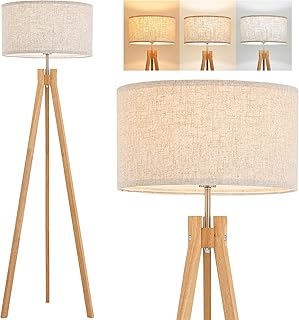
ELYONA Nordic Wood Tripod Floor Lamp, Modern Reading Standing Lamp for Living Room 3 Color Temperatures LED Bulb Included Flaxen Lamp Shade, Boho Natural Wooden floor lamp for Bedroom Office Kids Room
Think of this tripod floor lamp as your Step 3 accent layer. Its natural wood frame and flaxen shade give you a warm, light-toned finish rather than a bold metal one, which suits Scandinavian rooms where the accent note is meant to be gentle and textural rather than loud. Because it also offers multiple color temperatures, you can test which light tone best echoes the undertone you set with your grounding sofa or rug color before committing to the room's final palette.
View on Amazon
SHACOS Soft Cozy Fluffy Arch Pattern High Low Pile Area Rugs 5'x7' Non Slip Washable Scandinavian Minimalist Rug Modern Geometric Arc Carpet for Living Room Bedroom Dining Room, Beige
This arc-pattern rug works well as the contrast-tone piece in Step 2 of the formula. Its beige, minimalist geometric look reads as a Scandinavian-friendly neutral that can sit a shade lighter or darker than a grounding sofa color without competing with it, which is exactly the 'related but distinct' role the worksheet asks the second piece to play. Its high-low pile texture also adds a bit of visual interest on its own, useful if your sofa and lamp end up fairly flat in texture.
View on Amazon
Korser 110" Cloud Sectional Couches for Living Room, Modern Modular Sectional Sofa with Ottoman, Boneless Cloud Couch with Comfy Deep Seats, Fluffy Chenille L-Shape Sofa Couch for Living Room, Beige
As a large beige chenille sectional, this sofa is a natural fit for Step 1 of the formula, the grounding color. Its soft, cloud-like silhouette and neutral beige tone align with Scandinavian preferences for calm, uncomplicated forms, making it a sensible anchor to build the rest of your contrast and accent choices around once you've decided this is the piece you're keeping longest.
View on Amazon