The Furniture Proportion Worksheet Living Room Owners Need Before They Buy
Design theme: Contemporary
A one-page furniture proportion worksheet for your living room: check sofa seat height, rug footprint, and floor lamp reach together before you buy, with a worked example.
As an Amazon Associate, Nido earns from qualifying purchases.
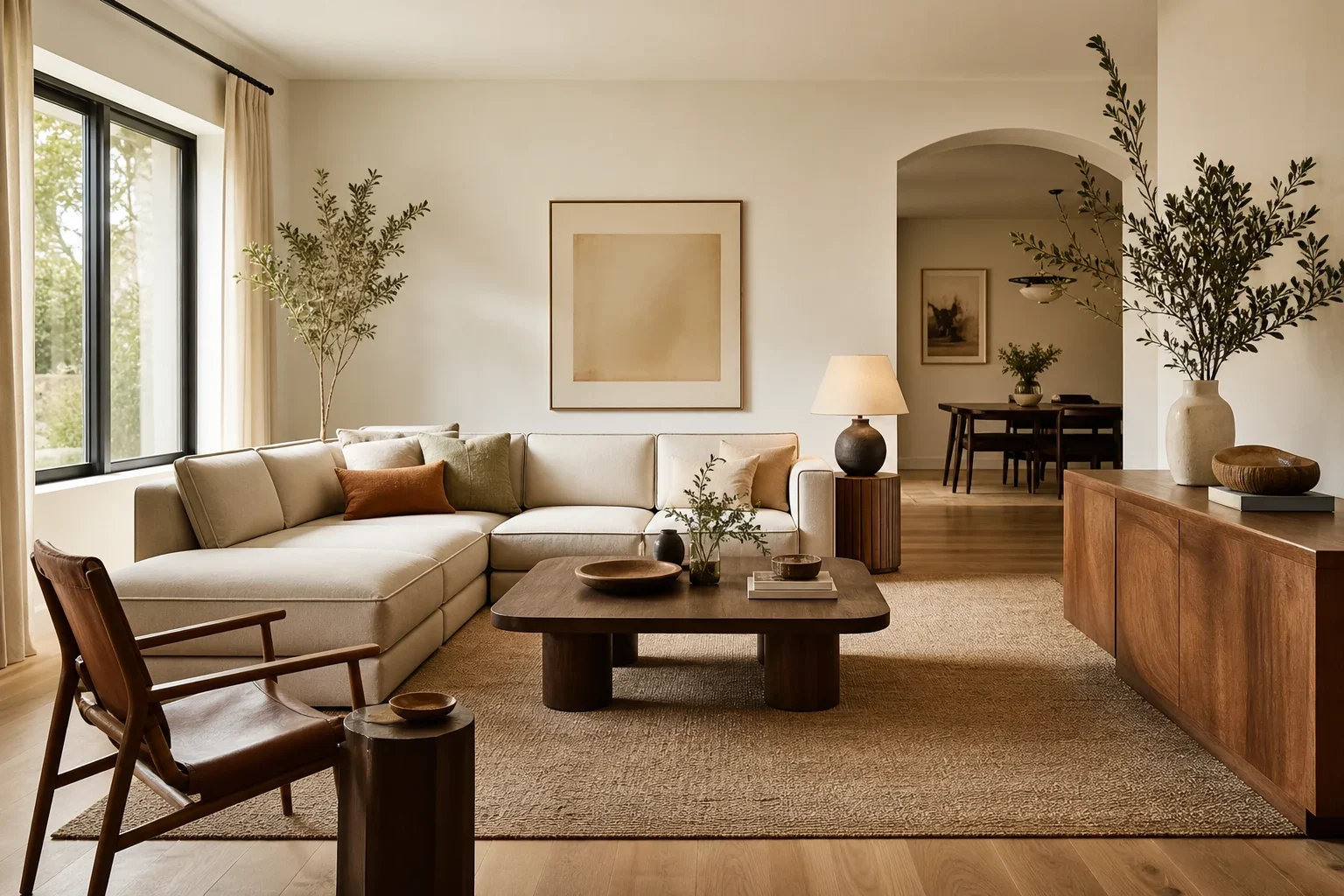
Most living room mistakes aren't about taste — they're about scale. A sofa that's the right color but too deep for the walkway. A rug that's the right pattern but too small for the seating group. A floor lamp that's beautiful on its own but too short to actually light a reading chair. This furniture proportion worksheet for your living room gives you one page to check sofa, rug, and lamp against each other, instead of approving each piece on its own and hoping they add up.
The idea is simple: before you buy, write down three numbers — your sofa's seat height, your rug's footprint, and your lamp's head height — and check whether they actually relate to the room and to each other. It takes ten minutes and it catches the kind of mismatch that's expensive to fix after delivery.
Why checking all three pieces together matters
Sofa, rug, and floor lamp are usually shopped on three separate trips, at three separate times, against three separate mental pictures of the room. Each purchase can look reasonable in isolation and still not work together once it's all sitting in the same space. A rug sized for a loveseat looks stranded under a deep sectional. A floor lamp that's perfect beside a low-slung chair can suddenly sit at an awkward height next to a taller sofa arm. Checking proportion as one worksheet, rather than one decision at a time, is what catches this before the pieces are in your living room.
Step 1: Record your sofa's seat height and depth
Measure your sofa (or the one you're considering) at two points: seat height off the floor, and overall depth from front to back. These two numbers set the baseline for everything else in the room. A lower, deeper sofa generally wants a lower coffee table and a floor lamp with a lower shade line, so the eye doesn't travel up and down awkwardly between pieces. A higher-set sofa can carry a taller lamp and table without feeling top-heavy.
Write both numbers at the top of your worksheet. You'll check the rug and lamp against them next.
Contemporary product idea: HULALA HOME 84" Faux Leather Sofa, Mid Century Modern 3 Seater Couch, Camel. Start your worksheet with this sofa's listed 84-inch width and seat profile as the baseline numbers in Step 1. An 84-inch overall width gives you a concrete figure to add the recommended margin to when targeting a rug width in Step 2, and a mid-century seat height is a useful real-world reference point for checking whether a floor lamp's shade height will land near eye level for a seated reader, exactly the cross-check the worksheet is built around.
Step 2: Map your rug's footprint against the seating
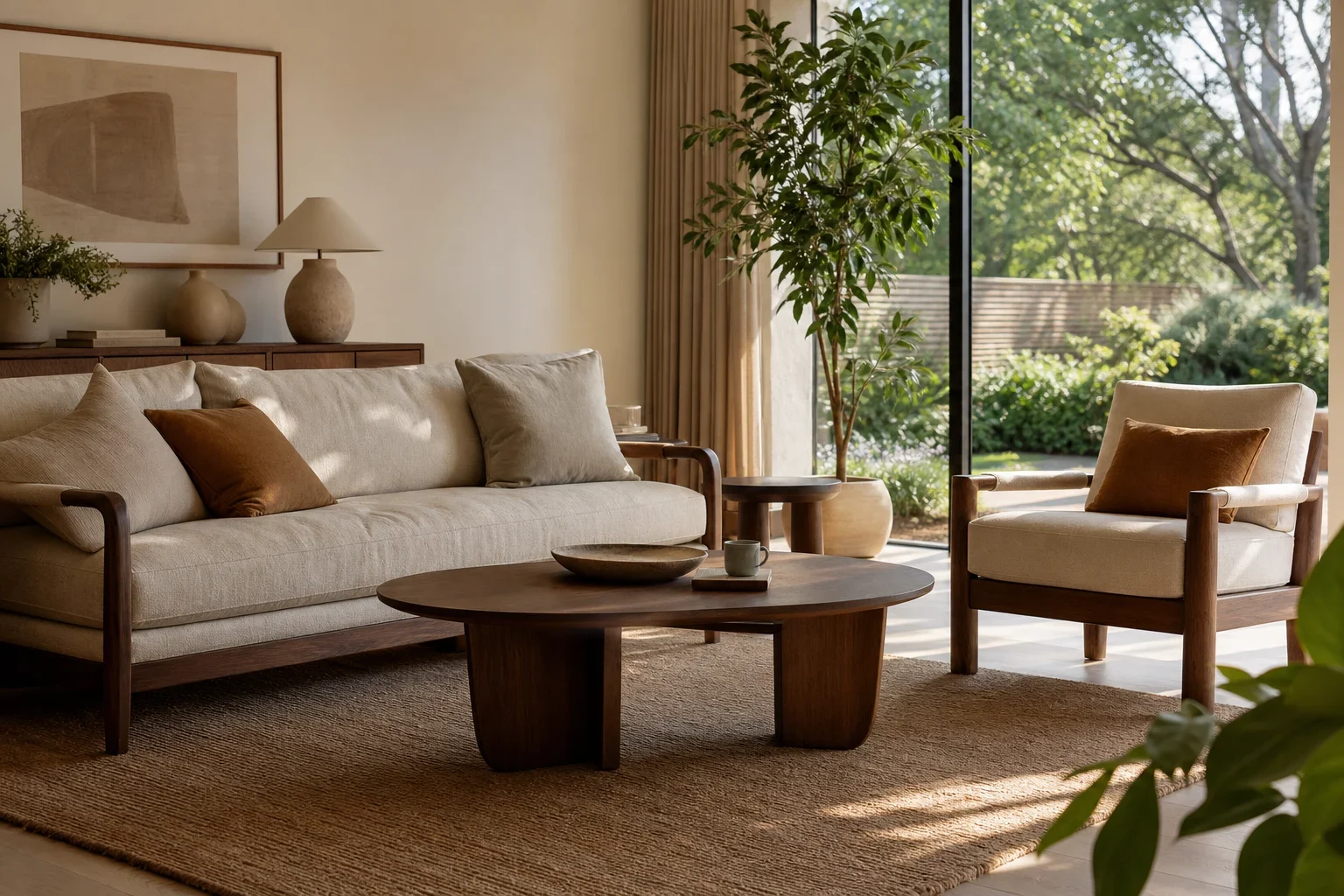
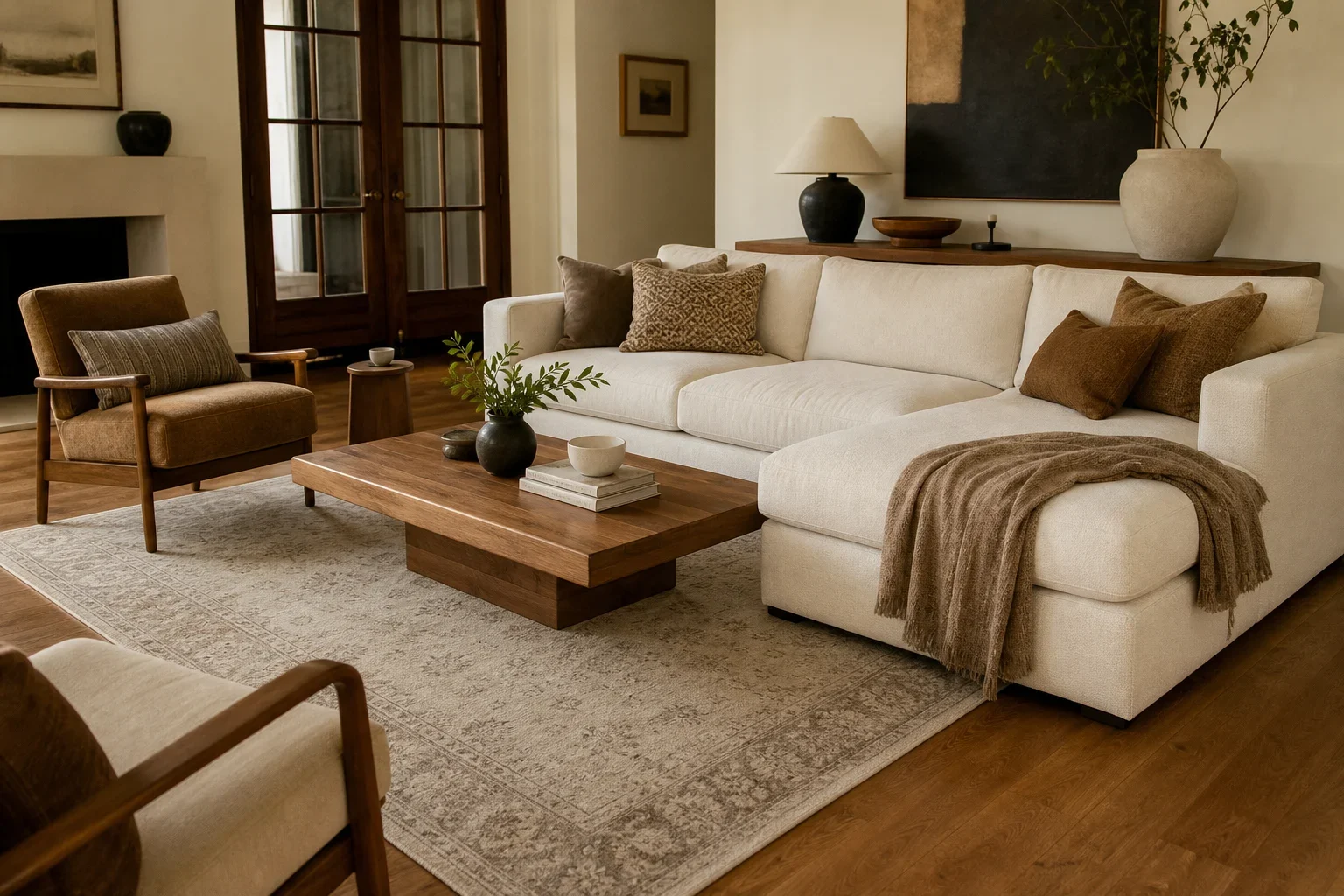
This is where most living rooms actually go wrong. Design guidance consistently points to the same two rules: the rug should extend several inches beyond the sofa's sides, and the front legs of your major seating pieces should rest on the rug rather than floating just off its edge. An undersized rug is one of the most frequently cited styling mistakes in living room guides, because it visually shrinks the seating group instead of anchoring it.
For your worksheet, measure the full width of your seating arrangement — sofa plus any chairs — and add roughly a foot and a half on each side as a rough target for the rug width. Then check the walkway: guidance generally suggests leaving meaningful clearance between the rug's edge and the walls, and comfortable spacing between the coffee table and sofa, so the room doesn't feel cramped even once the rug is down.
Quick rug-to-sofa check
- Rug extends past both ends of the sofa — not just the front.
- At minimum, the sofa's front legs sit on the rug.
- There's a visible gap between the rug's edge and the wall, not wall-to-wall carpeting-style coverage.
- The coffee table has breathing room between its edge and the sofa, rather than crowding either the rug's edge or the sofa cushions.
Step 3: Check your floor lamp's head height against both
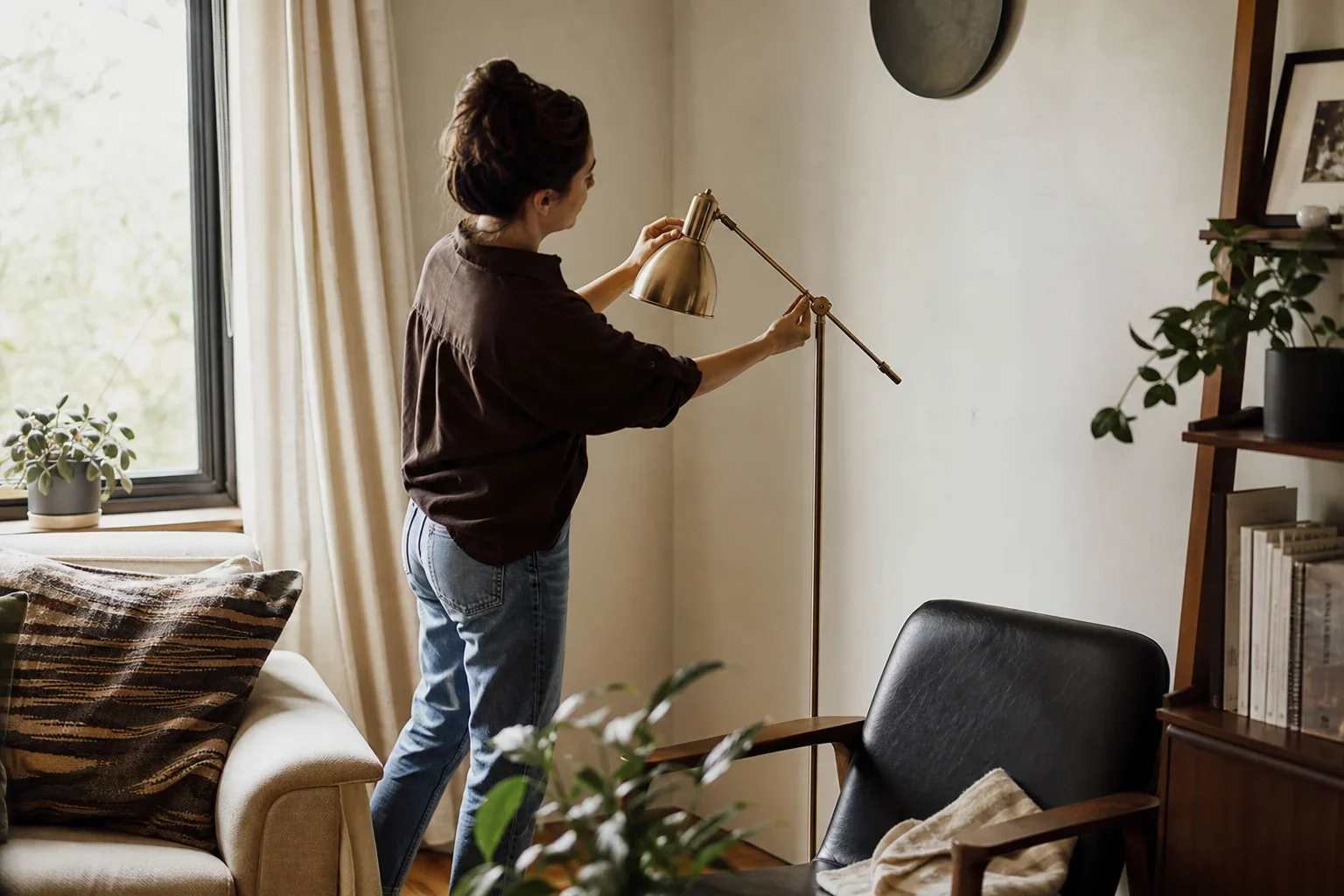
The floor lamp is the piece most often bought last and checked least. Its head height — the point where the shade sits — should relate to the seat height you recorded in step one. A lamp head set too high over a low sofa can throw light past where people are actually sitting and reading; one set too low beside a taller armchair can leave the room under-lit at eye level. Design trend reporting on living room lighting generally recommends layering at least a few light sources — ambient, task, and accent — rather than relying on one fixture, which is part of why the lamp's height needs to work with the furniture nearby, not just look good as a standalone piece.
For the worksheet, note the lamp's head height and where it will sit relative to the sofa arm or the side of a reading chair. If the shade bottom sits noticeably above or below the arm height, it's worth reconsidering the lamp or its placement before you commit.
Worked example: a hypothetical 12x16 ft living room
To make this concrete, here's a hypothetical worked example — not a real product recommendation, just a way to see the worksheet in action.
Contemporary product idea: 8x10 Area Rug for Living Room, Abstract Washable Non-Slip Large Rugs, Gold. An 8x10 footprint is a handy real-world figure to run through the rug-to-sofa check in Step 2: lay it against your seating group's total width to see whether it extends past the sofa's sides and lets the front legs rest on it, or whether your grouping actually calls for a larger size. Its listed abstract pattern and washable, non-slip construction are the kind of practical details worth noting on the worksheet alongside the measurements, so pattern and upkeep don't get decided separately from fit.
- Sofa: seat height 17 inches, depth 36 inches, total width 84 inches.
- Rug check: seating group (sofa plus two chairs) spans roughly 10 feet wide, so the worksheet target rug width lands around 11 to 12 feet, pointing toward a large rectangular rug rather than a mid-size one, with the sofa's front legs planned to sit on it and a visible gap left at the walls.
- Lamp check: with a 17-inch seat height, a floor lamp with a shade bottom around 40 to 42 inches off the floor sits roughly at eye level for someone seated, rather than towering over the sofa arm or sitting too low to read by.
None of these three numbers would catch a mismatch on its own. Together, they show a rug large enough for the seating group and a lamp scaled to the sofa's seat height, the kind of coherence a proportion worksheet is built to confirm before anything is purchased.
Turning the worksheet into a shopping list
Once you've got your three numbers, a room-by-room moving or furnishing checklist can hold them alongside the rest of your living room plan, so the proportion check doesn't get lost between separate shopping trips. If you're not sure how to translate sofa, rug, and lamp measurements into actual products, describing the room in plain language, including those measurements, to a tool built for room planning can turn the worksheet into a real, budget-matched shortlist rather than leaving you to cross-reference listings by hand.
Frequently asked questions
What is a furniture proportion worksheet for a living room, exactly?
It's a simple one-page check where you record three measurements, sofa seat height, rug footprint, and floor lamp head height, and confirm they relate to each other and to your room, rather than approving each piece separately. The goal is to catch mismatches on paper before the furniture arrives.
How big should my rug be compared to my sofa?
Design guidance generally suggests the rug should extend several inches beyond the sofa's sides, with at least the front legs of your seating resting on the rug. Undersized rugs are commonly cited as one of the most frequent living room styling mistakes, since they make a seating group look disconnected from the floor.
Contemporary product idea: SIBRILLE Floor Lamp with Linen Shade, Dimmable Tall Standing Lamp with Remote Control & 3 Color Temperatures, Modern Floor Lamps for Living Room Bedroom Office Corner, 9W LED Bulb Included. This tall floor lamp's dimmable, remote-controlled design is worth measuring against the seat and arm height you recorded in Step 1, since its shade position relative to a sofa or chair is exactly the head-height check Step 3 asks for. The listed 3 color temperature settings also map onto the layered ambient-and-task lighting idea discussed in the worksheet, making it a reasonable reference point for testing whether a lamp's height and light quality actually suit the seating nearby rather than just looking good on its own.
How do I know if my floor lamp is the right height for my sofa?
Compare the lamp's shade-bottom height to your sofa's seat height and arm height. If the shade sits noticeably above or below where someone's eyes would be while seated or reading, the lamp is likely mismatched to that piece of furniture, even if it looks fine standing alone in a showroom.
Do I need to measure walkway space as part of this worksheet?
Yes, proportion isn't only about the sofa, rug, and lamp relating to each other, it's also about whether the whole grouping fits the room. Leaving clearance between the rug's edge and the walls, and comfortable spacing around the coffee table, keeps the room feeling open rather than crowded once every piece is in place.
Can I use this worksheet if I'm buying the sofa, rug, and lamp at different times?
Yes, that's actually the most common real-world scenario. Record your sofa's measurements as soon as you have them, then use those numbers as the baseline when you shop for the rug and lamp later, rather than choosing each one against a vague mental picture of the room.
What if my rug and lamp don't match my sofa's proportions once I check?
That's exactly what the worksheet is designed to catch early. It's usually easier and cheaper to size up a rug or swap a lamp before delivery than to live with a mismatch and replace it later, which is why running the check before you buy is worth the ten minutes it takes.
Shop the Contemporary look
As an Amazon Associate, Nido earns from qualifying purchases.

HULALA HOME 84" Faux Leather Sofa, Mid Century Modern 3 Seater Couch, Camel
Start your worksheet with this sofa's listed 84-inch width and seat profile as the baseline numbers in Step 1. An 84-inch overall width gives you a concrete figure to add the recommended margin to when targeting a rug width in Step 2, and a mid-century seat height is a useful real-world reference point for checking whether a floor lamp's shade height will land near eye level for a seated reader, exactly the cross-check the worksheet is built around.
View on Amazon
8x10 Area Rug for Living Room, Abstract Washable Non-Slip Large Rugs, Gold
An 8x10 footprint is a handy real-world figure to run through the rug-to-sofa check in Step 2: lay it against your seating group's total width to see whether it extends past the sofa's sides and lets the front legs rest on it, or whether your grouping actually calls for a larger size. Its listed abstract pattern and washable, non-slip construction are the kind of practical details worth noting on the worksheet alongside the measurements, so pattern and upkeep don't get decided separately from fit.
View on Amazon
SIBRILLE Floor Lamp with Linen Shade, Dimmable Tall Standing Lamp with Remote Control & 3 Color Temperatures, Modern Floor Lamps for Living Room Bedroom Office Corner, 9W LED Bulb Included
This tall floor lamp's dimmable, remote-controlled design is worth measuring against the seat and arm height you recorded in Step 1, since its shade position relative to a sofa or chair is exactly the head-height check Step 3 asks for. The listed 3 color temperature settings also map onto the layered ambient-and-task lighting idea discussed in the worksheet, making it a reasonable reference point for testing whether a lamp's height and light quality actually suit the seating nearby rather than just looking good on its own.
View on Amazon