How to Pack a Kitchen When Moving: A Daily-Use vs. Rarely-Used Split
Design theme: Minimalist
Learn how to pack kitchen items when moving without losing access to plates and coffee for weeks. A room-specific checklist splitting what to box early from what to leave until the final days.
As an Amazon Associate, Nido earns from qualifying purchases.
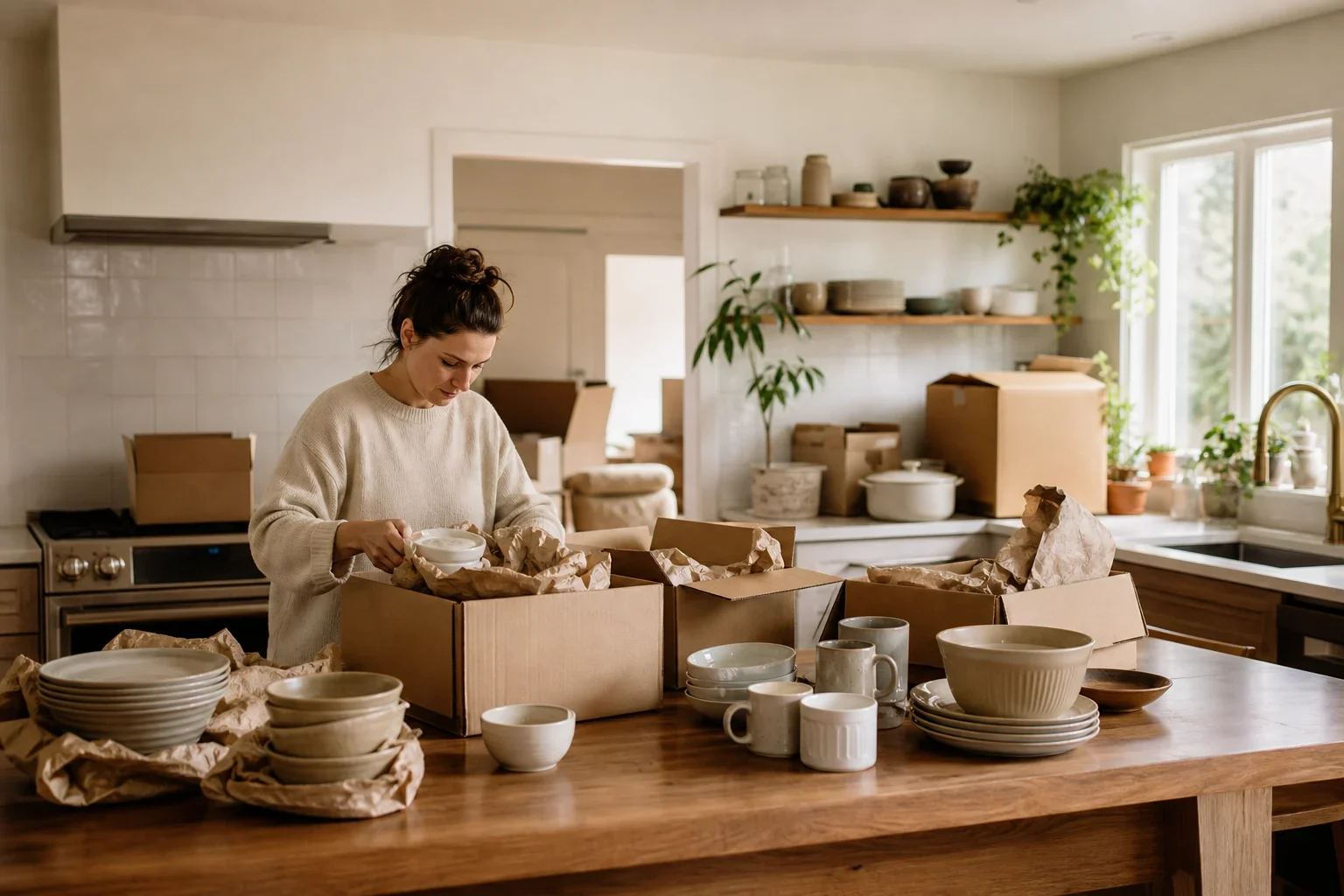
The kitchen is the one room where packing order actually matters more than packing speed. Pack too early and you're eating takeout off paper towels for two weeks. Pack too late and you're wrapping glassware in the dark the night before movers arrive. Figuring out how to pack kitchen when moving comes down to one split: separate what you use most days from what you only reach for occasionally, then box each group on its own schedule. This guide walks through that split room by room, with a labeled worked example you can adapt to your own cabinets.
If you haven't mapped out the rest of your apartment yet, our room-by-room packing order guide covers the full sequence from storage closets to the final-day essentials box.
Why the kitchen breaks the usual packing rules
Most packing advice says to start with the rooms you use least — storage areas, guest bedrooms, off-season clothes — and save daily-use spaces for last. The kitchen follows that same logic, but it's trickier than other rooms for two reasons. First, it holds more breakables than almost any other space in the apartment, which means more wrapping time per box. Second, you need at least some of it functional every single day until moving day, so you can't treat it as one block to pack in a single sitting the way you might a closet.
That's why the kitchen works best as two separate packing jobs on two separate timelines, rather than one room you tackle all at once.
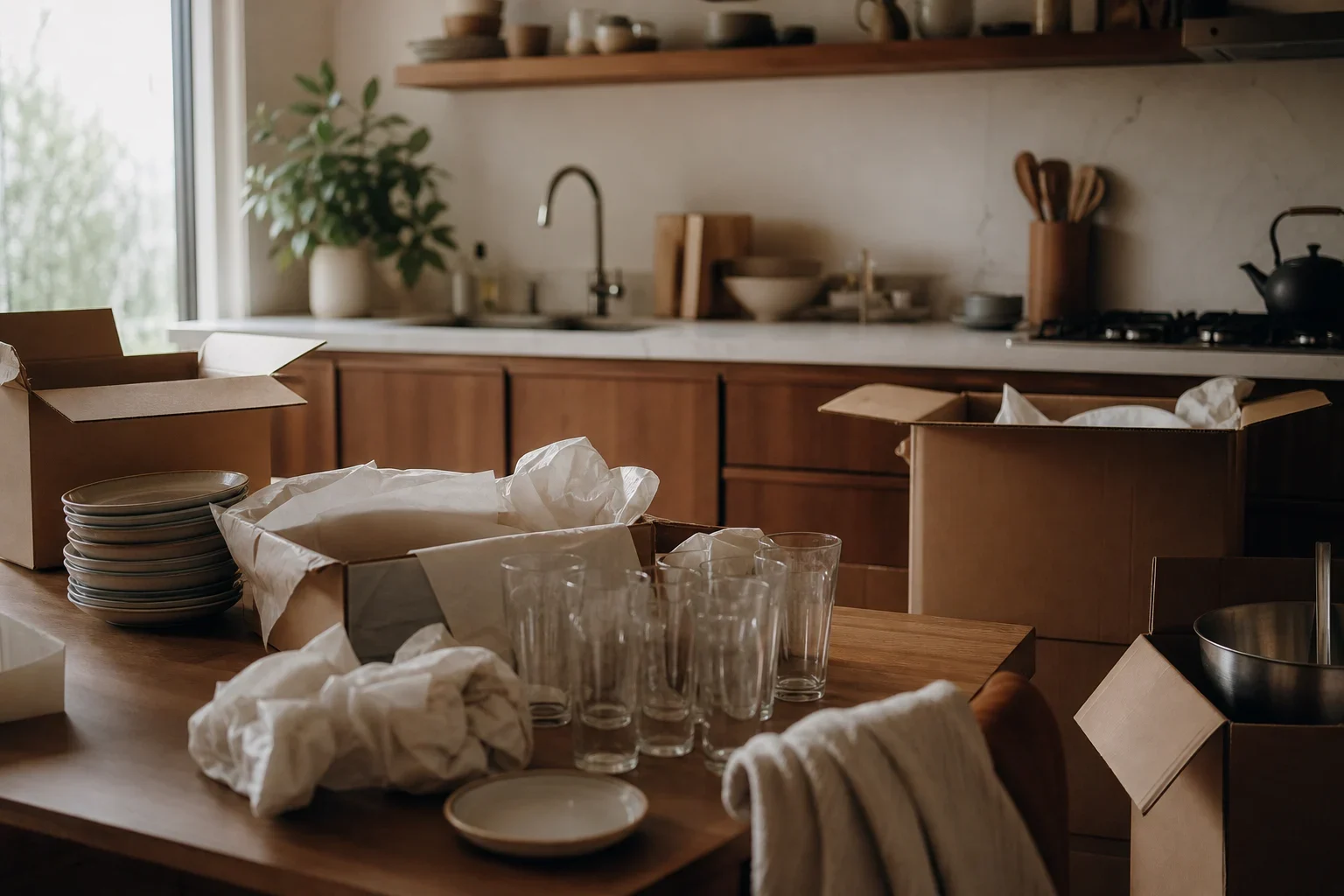
Minimalist product idea: BOX USA Moving Boxes Holds 65lbs, 18x14x12, Medium 10-Pk for Shipping. These medium 18x14x12 boxes suit the 'pack weeks early' half of the split — fine china backups, extra bakeware, and bulk pantry stock. A medium size keeps a fully loaded glassware or dish box from getting too heavy to carry, which lines up with the article's advice to use smaller or medium boxes for fragile kitchen items rather than one oversized one. A uniform 10-pack also supports a minimalist approach: consistent box sizes stack neatly and are easy to label and track as you work through the rarely-used cabinets first.
The split: rarely-used items first, daily-use items last
Think of your kitchen in two halves. One half is things you can live without for the next few weeks. The other half is things you'll reach for tonight. Packing order advice from moving guides consistently draws this same line in the kitchen specifically, separating fragile and occasional-use items from the handful of things a household actually needs every day.
Pack these weeks early (rarely used)
- Fine china, crystal, and serving pieces you only bring out for guests
- Duplicate small appliances — the second blender, the waffle iron, the fondue set
- Bulk or backup pantry stock you won't finish before move day
- Specialty bakeware: the roasting pan, the bundt pan, the holiday cookie sheets
- Extra glassware, mugs, and serving bowls beyond what you use weekly
- Small gadgets that live in a drawer and rarely get touched
Pack these in the final two to three days (daily-use)
- One set of everyday plates, bowls, and cups per person, plus a couple of spares
- One pot, one pan, and the utensils you cook with most
- The coffee maker or kettle, if mornings depend on it
- A few days' worth of pantry basics you're actively using
- Dish soap, a sponge, and one dish towel to keep using until the last load
This mirrors advice from moving guides that recommend packing the rarely-used half of the kitchen — china, serving pieces, the gadget drawer — around three weeks out, and saving the everyday half for the final two or three days before the move. Kitchen-specific timelines from portable-storage and moving-container guides go further, suggesting you wrap delicate and rarely-used items like crystal and silverware three to four weeks before the move, then hold back baking dishes, special appliances, extra glassware, and bulk pantry items until two to three days before move day — leaving only what you need for a last few meals.
A worked example: packing a two-person apartment kitchen
Here's a hypothetical timeline to show how the split plays out in practice. Your own dates will shift depending on your move-out date, but the sequence stays the same.
- Three to four weeks out: Wrap and box the fine china, the extra serving platters, the second coffee maker from a wedding registry, and anything in the back of the pantry you won't cook with before the move. Label the box "Kitchen — rarely used" and note roughly what's inside.
- Two weeks out: Go through the cabinet of mismatched mugs and travel cups. Keep two mugs out per person, pack the rest. Do the same with bakeware — keep one sheet pan, pack the others.
- Final week: Pack all but one pot, one pan, one set of dishes per person, and the utensils you've used every day this week. Everything else in the kitchen should already be boxed by this point.
- Final two to three days: Pack the last pot, the last plates, and the coffee maker. Keep out paper plates, a couple of disposable cups, and a few snacks so the final morning doesn't depend on a working stove.
This last stretch overlaps with building a first-night box — a separate, dedicated box of essentials packed last and carried with you rather than loaded into the truck, so your first meal in the new place doesn't require unpacking anything.
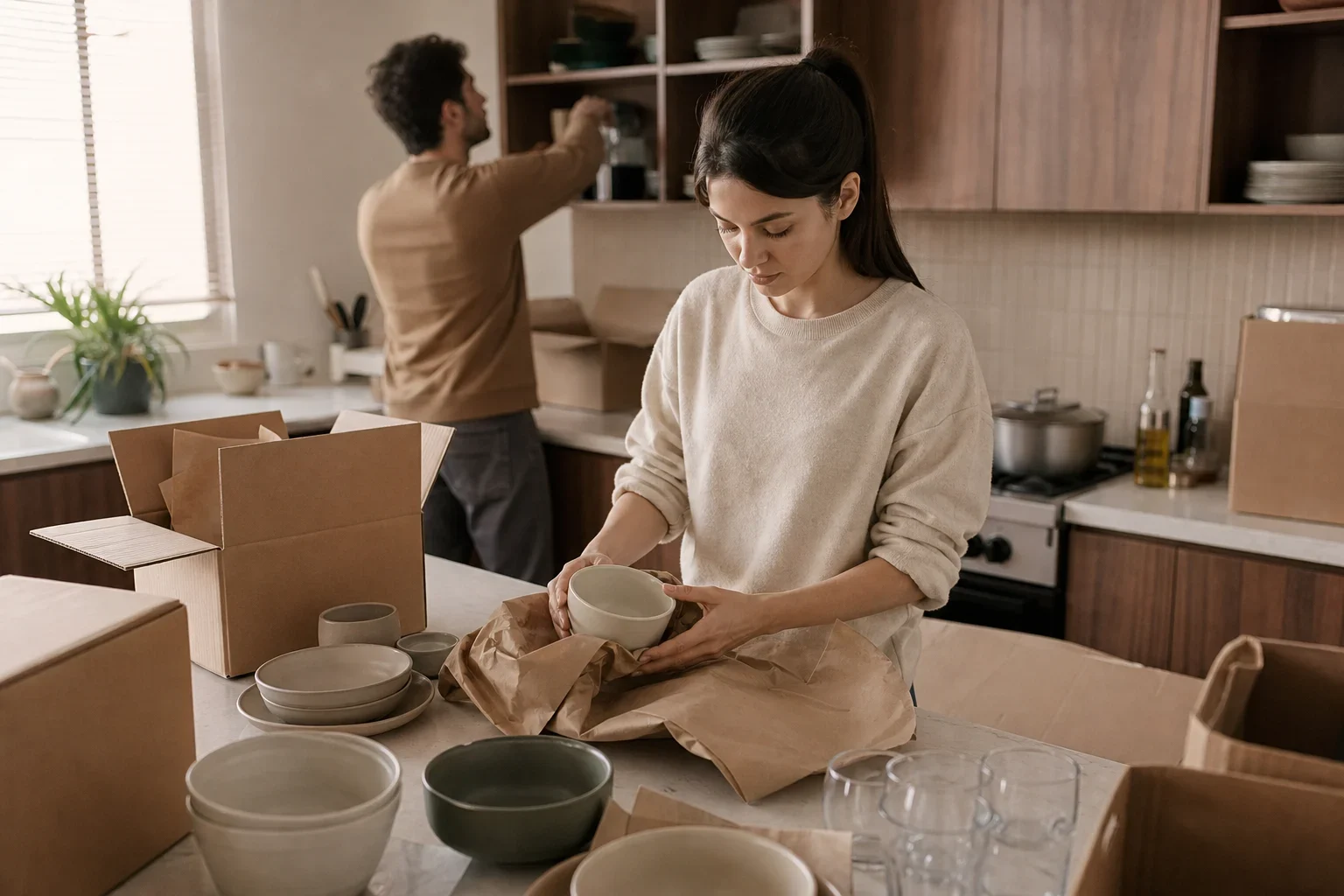
Minimalist product idea: 100 Sheets Packing Paper for Moving, Newsprint Paper for Packing Wrapping, Wrapping Paper for Packaging Glasses Dishes - Must Have Packing Supplies for Moving Box Filler(12 * 24in). This newsprint packing paper is a direct fit for the guide's instruction to wrap each fragile piece individually before boxing. Use it on the rarely-used fine china, crystal, and extra glassware you're setting aside three to four weeks out, wrapping each item and padding gaps so nothing shifts in transit. Plain newsprint keeps the process simple and clutter-free, which suits a minimalist packing routine focused on protecting breakables without extra materials or steps.
Where Nido fits into kitchen packing
Once you've got the split sorted, the harder part is remembering which box has the coffee maker and which has the good plates. Nido's room-by-room planning tool lays out every item for each room — including the kitchen — organized and prioritized, so you have a working list to check off as you pack rather than relying on memory. And if you're setting up a new kitchen at the other end, Nido's new-home setup conversation turns your answers into a room-by-room plan for what to buy first, so the daily-use items you packed last are also the first ones you replace or restock if anything didn't survive the move.
Frequently asked questions
What kitchen items should I pack first when moving?
Start with anything you don't use on a typical week: fine china, duplicate appliances, specialty bakeware, extra glassware, and bulk pantry backstock. These are the safest items to box three to four weeks before your move because you won't miss them in daily life.
What kitchen items should I pack last?
Hold back one set of everyday dishes, one pot, one pan, your most-used utensils, the coffee maker, and a few days of pantry basics. Moving guides generally recommend boxing these in the final two to three days, right before move day, so you're not cooking out of boxes for weeks.
How do I pack fragile kitchen items like china and glassware safely?
Wrap each fragile piece individually in bubble cushioning or packing paper, and fill any gaps in the box with extra padding so nothing shifts in transit. Pack glassware and china into smaller or medium boxes rather than one oversized box, since fully packed glassware boxes get heavy fast and are easier to carry when kept compact.
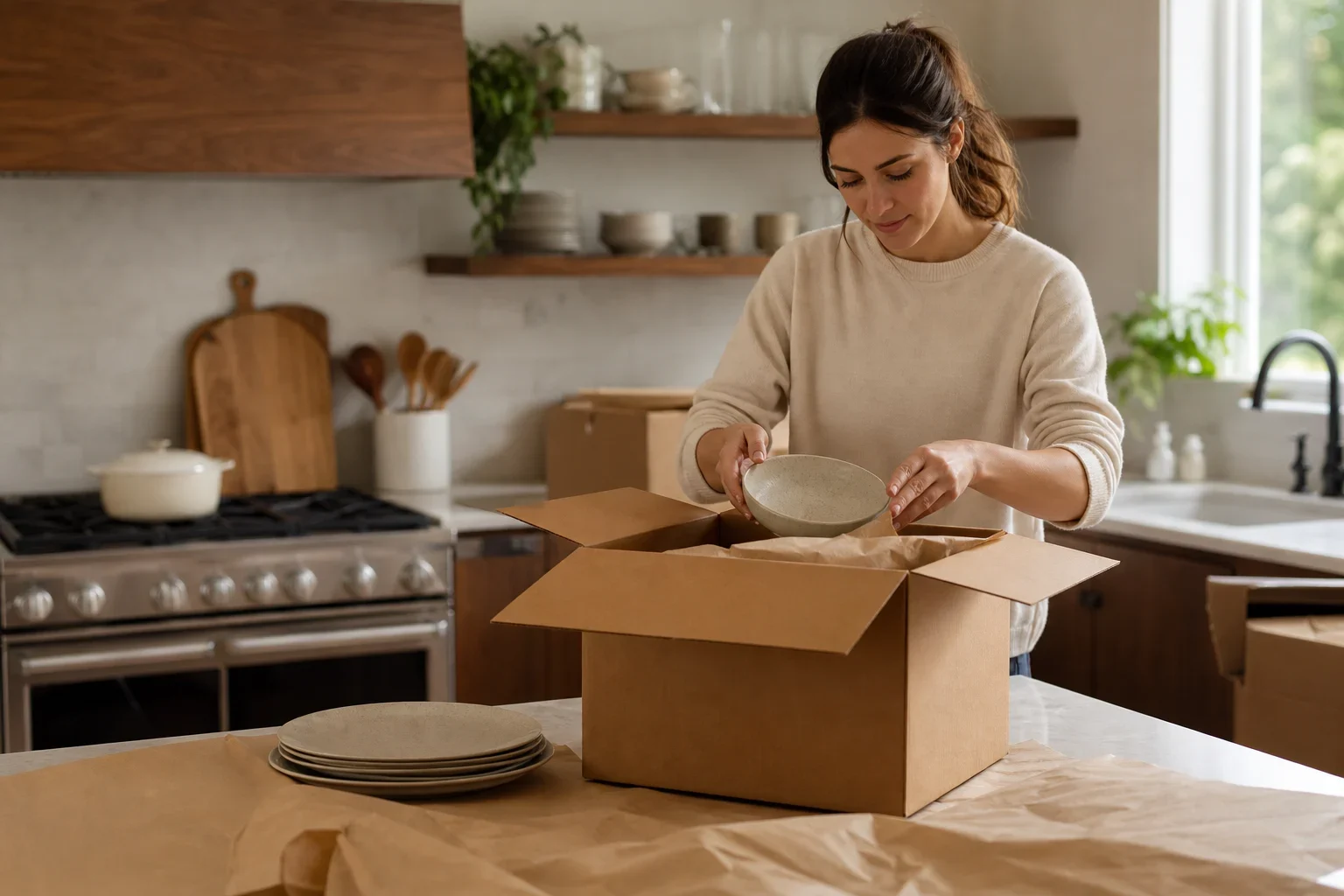
Minimalist product idea: HOLDN’ STORAGE China Storage Containers 5-Piece Set Moving Boxes, Quilted. A dedicated, quilted china storage set gives the fine china and serving pieces from the 'rarely used' batch their own padded container instead of being mixed into general moving boxes. This matches the article's early-packing stage for delicate, occasional-use items and keeps those pieces organized separately from daily-use dishes. For a minimalist approach, having one purpose-built container for china reduces the need to over-wrap or improvise padding with miscellaneous materials.
Should I pack my kitchen all in one day?
No — splitting the kitchen into two separate packing sessions on two different timelines works better than tackling it all at once. Doing the rarely-used half weeks early and the daily-use half in the final days keeps your kitchen functional right up until moving day instead of leaving you without dishes for two weeks.
What should go in a first-night kitchen kit instead of a packed box?
Plan for a kitchen-free first night: paper plates, disposable cutlery, a couple of cups, a can opener, basic snacks, and water are enough to get through the first evening without unpacking boxes. If coffee is non-negotiable, add the coffee maker and filters to this kit rather than the last kitchen box you pack.
How far in advance should I start packing my kitchen?
Begin with the rarely-used half around three to four weeks before your move, and plan to finish the daily-use half in the final two or three days. That split keeps the bulk of the fragile, time-consuming wrapping work out of the last-minute scramble while still leaving you functional dishes until close to move day.
Shop the Minimalist look
As an Amazon Associate, Nido earns from qualifying purchases.

BOX USA Moving Boxes Holds 65lbs, 18x14x12, Medium 10-Pk for Shipping
These medium 18x14x12 boxes suit the 'pack weeks early' half of the split — fine china backups, extra bakeware, and bulk pantry stock. A medium size keeps a fully loaded glassware or dish box from getting too heavy to carry, which lines up with the article's advice to use smaller or medium boxes for fragile kitchen items rather than one oversized one. A uniform 10-pack also supports a minimalist approach: consistent box sizes stack neatly and are easy to label and track as you work through the rarely-used cabinets first.
View on Amazon
100 Sheets Packing Paper for Moving, Newsprint Paper for Packing Wrapping, Wrapping Paper for Packaging Glasses Dishes - Must Have Packing Supplies for Moving Box Filler(12 * 24in)
This newsprint packing paper is a direct fit for the guide's instruction to wrap each fragile piece individually before boxing. Use it on the rarely-used fine china, crystal, and extra glassware you're setting aside three to four weeks out, wrapping each item and padding gaps so nothing shifts in transit. Plain newsprint keeps the process simple and clutter-free, which suits a minimalist packing routine focused on protecting breakables without extra materials or steps.
View on Amazon
HOLDN’ STORAGE China Storage Containers 5-Piece Set Moving Boxes, Quilted
A dedicated, quilted china storage set gives the fine china and serving pieces from the 'rarely used' batch their own padded container instead of being mixed into general moving boxes. This matches the article's early-packing stage for delicate, occasional-use items and keeps those pieces organized separately from daily-use dishes. For a minimalist approach, having one purpose-built container for china reduces the need to over-wrap or improvise padding with miscellaneous materials.
View on Amazon