Does Landlord Insurance Cover Renters' Belongings? The Coverage Gap Explained
Design theme: Minimalist
Landlord insurance protects the building, not what's inside your apartment. A plain-English breakdown of the coverage gap, plus a worked fire scenario and a simple way to close it.

As an Amazon Associate, Nido earns from qualifying purchases.
Does landlord insurance cover renters belongings? If you're moving into your first rental, the short answer is no. The building's policy is built to protect the structure and the owner's financial interest in it — not the couch, laptop, or clothes you bring with you. That gap surprises a lot of first-time renters, usually at the worst possible moment: right after something has already gone wrong.
This guide walks through exactly what a landlord's policy does and doesn't pay for, works through a simple hypothetical so you can see the gap in action, and covers the one habit that makes any future claim — yours or anyone else's — faster to resolve.
Does landlord insurance cover renters belongings?
No. Landlord insurance (sometimes called a landlord policy or rental dwelling policy) is taken out by the property owner, and it's designed around the owner's risks: the physical building, fixtures, the owner's own appliances, lost rental income if the unit becomes uninhabitable, and the owner's liability if someone is hurt on the property. Industry guidance is consistent on this point — a tenant's personal property, from furniture to electronics to clothing, simply isn't part of what that policy is built to cover.
Put another way: your landlord's insurance protects their investment in the property. It was never designed to protect your investment in furnishing it.
What landlord insurance typically covers
- The building's structure — walls, roof, floors, built-in fixtures
- Damage from fire, storms, vandalism, or burst pipes to the structure itself
- The owner's liability if a visitor or tenant is injured due to a property condition the owner is responsible for
- Lost rental income if a covered event makes the unit temporarily uninhabitable
- The owner's own appliances or fittings, in some policies
What landlord insurance does not cover
- Your furniture, electronics, clothing, or other personal belongings
- Your liability if you accidentally injure a guest or damage someone else's property
- Your cost of a hotel or temporary housing if you're displaced
- Routine wear, pest damage, or appliance breakdowns, in most standard policies
A worked example: the kitchen fire scenario
This is a hypothetical walkthrough, not a real case, but it's a useful way to see the coverage gap in concrete terms.
Minimalist product idea: Akro-Mils 30230 AkroBins Plastic Storage Bins, 11"x5"x5", Blue, 12-Pack. Clear, uniform bins like these give you a tidy way to group belongings by category as you unpack — exactly the moment this article flags as the easiest time to build a home inventory. Sorting items into labeled bins by room or type creates a natural, photographable record of what you own, supporting the documentation habit the guide recommends for faster insurance claims later. Their simple, uncluttered form also fits a minimalist approach to settling in without creating visual chaos.

Imagine a small kitchen fire starts from an unattended stove in a rented apartment. It scorches the cabinets, cracks a window from heat, and smoke damages the walls throughout the unit. It also destroys the tenant's couch, a laptop, and most of their clothing, and the apartment is unlivable for three weeks while repairs happen.
Here's how a typical landlord policy and a tenant's own renters insurance would likely split that loss:
- Cabinets, window, walls (the structure): Landlord's policy — this is exactly what it's for.
- Couch, laptop, clothing (personal property): Not covered by the landlord's policy. Without a renters insurance policy, the tenant pays out of pocket to replace all of it.
- Three weeks in a hotel while repairs happen: Not covered by the landlord's policy either. A renters insurance policy's loss-of-use (or additional living expenses) coverage is what would typically help with that cost — the landlord's lost-rent coverage only reimburses the owner, not the tenant's hotel bill.
In this hypothetical, the landlord's insurer handles the repair bill for the unit. The tenant is left covering their own replacement costs and temporary housing unless they had their own policy in place.
Why the misconception is so common
Many first-time renters assume that because the building is insured, they're covered too. It's an understandable assumption — you're paying rent to someone who clearly has insurance on the property — but landlord and tenant insurance are two separate policies built for two separate parties, and neither one fills in for the other. A landlord not requiring renters insurance in your lease doesn't mean the coverage gap doesn't exist; it just means no one is enforcing the decision on your behalf.
Minimalist product idea: Nelko P21 Label Maker Machine with Tape, Bluetooth Label Printer, White. A label maker pairs naturally with the article's advice to document belongings room by room during move-in: labeling storage bins, boxes, or shelves with contents makes it far easier to track what's where, which in turn speeds up matching items to an inventory list if you ever need to file a renters insurance claim. Clean, consistent labels also support a minimalist, organized home rather than a pile of hand-scrawled notes.

Closing the gap: a simple two-part approach
You don't need to resolve this before move-in day, but it's worth handling in your first couple of weeks:
- Get your own renters insurance policy. It covers the belongings, liability, and loss-of-use exposure that a landlord's policy leaves out. Check your lease first — many now require proof of a policy as a condition of renting.
- Document what you own. If something is ever damaged, destroyed, or stolen, having a simple record of your belongings — what you have, roughly what it's worth, and photos — makes a claim faster and more accurate than trying to reconstruct the list from memory under stress.
That second step is easy to put off, but move-in week is actually the fastest time to do it: your things are already out of boxes, grouped by room, and fresh in your mind. Nido's moving inventory tools let you photograph what you own as you unpack, label boxes, and keep a running record by room — so if you ever need it for a claim, the documentation already exists instead of being another task to catch up on later.
Frequently asked questions
Does landlord insurance cover my furniture if there's a fire?
No. Even when a fire is covered under the landlord's policy for structural repairs, that policy does not reimburse you for furniture, electronics, or other personal belongings damaged in the same event. That's the core gap a renters insurance policy is designed to close.
What does landlord insurance actually cover?
It covers the physical building and fixtures, the owner's liability for injuries tied to the property's condition, and often the owner's lost rental income if the unit becomes uninhabitable after a covered event. It does not extend to anything the tenant personally owns.
Minimalist product idea: Nathan James Floating Wall Book Shelves, 3-Tier Display Shelf, Decorative Modular Shelf in Solid Wood for Bedroom, Nursery, Bathroom or Kitchen, Set of 2. Open, wall-mounted shelves give you a visible, organized spot to display and group smaller belongings — books, electronics, decor — making them easier to photograph and catalog as part of a move-in inventory, rather than leaving items buried in boxes. The modular, minimal design also suits a clean, uncluttered first apartment setup while still giving you a clear view of what you own.
Can my landlord require me to get renters insurance?
Yes, in most cases. A growing number of leases include a renters insurance requirement as a condition of renting, partly because it protects the tenant and partly because it reduces disputes over who pays for what after an incident. Check your specific lease for the requirement and any minimum coverage amounts.
What happens if my belongings are stolen and I don't have renters insurance?
You're responsible for replacing them yourself. Theft of personal property, whether it happens inside your rental or from a parked car, falls outside what a landlord's policy covers, and without your own renters policy there's no insurer to file a claim with.
Does renters insurance cover damage I accidentally cause to the apartment itself?
This depends on the specific policy and the type of damage, so it's worth confirming the details directly with an insurer before assuming you're covered for accidental damage you cause to the unit.
Do I need to document my belongings even if I don't have renters insurance yet?
It's a good habit regardless. A simple inventory — photos, approximate values, and where items are packed — makes it much easier to estimate how much coverage to buy when you do get a policy, and it gives you a head start if you ever need to file a claim.
Shop the Minimalist look
As an Amazon Associate, Nido earns from qualifying purchases.
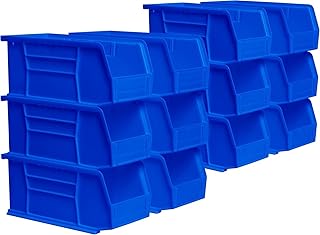
Akro-Mils 30230 AkroBins Plastic Storage Bins, 11"x5"x5", Blue, 12-Pack
Clear, uniform bins like these give you a tidy way to group belongings by category as you unpack — exactly the moment this article flags as the easiest time to build a home inventory. Sorting items into labeled bins by room or type creates a natural, photographable record of what you own, supporting the documentation habit the guide recommends for faster insurance claims later. Their simple, uncluttered form also fits a minimalist approach to settling in without creating visual chaos.
View on Amazon
Nelko P21 Label Maker Machine with Tape, Bluetooth Label Printer, White
A label maker pairs naturally with the article's advice to document belongings room by room during move-in: labeling storage bins, boxes, or shelves with contents makes it far easier to track what's where, which in turn speeds up matching items to an inventory list if you ever need to file a renters insurance claim. Clean, consistent labels also support a minimalist, organized home rather than a pile of hand-scrawled notes.
View on Amazon
Nathan James Floating Wall Book Shelves, 3-Tier Display Shelf, Decorative Modular Shelf in Solid Wood for Bedroom, Nursery, Bathroom or Kitchen, Set of 2
Open, wall-mounted shelves give you a visible, organized spot to display and group smaller belongings — books, electronics, decor — making them easier to photograph and catalog as part of a move-in inventory, rather than leaving items buried in boxes. The modular, minimal design also suits a clean, uncluttered first apartment setup while still giving you a clear view of what you own.
View on Amazon